Home / Roofing Manufacturers / Holcim Elevate Commercial Roofing
Holcim Elevate Commercial Roofing in Chandler, AZ
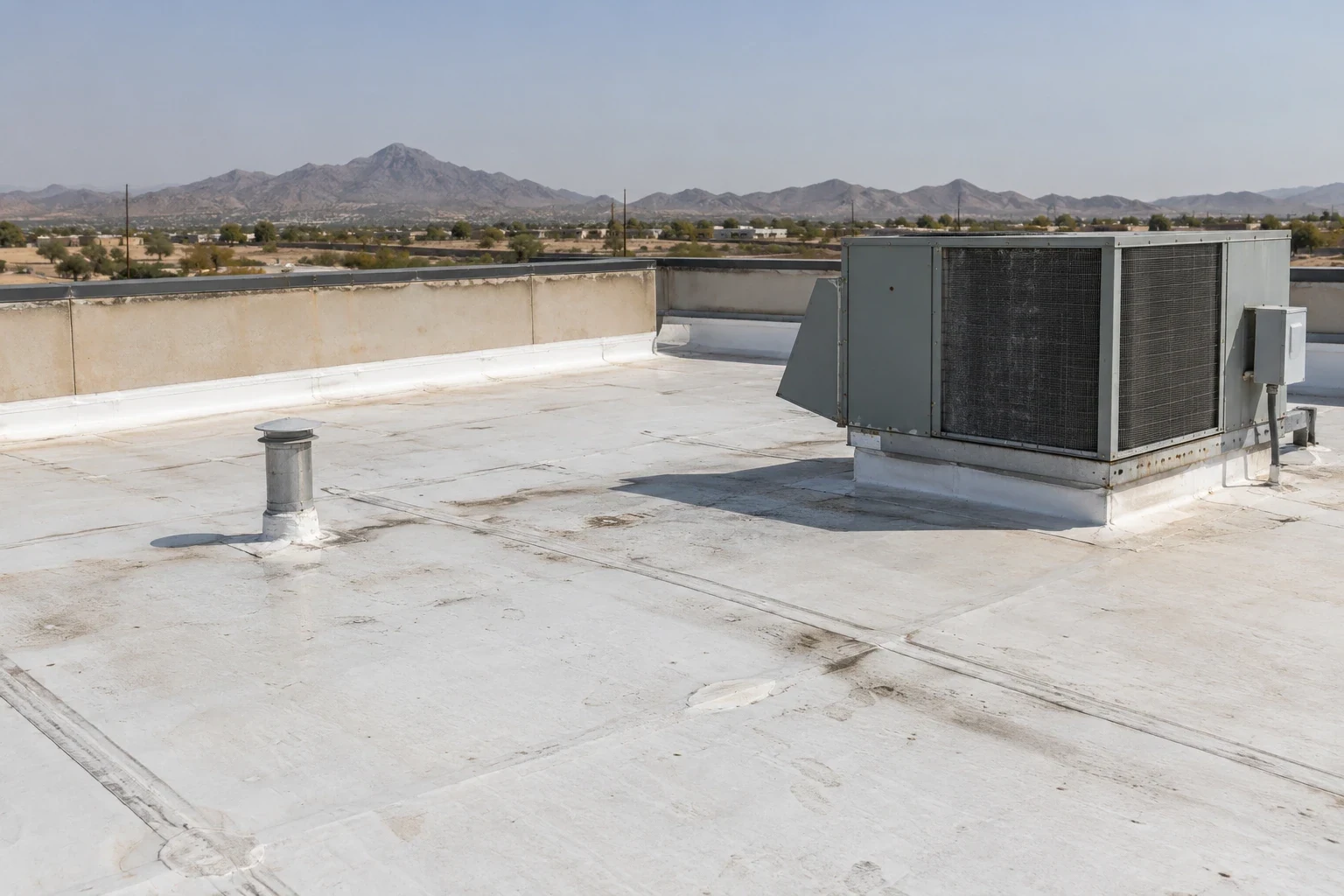
Holcim Elevate RubberGard EPDM repair in Chandler, AZ: QuickSeam splices with the right prep, flashing at curbs and walls, and backing repairs done before the patch goes on.
Many Chandler buildings, including medical offices and clinics, have RubberGard EPDM roofs from Holcim Elevate, formerly Firestone Building Products. Before a permanent repair, we identify the seam products that belong with that membrane. We look at the sheet, any installation records and old patches in the problem area. The repair products have to match the membrane and its condition, and the facility manager should know exactly what the seam repair involves and what has to be fixed first.
Chandler's July average high is about 106 F, with a record high of 119 F. Heat affects how EPDM primers and tapes handle, so we check conditions and the manufacturer's prep requirements before seam work and often schedule it for early morning. For any EPDM repair, we confirm the building, the installed sheet and the facility contact. A larger replacement option is priced separately from a local RubberGard repair.
RubberGard and QuickSeam
QuickSeam Splice Tape is the Holcim Elevate product used for field seams between RubberGard EPDM panels and flashing. We confirm the sheet the new seam will bond to and look for old repairs made with unknown materials. The crew has the product instructions on hand before preparing any splice. Calling it a rubber roof does not tell you which accessories are already up there.
If you are comparing Carlisle EPDM or another brand, that option gets its own proposal. Repairing the existing RubberGard roof is a separate decision from replacing it with another product. Both recommendations list the backing and flashing work, so a different brand name never hides a different installation method.
If key product information is missing, we note it in the scope, along with how we will find out, whether from records or a closer look at the material. The facility manager knows which seams are ready to repair and which areas still need checking before we promise a permanent fix.
Seam prep
Holcim Elevate lists QuickPrime products and the QuickScrubber for preparing the surfaces of QuickSeam splices. Those go with the tape, and we follow the prep instructions for each seam. Pricing tape without the right cleaning and priming leaves out the part of the job that makes it hold.
An EPDM roofing repair follows the seam detail for that product on a properly prepped sheet. We check for dirt, oils and old patch material on the bonding surface, along with the surrounding membrane. A small visible hole may need a larger repair if the rubber around it is worn out.
We record the prepped area and the accessory used at each location, with photos taken before later work covers it. The facility manager can always find what was repaired and how it ties into the existing sheet, which helps if another repair is ever needed at the same seam.
Backing repairs
We check what is under the repair area. Damage or movement in the deck or insulation affects whether it can stay. If hidden conditions could change the recommendation, we test. A patch should never sit on top of known damage, so the scope lists any tear-off and rebuild work that has to happen first.
A commercial roof repair scope keeps those steps separate. If we find more damage once we open up, we record where it is and how we plan to fix it before covering it. The owner sees why the quantity changed and what it takes to finish.
For a RubberGard repair in Chandler, we confirm the building, the installed sheet and the access contact before choosing seam products. The permanent detail follows the manufacturer's instructions and the condition of the backing we find.
Any new backing material is recorded before it is covered and tied to the EPDM repair in the roof file.
Curbs, walls and pipes
We measure each curb, wall and pipe group in the repair area and check the rubber around it and the surface the new flashing will bond to. If a curb or support is loose or damaged, that gets fixed first as its own task. Our flashing goes onto a solid, final detail.
If you want to compare a Versico replacement or another system, we write up its backing and flashing details separately. Choosing products for a RubberGard repair is a different decision from choosing a new system, and the owner should see how the work differs before deciding.
We coordinate with the HVAC contractor on any equipment changes and confirm the final curb size. We do not flash a curb that is about to be replaced. The facility manager knows who is fixing the curb and when our flashing can go on.
Scheduling and records
We set up deliveries and access with the building contact and review any site rules for the work. Backing and curb repairs are scheduled first. The crew has the product documents and repair locations on hand, so each permanent repair goes onto a ready surface.
The Price Corridor sits where Loop 101 meets Loop 202, with plenty of office and medical buildings. For EPDM repairs there, we confirm the building, the sheet and the access contact first. The repair follows the manufacturer's instructions and the backing condition, and a wider replacement is priced separately.
Preventive roof maintenance visits use that record to check completed repairs. A new problem gets its own inspection instead of automatically being lumped in with an earlier patch.
We record the seam and flashing accessories installed, with photos of any backing repairs, changed curb details and completed locations. Other recommended work is listed separately, so the facility manager has the product and repair information ready for the next review.
Commercial Roofing Questions
What do you check before repairing a RubberGard roof?
The installed sheet and the seam products that go with it. We also look at old patches and the membrane around the repair before choosing a permanent fix.
Why does QuickSeam tape need its own prep products?
The tape only holds on clean, primed rubber. Holcim Elevate specifies QuickPrime and the QuickScrubber for preparing QuickSeam splices.
Can you patch over damaged backing on a RubberGard roof?
No. Damaged insulation or deck is removed and rebuilt first, then the surface repair goes on.
What happens to the flashing if a rooftop unit is changed?
We get the new curb size from the HVAC contractor, wait until the curb is set and solid, and then flash it.
What records do we get after a Holcim Elevate repair?
The accessories installed at each location, photos of backing repairs and a separate list of any other recommended work.
Get your RubberGard roof repaired
Contact us with your Chandler building and any roof records. We will inspect the EPDM, prep the seams properly and repair any backing and flashing that needs it.
Request a Roof AssessmentAll Roofing Manufacturers