Home / Service Areas / Downtown Chandler
Downtown Chandler Commercial Roof Repair Work
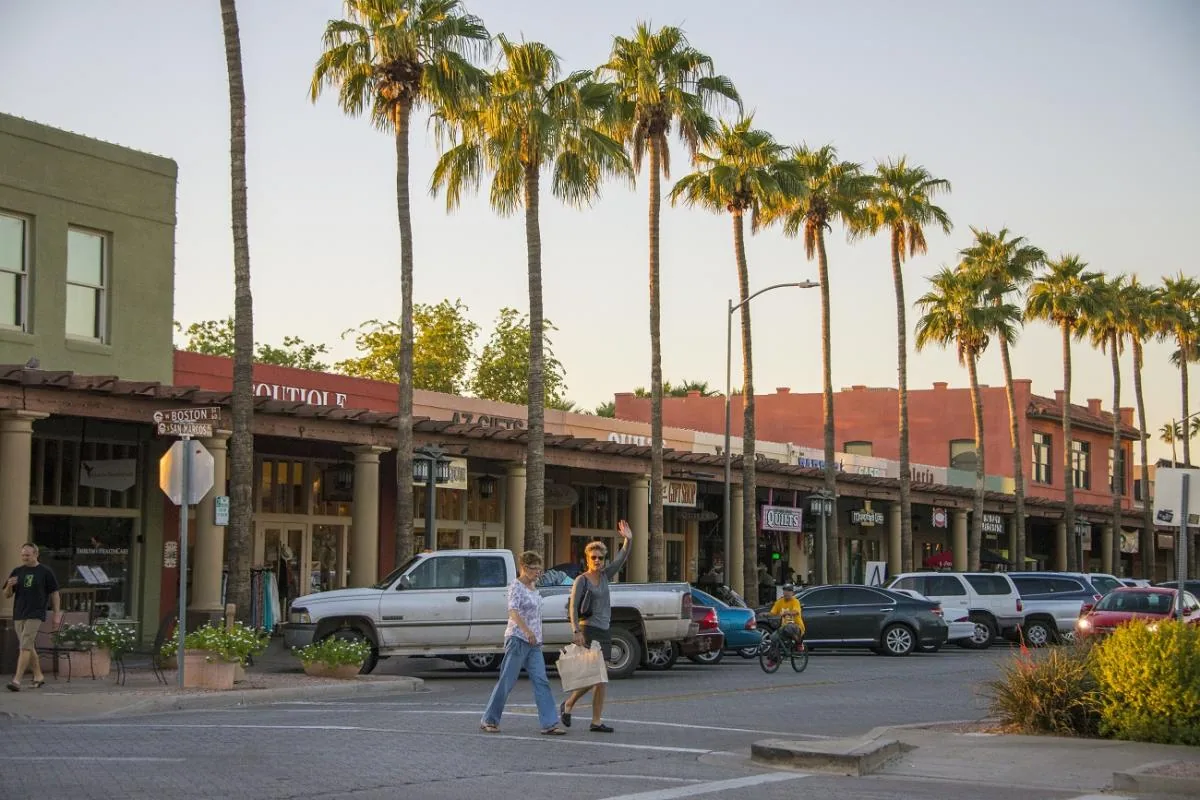
Commercial roof repair in Downtown Chandler: inspections, parapet and wall flashing repair, recover assessments and work planned around tight streets and occupied buildings.
Downtown Chandler roofs come with tight access and buildings that stay busy all day. Civic buildings, offices, restaurants and older storefronts often share walls, have limited parking and need permission before anyone goes on the roof. We start by confirming who can authorize the inspection and the repair, where the problem is and how we'll get onto the roof. If a wall or rooftop unit is part of the problem and belongs to someone else, we tell you who to call.
The downtown core around Chandler City Hall on Arizona Avenue and the library on Delaware Street mixes public buildings with historic storefronts and newer offices. Give us the building address and what's happening, and we'll inspect the roof directly. We also cover Uptown Chandler and the Price Corridor, with each property getting its own inspection and access plan. A small repair and a larger project need different planning, and we'll explain which one you're looking at.
Authorized inspection and reported concern
Before we go on any downtown roof, we confirm who has authority to let us up there and approve repairs. On civic and multi-tenant buildings, that may be different people. Then we start inside with the leak or damage, match it to the roof above and inspect seams, flashings, drains and equipment nearby.
A commercial roof inspection on an older downtown building often turns up earlier repairs layered on top of each other: tar over caulk over flashing tape. We note which are holding and which have failed. We also note areas we couldn't reach or check, so nobody assumes the whole roof was cleared.
You get photos of each defect with its location marked, plus a plain-language explanation of what's urgent and what can wait. If the building has repair records or drawings, we'd like to see them. Knowing what was done before helps us figure out whether a leak is new or the same one coming back.
Wall transitions and roof closure
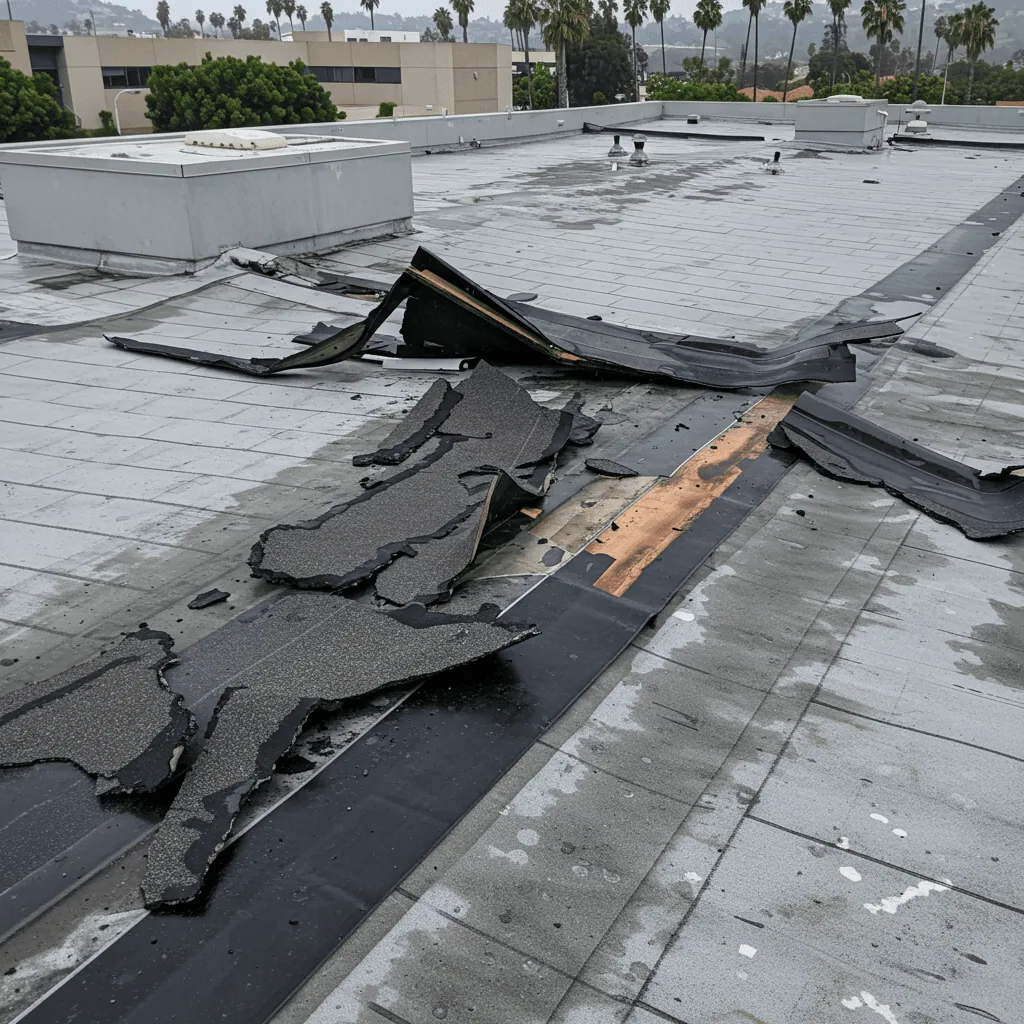
Older downtown buildings often have tall parapet walls, and the joint where the roof meets the wall is where most leaks happen. Flashing pulls loose, sealant dries out, coping caps separate and brick or stucco above the flashing cracks and lets water get behind it. Water that enters a wall can show up inside far from where it entered.
For flashing failure repair, we remove the failed flashing and check what's behind it. If the wood nailer is rotted or the masonry is crumbling, that gets repaired first. Then new base flashing and counterflashing go on, sealed to the wall. If the wall itself needs masonry or stucco work above the roof line, that's often a different trade, and we'll explain what needs to happen in what order.
Rooftop equipment on downtown buildings is often older too. If a unit is leaking or sitting on a damaged curb, we coordinate with the HVAC contractor so the flashing is done after their work, not before.
Building access and material movement
Downtown access takes planning. Streets are narrow, parking is limited and sidewalks are busy. We find out where a truck can park, whether a lift or crane needs a street or sidewalk permit, where materials can be staged and where debris can go. On some buildings, materials have to go up through an interior roof hatch, which changes how much we can bring at once.
For government building roofing, we follow the building's rules for contractors, including check-in procedures, work hours, background checks if required and areas that are off limits. We ask who notifies building occupants and whether any public entrances need protection or a temporary detour.
Small repairs may need only a ladder and a few hours. Larger projects need a site plan covering staging, debris removal, pedestrian protection and noise, especially near offices and public spaces. We review that plan with the building contact before scheduling, and update it if the scope changes once we're on the roof.
Moisture and retained construction
Many downtown buildings have been reroofed more than once, sometimes with a new layer on top of the old. Before recommending a roof recover, we confirm how many layers are already there. Building codes generally limit the number of roofs that can be stacked, and older buildings sometimes already have two.
We also check for moisture. Wet insulation under a new roof keeps rotting the deck and corroding fasteners. If test cuts or moisture readings show wet areas, those have to be removed before a recover. On older buildings, we also look at the deck itself. Wood plank decks may have rot, and older concrete or gypsum decks may need special fasteners.
Parapet walls, drains and penetrations usually need new flashing as part of any recover. We explain which details would be rebuilt and why, and compare that with targeted repairs or a full tear-off. You decide based on what's actually on the roof.
Approval record and finished work
Every change to the scope gets documented. If we open the roof and find hidden damage, such as rotted wood, wet insulation or a cracked drain, we stop, photograph it and explain the fix before going further. The building contact approves the change, and the approval is kept in the job file along with the photos.
If work takes more than one visit, any opening is sealed with temporary protection before the crew leaves. The building contact knows what's finished, what's temporary, who is responsible for the next step and who to call if water shows up.
At the end of the job, you get before and after photos, documentation of any hidden repairs, the approved changes and a list of anything we noticed but didn't fix. On downtown buildings that change hands or managers, that record is especially useful. It tells the next person exactly what was done to the roof, when, and what still needs attention.
Commercial Roofing Questions
Who should set up the first roof visit downtown?
Someone with authority to grant roof access and approve repairs. On civic or multi-tenant buildings, confirm who that is before we schedule the inspection.
What does a flashing repair usually include?
Removing the failed flashing, repairing any rotted wood or damaged masonry behind it, then installing new base flashing and counterflashing sealed to the wall.
Why check under the roof before a recover?
Wet insulation and too many existing layers can rule out a recover. Wet areas have to be removed, and older buildings sometimes already have the maximum number of roofs.
What access details should be in the proposal?
Truck parking, lift or crane placement and any permits, material staging, debris removal, pedestrian protection and the building's contractor rules.
What if work has to stop before the roof is finished?
Open areas are sealed with temporary protection. The building contact knows what's done, what's temporary, who handles the next step and who to call.
Schedule a Downtown Chandler roof inspection
Tell us the building address and who can authorize roof access. We'll inspect the roof, explain the repair and plan access around downtown streets and building rules.
Request a Roof AssessmentAll Service Areas