Home / Commercial Roofing Services / Commercial Roof Repair
Commercial Roof Repair in Chandler, AZ
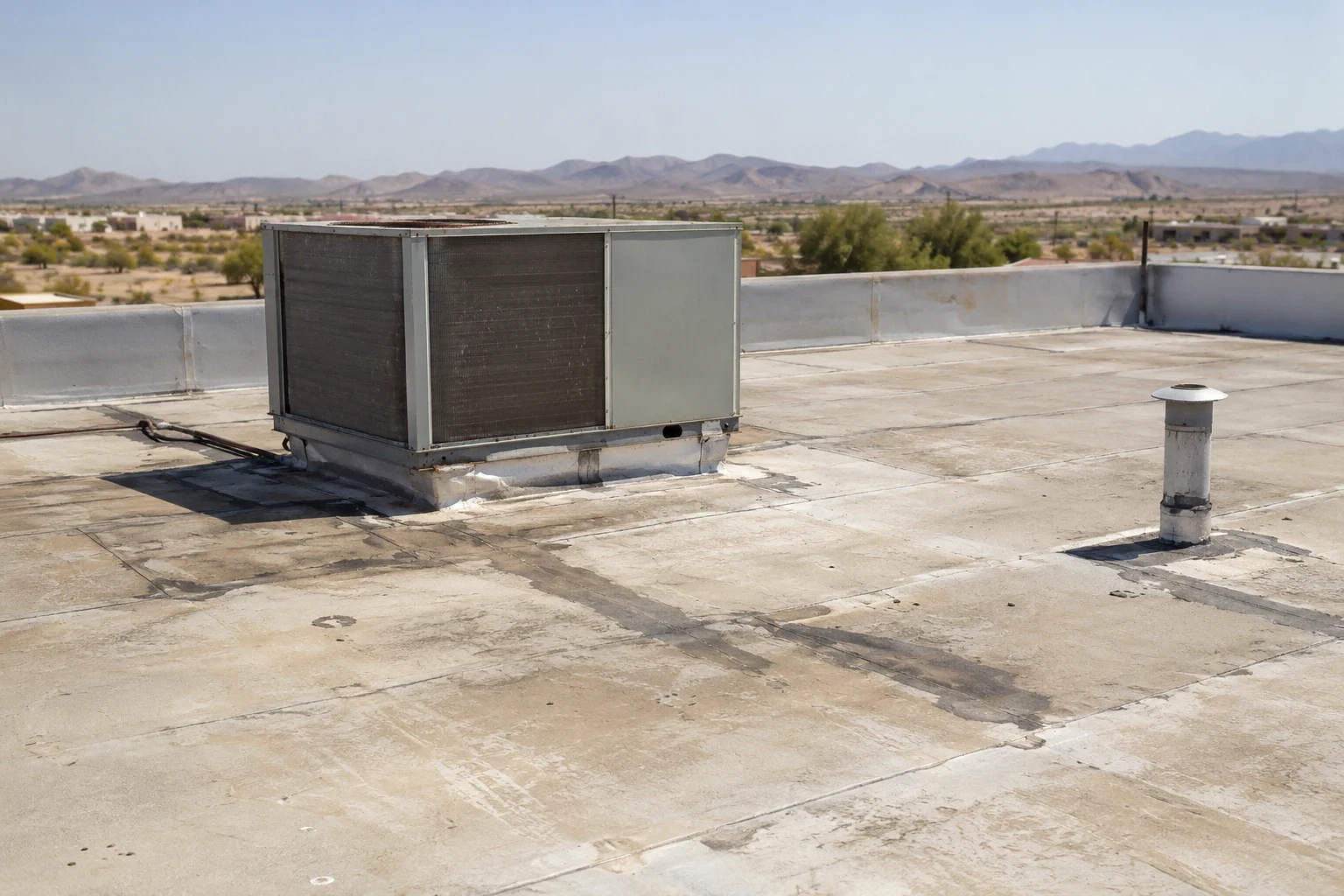
Commercial roof repair in Chandler, AZ: we find the actual defect, repair seams, flashings and punctures with compatible materials and give you a clear record of what was fixed.
Good commercial roof repair starts with finding the actual failure, not patching the area around a ceiling stain. We locate the defect, confirm what the roof is made of and then explain the fix step by step. Even a small leak can involve more than one task: removing an old patch, repairing a rotted curb, then installing new flashing. The proposal lists each of those so you know exactly what you're paying for before any work begins.
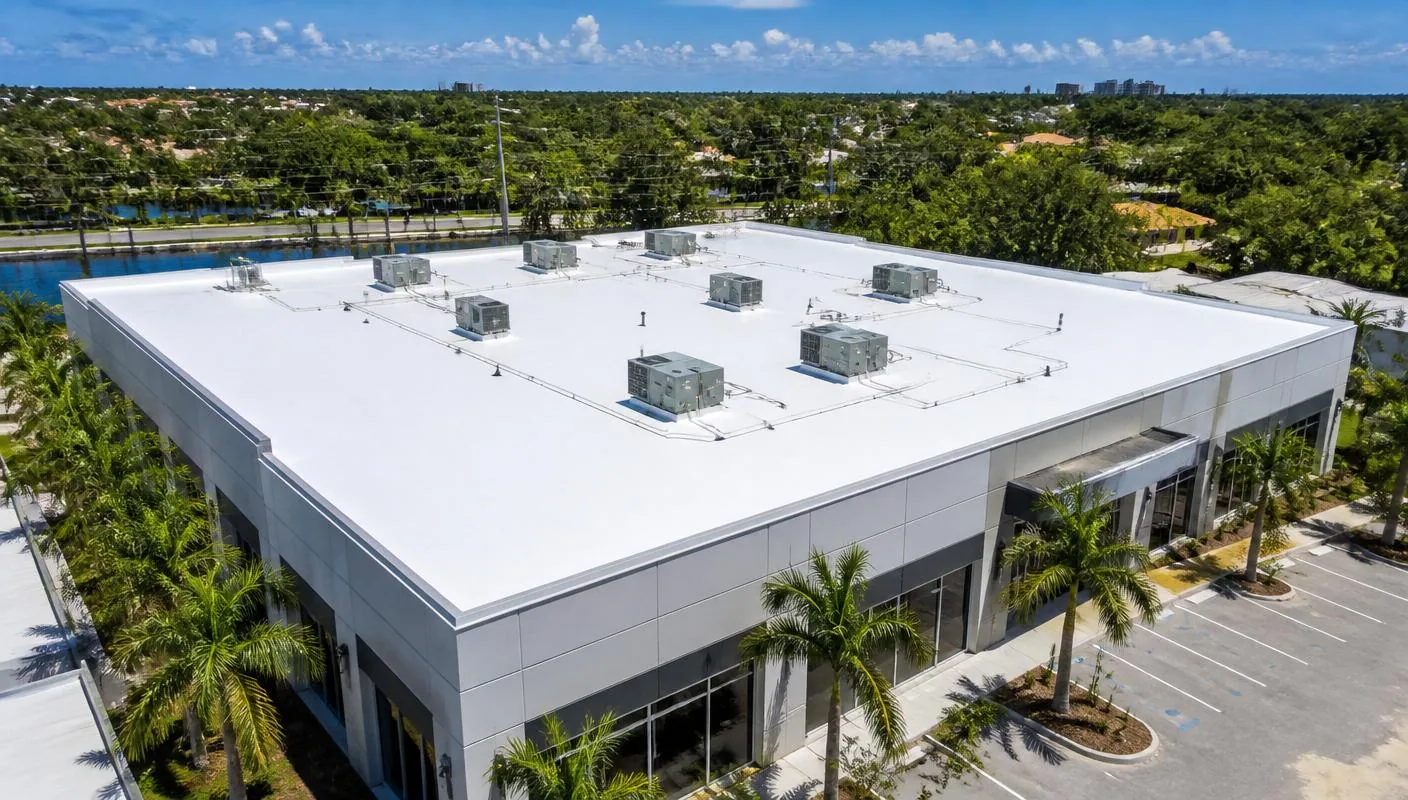
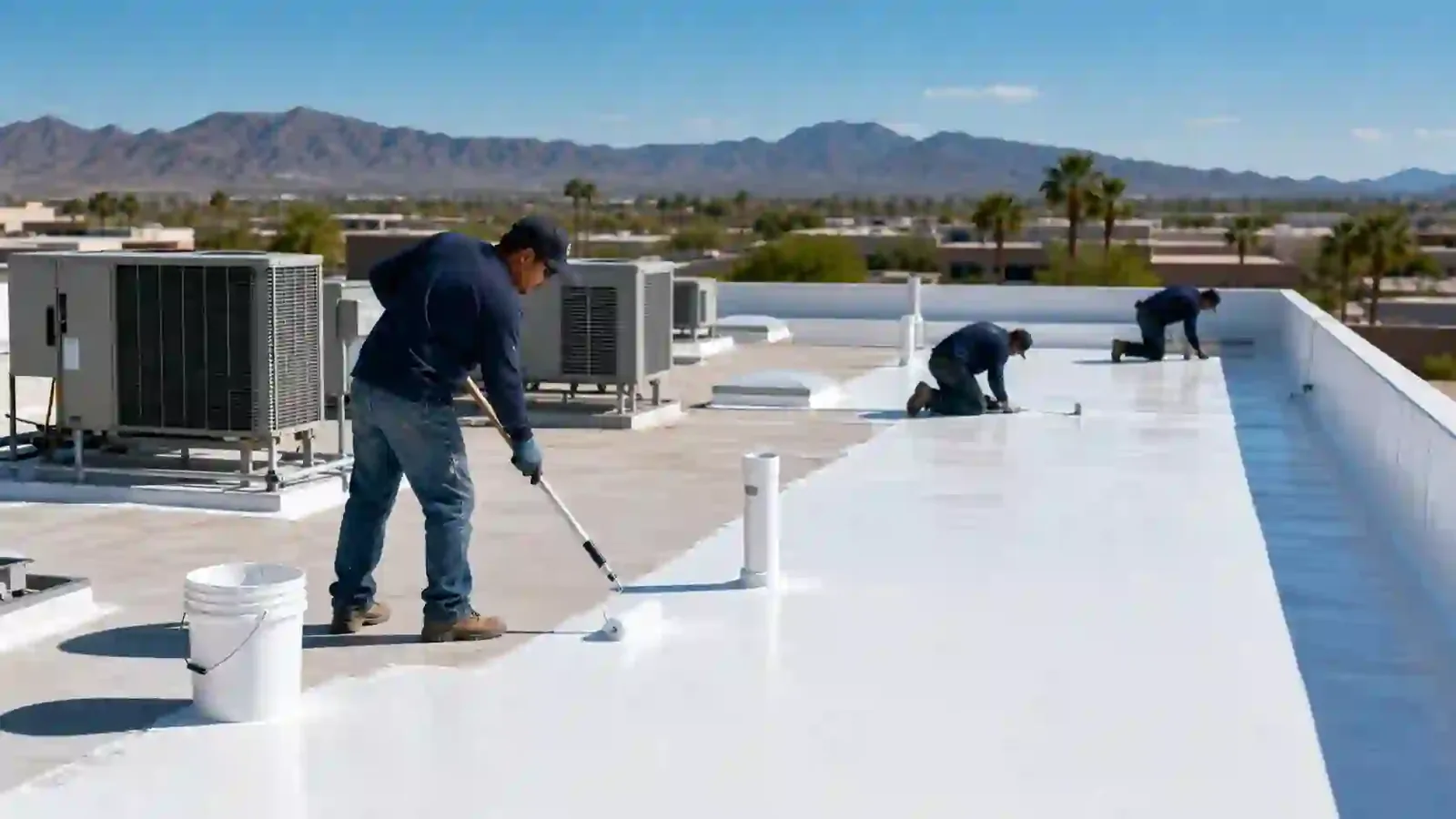
We work on offices, warehouses, retail centers, hangars, medical buildings and industrial plants across Chandler and the East Valley. Every job starts with an inspection of the roof itself. Old patches, the condition of the surrounding membrane and the state of curbs, walls and drains all shape the recommendation. When the work is done, you get a record showing where each repair is and what it fixed. If something still needs investigation before it can be priced, we say so up front.
Defect location
Every defect we find is marked on a roof sketch or photo, along with what it is and what it's made of. We keep what we saw on the roof separate from what was reported inside. A stain on a ceiling tile tells us where to start looking. It doesn't always tell us where the water got in, because water can travel along the deck or a seam before it drips.
Leak repair works best when each finding is tied to a specific repair. If there are three defects, you see three line items, each with a location and a photo. A vague "patch as needed" allowance makes it hard to know what you're getting.
When a leak source still isn't confirmed, we tell you what we ruled out and what the next step is. That clarity matters most when you're weighing a few targeted repairs against a larger project.
Existing material and earlier patches
Before choosing a repair method, we confirm the roof type: TPO, PVC, EPDM, built-up, modified bitumen, spray foam or metal. Each one uses different materials and techniques, and mixing them is a common reason repairs fail. We also look at earlier patches in the area. A peeling patch of mastic or a mismatched membrane usually has to come off before the new repair goes on.
A commercial roof inspection establishes those facts. If you have records showing what roof was installed and when, we compare them with what we see on site. Sometimes the roof isn't what the records say, especially on buildings that have been recovered.
If we can't confirm the membrane type without a closer look, we'll explain why and recommend a small test cut or core. Pricing a repair before knowing the material is a guess, and we'd rather get it right than revise the price later.
Seam correction
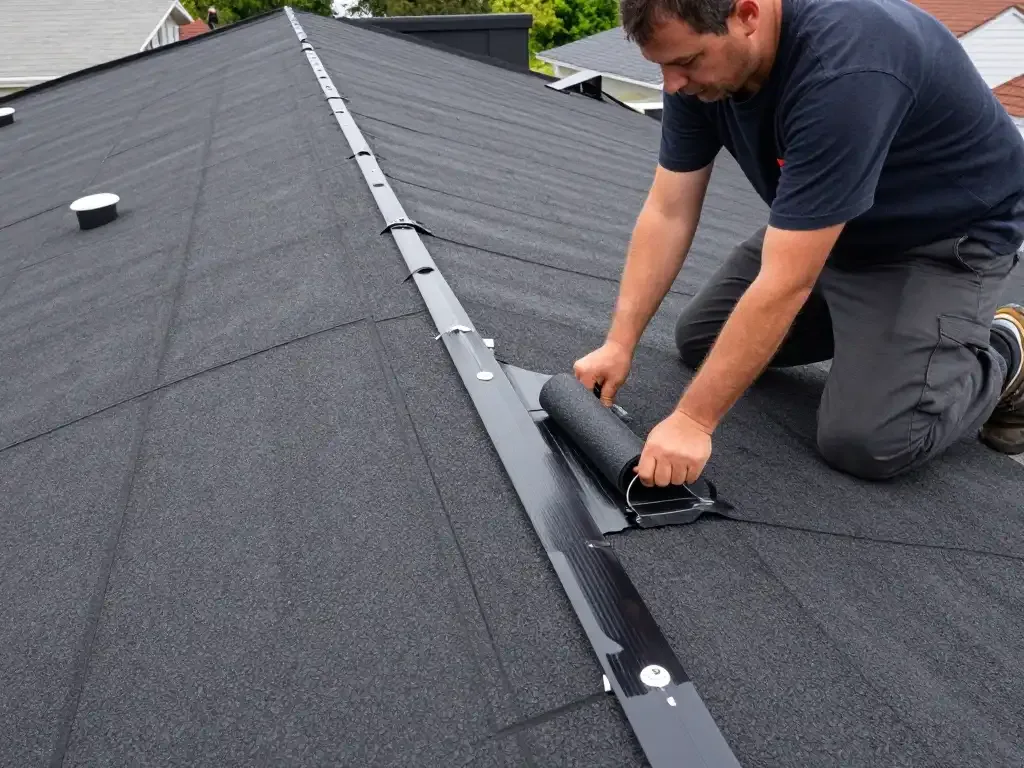
Seams are where most flat roofs fail first. Heat, building movement and age all work on them. When we find an open seam, we check how far the separation runs and inspect the membrane on both sides. A seam failure and a damaged area of membrane next to it may need different repairs, and we list them separately.
For seam failure repair, the method matches the membrane. TPO and PVC seams are cleaned and heat-welded, then probed to confirm the weld. EPDM seams get new seam tape and primer. Modified bitumen seams are torched or set in adhesive. Old patches over the seam come off first so the new material bonds to sound roofing.
We photograph the seam before and after, and the closeout record shows its location. If you ever have another leak nearby, you'll know exactly what was repaired and whether the surrounding membrane was left as is, replaced or repaired separately.
Flashing and supporting components
Flashing problems are often really problems with what's behind the flashing. A curb that's rotted, a wall with cracked stucco or a loose wood nailer at the roof edge will cause new flashing to fail no matter how well it's installed. We inspect the supporting construction and repair it before the new flashing goes on.
For flashing failure repair, the proposal shows both parts: the wall, curb or edge repair and the new flashing. If part of the work belongs to another trade, such as a mechanical contractor resetting a rooftop unit or a stucco crew repairing a wall, we say who does what and in what order.
That sequence matters. If we flash a curb and the HVAC contractor lifts the unit a week later, the flashing gets torn up. We wait for confirmation that the other trade's work is done, then finish the roofing. Any building rules about access, hours or noise are kept with the job plan so the crew follows them.
Puncture and local removal
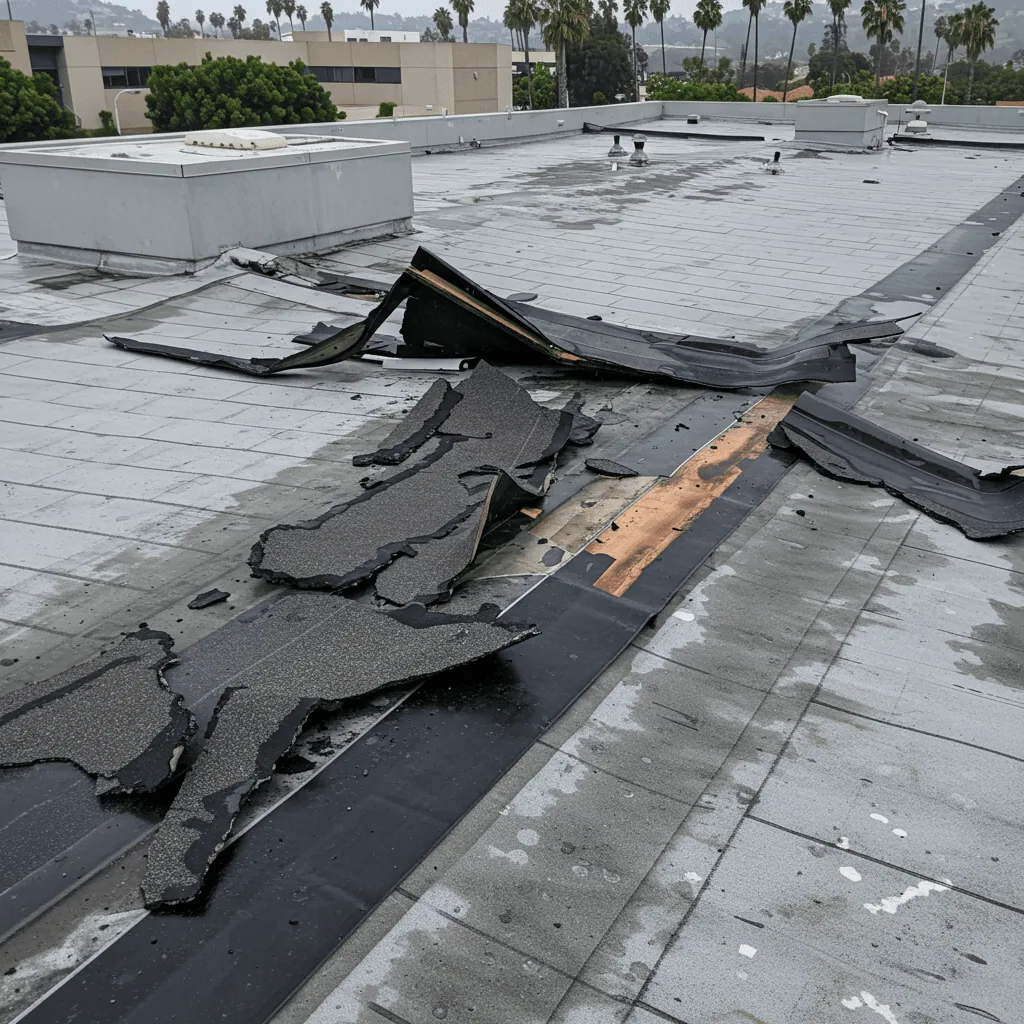
Punctures come from dropped tools, dragged equipment, foot traffic and hail. When we find one, we check the membrane around it and the insulation underneath. Sometimes it's just a hole in the surface. Other times water has been getting in for a while and the insulation is soaked. The visible hole doesn't tell you how deep the damage goes.
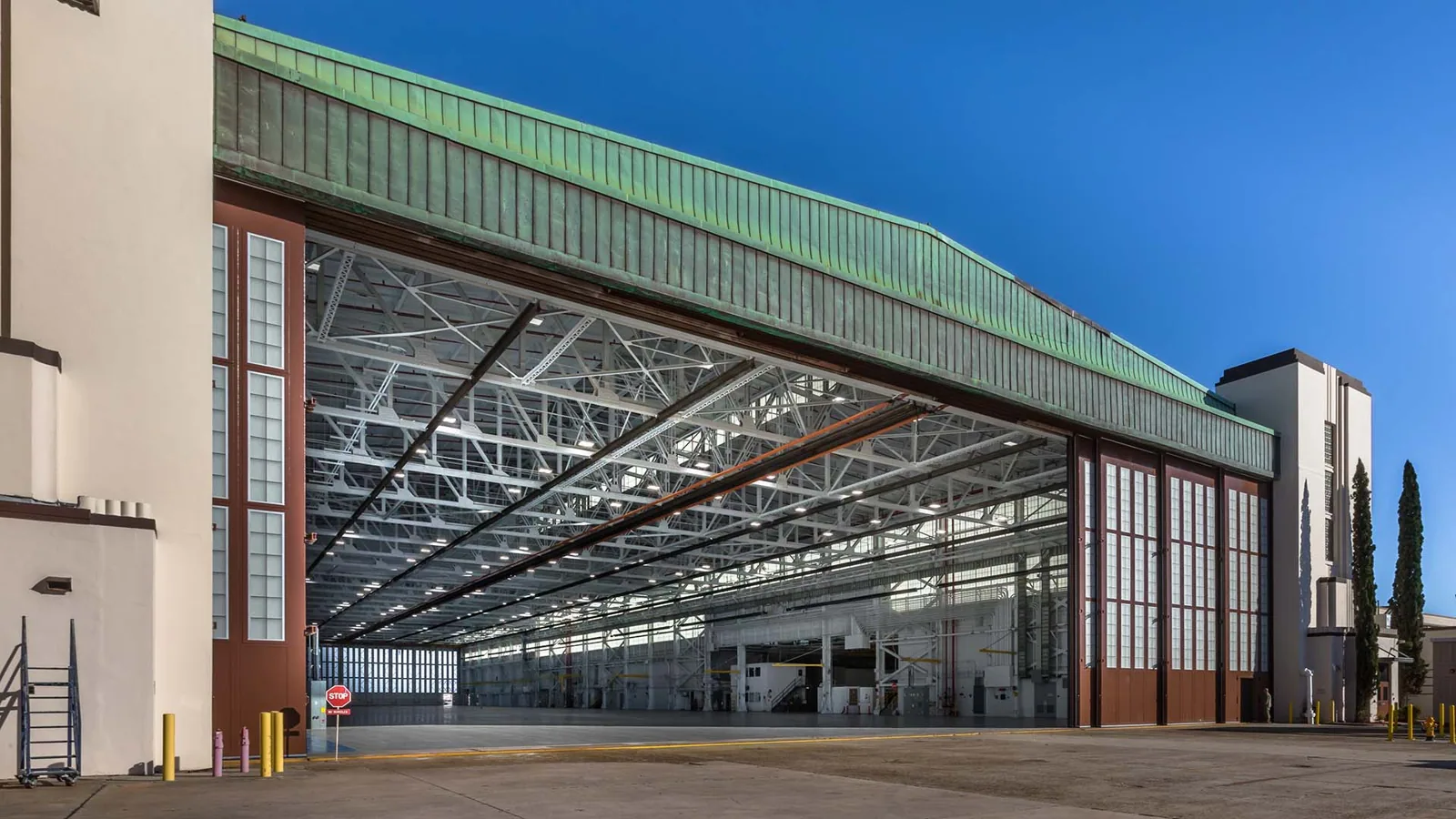
For hangar roofs and other buildings with heavy equipment traffic, punctures tend to repeat along the same paths. We plan the repair around the building's rules for access and staging, and recommend walkway pads where they'll prevent the next one.
If wet insulation turns up once we open the area, we stop, photograph it and explain the added work and cost. New insulation goes in before the membrane is patched. Any change to the scope is documented with the reason behind it, rather than disappearing into a general allowance.
Completion by repair location
When the job is done, you get a record organized by location: what was repaired at each spot, what materials were used, and photos taken before anything was covered up. If an old patch nearby was left in place, we note that too. Anything we noticed but didn't fix is listed separately so nobody assumes the whole roof was addressed.
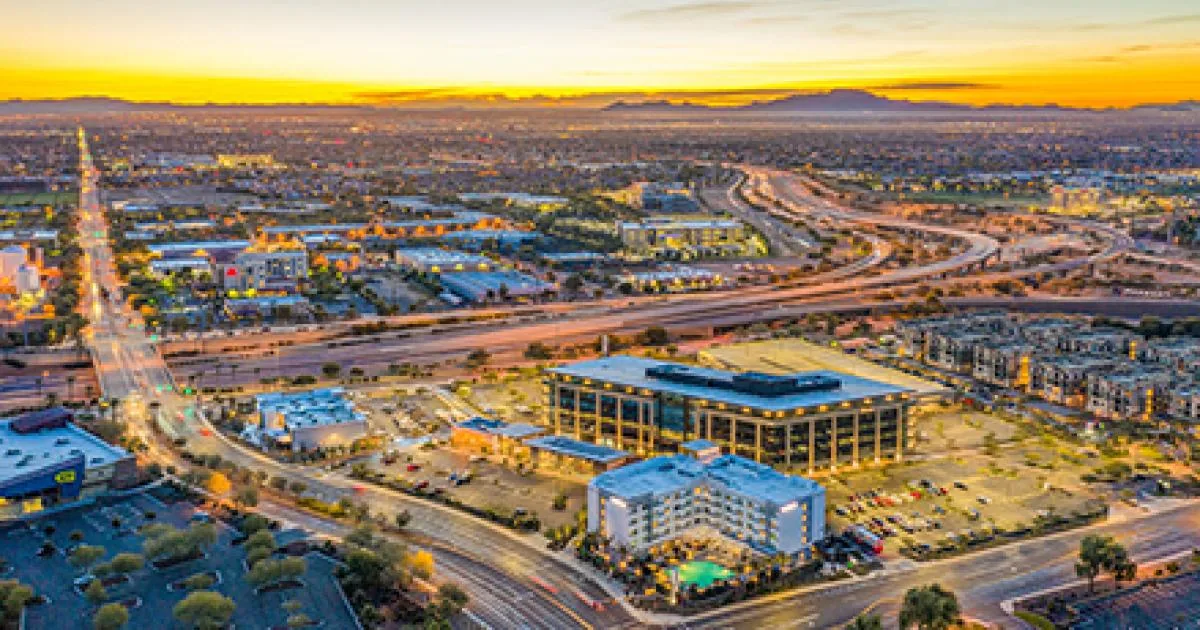
For properties like those in the Chandler Airpark area, where managers and tenants change over time, that record is especially useful. When the next leak is reported, whoever responds can see what was repaired and where, compare it with the new problem and avoid duplicating work.
The record also helps when it's time to budget for a larger project. Knowing which areas have been repaired, how often and with what materials gives a much clearer picture of the roof's condition than a stack of invoices.
Commercial Roofing Questions
What should a roof repair proposal show first?
Where each defect is, what it's made of and how the proposed repair fixes it. If anything still needs investigation, the proposal should say so.
Can a ceiling stain tell you where the leak is?
It tells us where to start. Water often travels along the deck or a seam before it drips, so we confirm the actual entry point on the roof before repairing it.
Why check an old patch before repairing the same area?
Old patches are often the wrong material or poorly bonded. New material won't hold on them, so they usually have to come off first.
How should other trades' work appear in a flashing repair?
The proposal should name the work, who's doing it and which roofing step depends on it, so the other trade finishes before new flashing goes on.
What should the completed repair record include?
The location of each repair, the materials used, photos of hidden work and a separate list of anything we noticed but didn't fix.
Schedule a roof repair inspection
Tell us the building address and what you're seeing. We'll find the defects, explain each repair and coordinate any other trades and building rules involved.
Request a Roof AssessmentAll Commercial Roofing Services