Home / Property Types We Roof / Office Building Roofing
Office Building Roofing in Chandler, AZ
Office building roofing in Chandler, AZ: tracking intermittent leaks, repairs and phased replacement that keep tenants working, plus drains, HVAC curbs and clear records.
Office leaks are often intermittent: a stain that grows after a big storm, a drip that only shows up with wind from one direction. For office building roofing in Chandler, AZ, we start with the floor and suite where the water shows up and what is happening when it does. Tenant photos and dates help narrow it down, but they cannot replace getting on the roof. We find the actual path the water takes and recommend a repair that fixes it, so the property manager can decide between a small repair and a bigger project with real information.
Send us the building address, the suite or floor affected, and any drawings or past repair records. For an office roof inspection in the Price Corridor or anywhere else in Chandler, we schedule access with the property manager. The first visit documents what we can see and flags anything that needs a closer look, such as wet insulation under the membrane. Those findings become the starting point for a clear, practical scope and estimate you can share with ownership.
Tracking down the leak
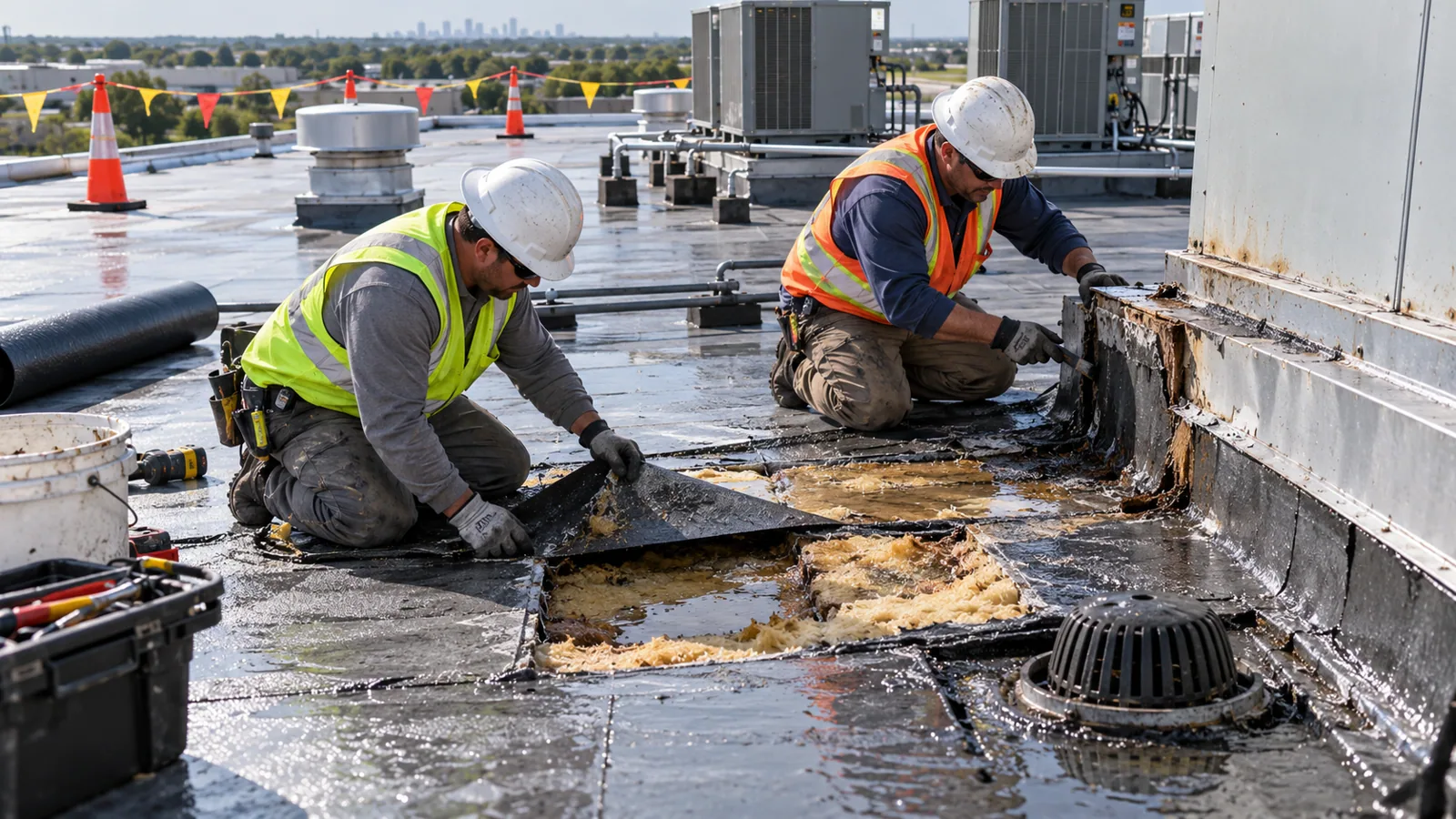
We start at the roof above the stain and work outward, checking seams, curbs, pipe boots, wall flashing and drains. Water often runs along the deck before it drips, so the source may be some distance away. Intermittent leaks sometimes need a water test, where we run water over one area at a time to see which detail lets it in. A proper commercial roof leak repair then fixes the actual entry point, not just the stain.
If insulation around the leak is wet, the repair area needs to grow. We confirm with small test cuts and patch them the same day. If the source is an HVAC condensate line, a plumbing vent or a window rather than the roof, we tell the property manager so the right trade can fix it. You get photos and a short report showing what we found, where it is and what we recommend, which makes tenant communication much easier.
Keeping tenants working
Most office roof work can happen while tenants stay in the building. We review which suites are under the work area, whether ceilings or equipment need protection, and when noisy or odor-producing work is least disruptive. Many offices prefer loud tear-off early in the morning or on weekends. HVAC intakes are protected from adhesive fumes. The lift and dumpster are placed away from entrances and tenant parking.
For reroofing while tenants stay in place, we work in sections and seal each one before leaving. HVAC contractors disconnect units first if needed. If the work area grows because of hidden damage, we update the property manager before continuing. A medical office roof adds patient care to the plan, and a shopping center roof adds customers. An office building is usually simpler, but tenants still need notice.
Repair or replace
A repair makes sense when the roof around the problem is dry and sound. When seams are failing across a wide area or insulation is wet, repairs only buy time. A coating can extend the life of a sound roof once leaks are repaired, and a recover depends on what test cuts show. We explain which options fit your roof and why. Comparing options means comparing complete scopes, not just bottom-line prices.
A commercial roof replacement estimate lists what is removed, the insulation and cover board going back, the attachment method, the membrane and how edges, walls and curbs are finished. Access, disposal and HVAC coordination affect cost. Phasing the work can keep tenants comfortable but may add cost. We lay out those trade-offs so ownership can choose.
HVAC units and drains
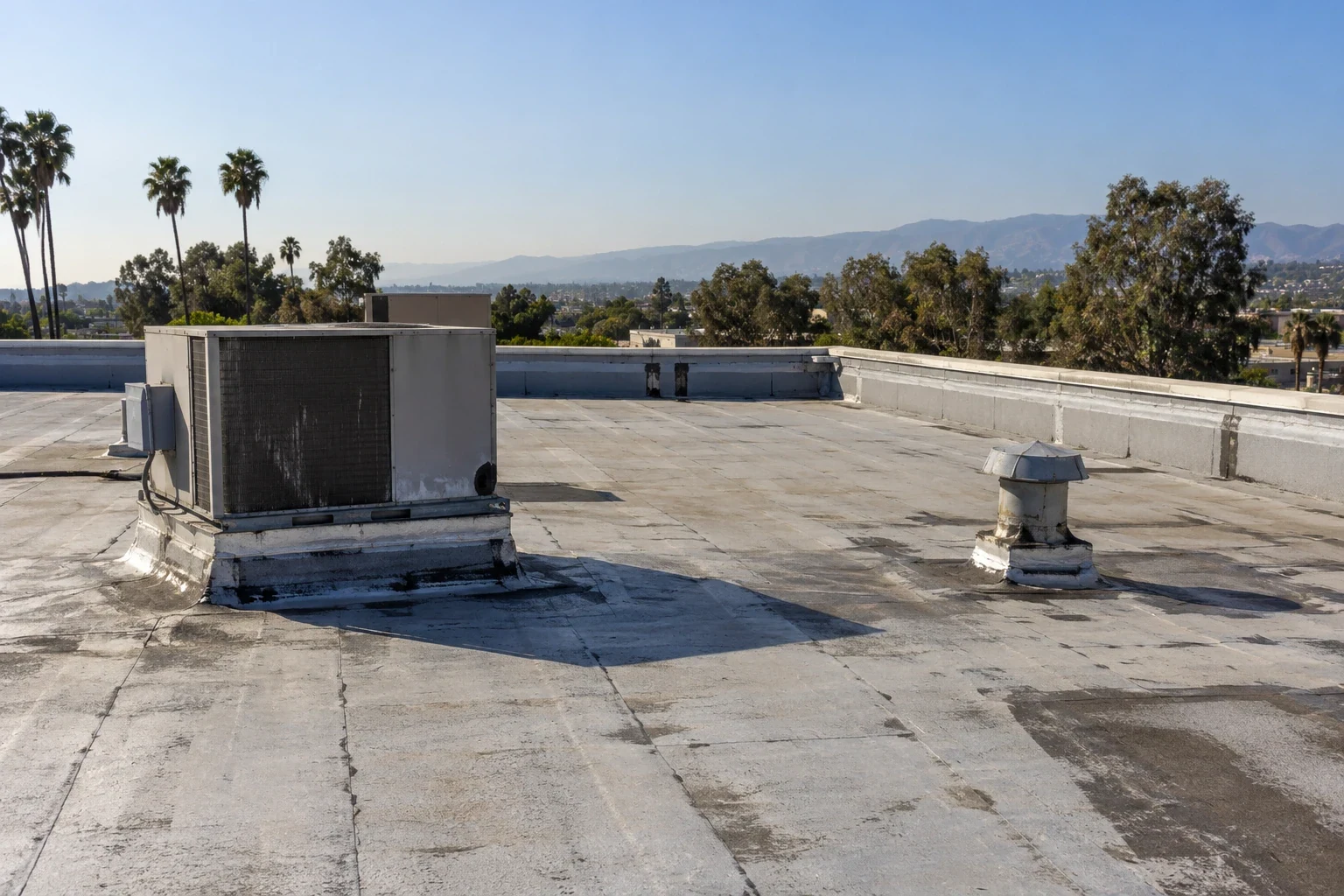
Office roofs usually carry several HVAC units, and their curbs are common leak points. We check the curb flashing, the wood blocking underneath and the top of the flashing where it meets the unit. If a unit needs to be lifted to flash it properly, the HVAC contractor does that first. Rotted blocking gets replaced before new flashing goes on. Curbs waiting on another trade get temporary protection.
Roof drains and scuppers are another frequent source of trouble. Sometimes they just need cleaning. Other times the drain flashing has cracked or a plumber needs to check the line. Standing water usually points to a low spot or a drain set too high, and we find the cause before recommending a fix. The estimate lists each drain included and any plumbing work.
Protection and records
Every section we open is sealed before the crew leaves, especially during monsoon season when storms can arrive with little warning. Edges and curbs waiting on another trade get temporary protection. If hidden damage expands a section, the protection plan and price are updated together, and the property manager gets notice to pass along to tenants. A section is only marked complete when the new insulation, membrane and flashing are in place and other trades have done their part. Temporary patches stay on the open-items list until they are replaced.
With preventive roof maintenance, we check drains, seams, curbs and flashing on a schedule and report what we found and fixed. When a project ends, you get photos of finished work and patched test cuts, material and warranty information, final quantities and a list of open items for other trades. Those records help with tenant questions, warranty claims and budget planning. They also make the next inspection faster. If water is coming in over a tenant's suite, call any time, including nights, weekends and holidays.
Commercial Roofing Questions
What helps track down an intermittent office leak?
Tenant photos, dates and notes on the weather when it leaked. We use those to focus the inspection, and may run a water test on the roof to pinpoint the entry point.
Can tenants stay in the building during roof work?
Usually, yes. We work in sections, protect ceilings and HVAC intakes, schedule loud work for off-hours and seal each section before leaving.
How should an owner compare repair with replacement?
Look at the condition of the roof around the problem and what each option includes: tear-off, insulation, membrane, details, access, disposal and HVAC coordination. Compare full scopes, not just prices.
What goes into the completed work record?
Photos and locations of finished work and patched test cuts, material and warranty information, final quantities and a list of open items for other trades.
Schedule an office roof inspection
Tell us which floor or suite is affected and when the leak happens. We will inspect the roof, find the source and explain your repair options.
Request a Roof AssessmentAll Property Types We Roof