Home / Property Types We Roof / Distribution Center Roofing
Distribution Center Roofing in Chandler, AZ
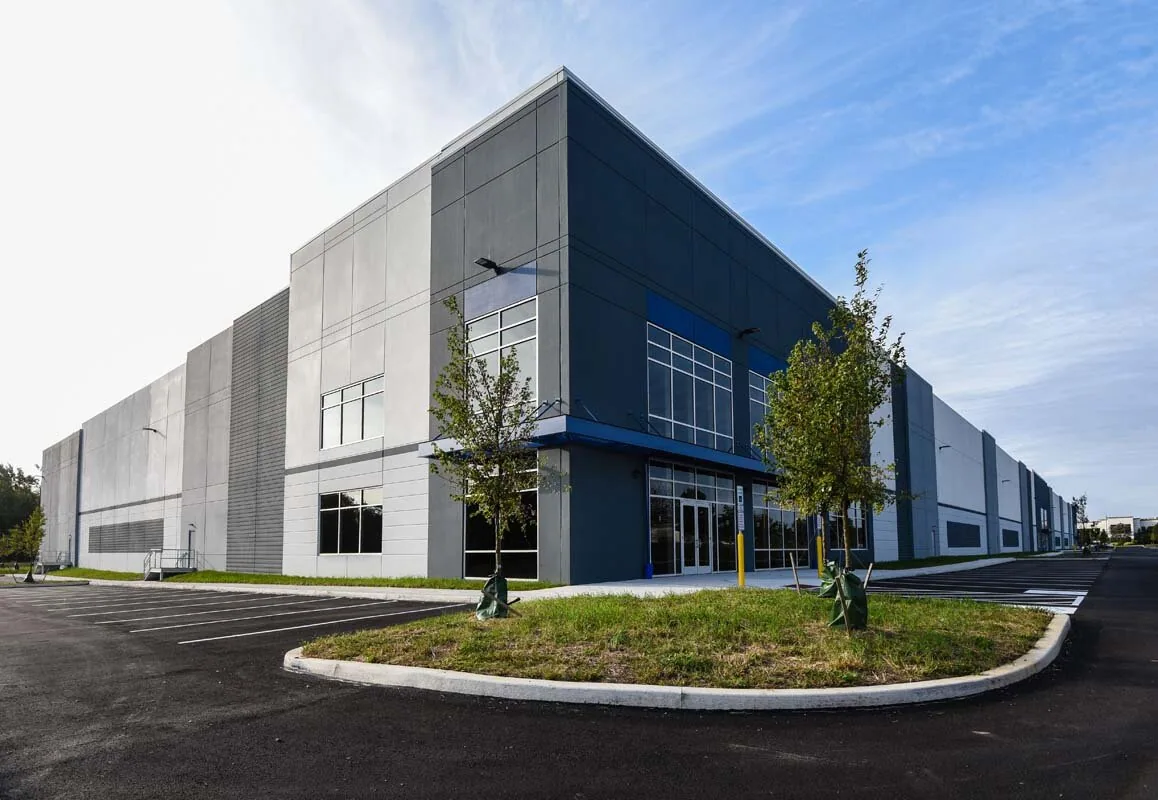
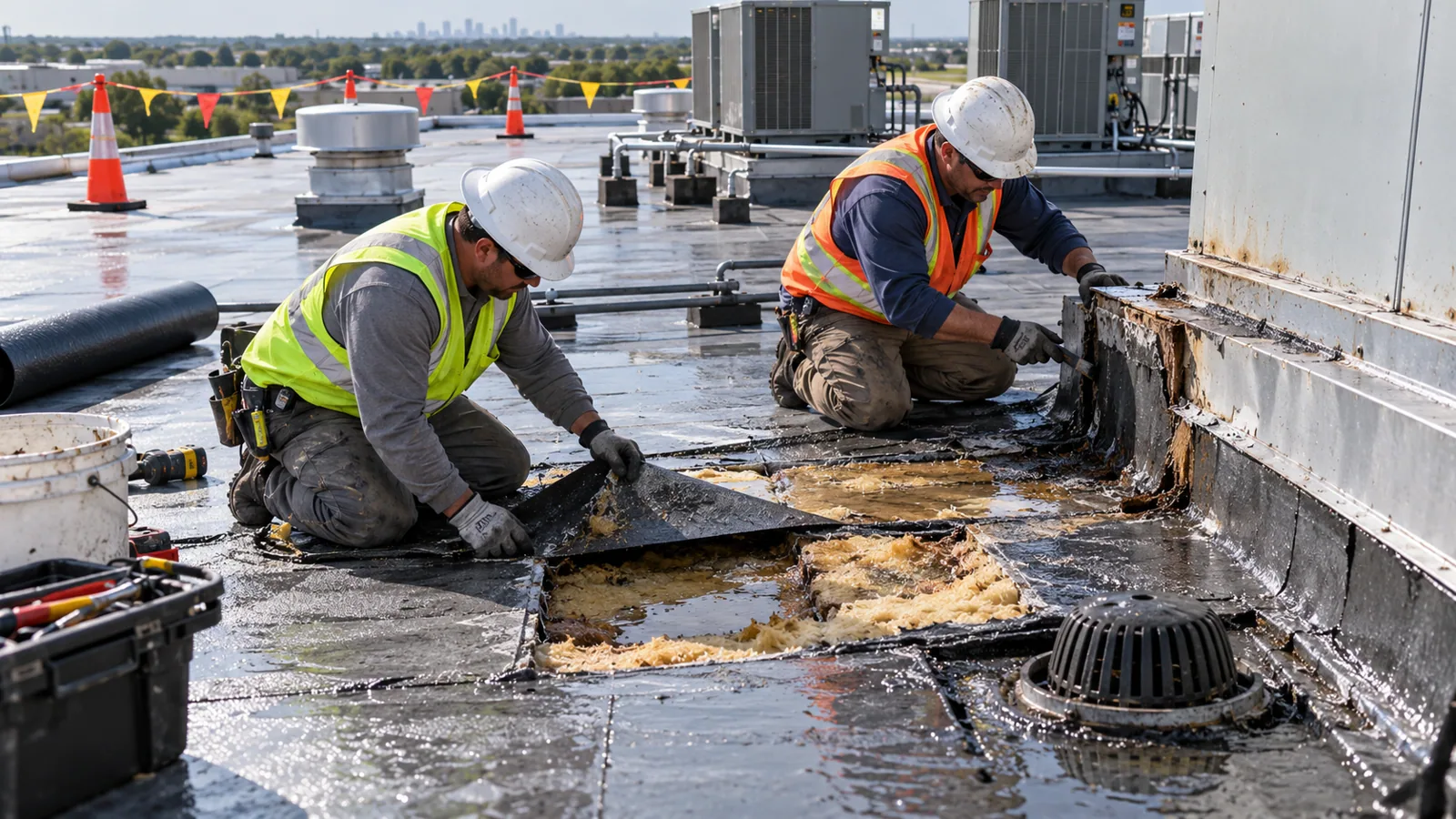
Distribution center roofing in Chandler, AZ: leak tracing, drain and wall flashing repairs, moisture surveys and phased replacement planned around docks, racking and shipping.
A distribution center cannot stop shipping because the roof needs work. Trucks, forklifts, racking and product all sit under that roof, and a leak over a pick aisle or a pallet of inventory costs money fast. For distribution center roofing in Chandler, AZ, we plan around your operation from the start. We find out which areas are busiest, where product is stored and when crews can work, then inspect the roof and explain what its condition calls for: a targeted repair or a larger, phased project.
When you call, give us the building address and where you are seeing water or roof damage. Drawings and past repair records help us focus the inspection. For distribution center roof work in West Chandler or elsewhere in town, we coordinate with your facility manager on access and timing. On the roof, we document what we can see and flag areas that need a closer look, such as possible wet insulation. Then we explain what can be kept, what needs to come off and why.
Working around shipping and racking
Before any roof work, we sit down with the facility manager and walk through the operation below. Which aisles have high-value or moisture-sensitive product? Where do forklifts and trucks run? Where can a crane, material lift and dumpster go without blocking docks or the yard? Equipment contractors handle anything affecting their systems. For reroofing while the building stays in operation, each phase gets its own plan for access, protection below and timing. A quick inspection visit is easy to arrange; a construction phase needs more coordination.
As the work moves to a new section of the roof, we go back over the plan for the area underneath. Product may need to be covered or moved, and traffic routes may shift. Each day's section is sealed watertight before the crew leaves, and any spot waiting on another trade gets temporary protection. If we find more damage and the section grows, we explain the extra work and price before opening more roof. The schedule is built around your real operation, not a generic timeline.
Finding where water gets in
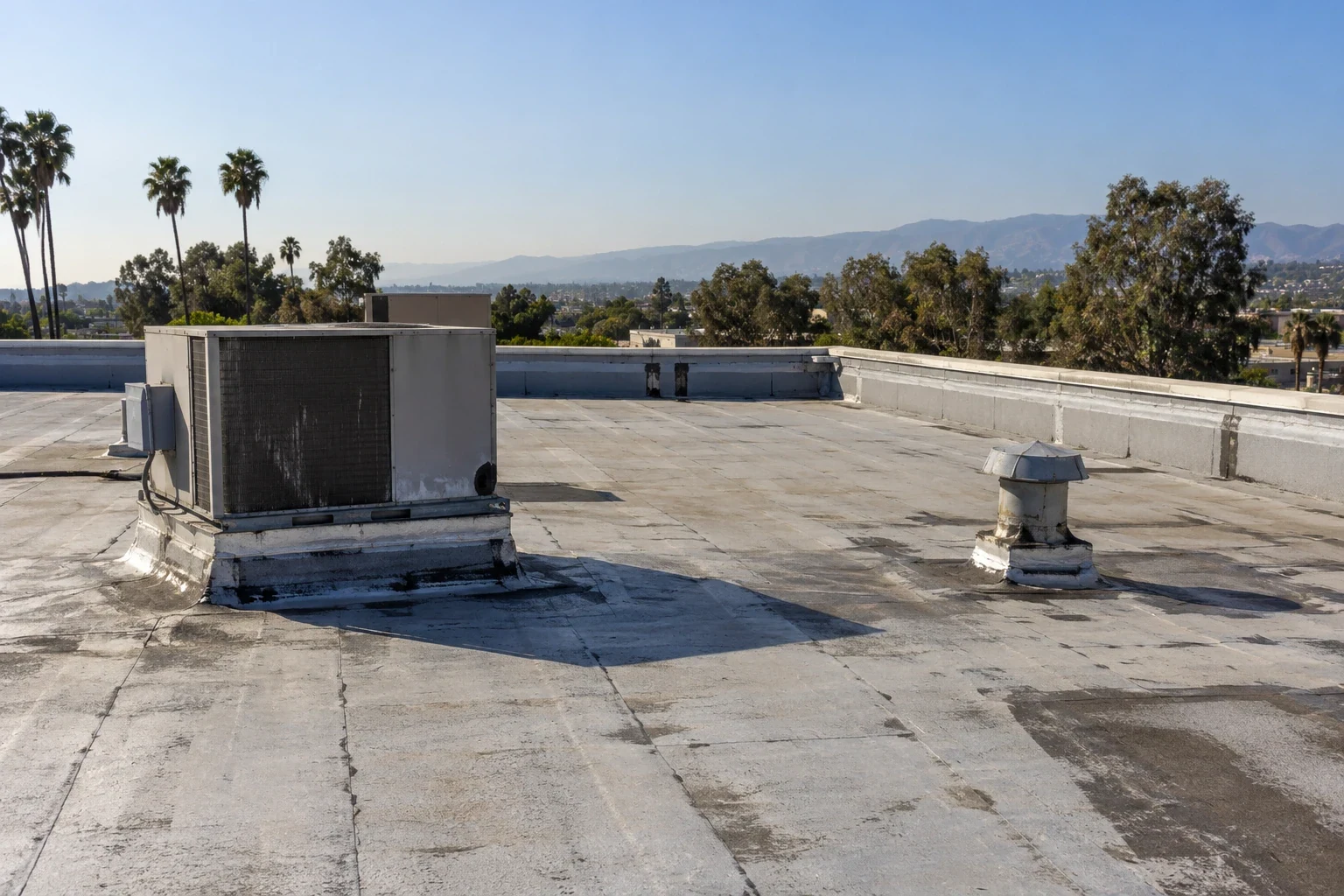
The spot where water lands inside is rarely right below the hole. On a large, low-slope roof, water can travel along the deck before it finds a seam in the deck to drip through. A commercial roof inspection starts above the wet area and works outward through seams, penetrations, wall flashing and nearby drains, with each finding photographed and marked on a roof plan. If a rooftop unit or a pipe is the cause, we pass that to the right contractor. Where the surface looks fine but we suspect hidden damage, we say so.
An infrared moisture survey can scan a big roof quickly and point to areas where insulation may be wet. Readings depend on weather and roof conditions, so we confirm suspect areas with small core cuts and patch them the same day. One core only tells you about that spot, so we take enough to map the wet area. Dock canopies get their own check, since their attachment to the main wall is a frequent leak point. The results let you approve the right next step with confidence.
Drains and wall details
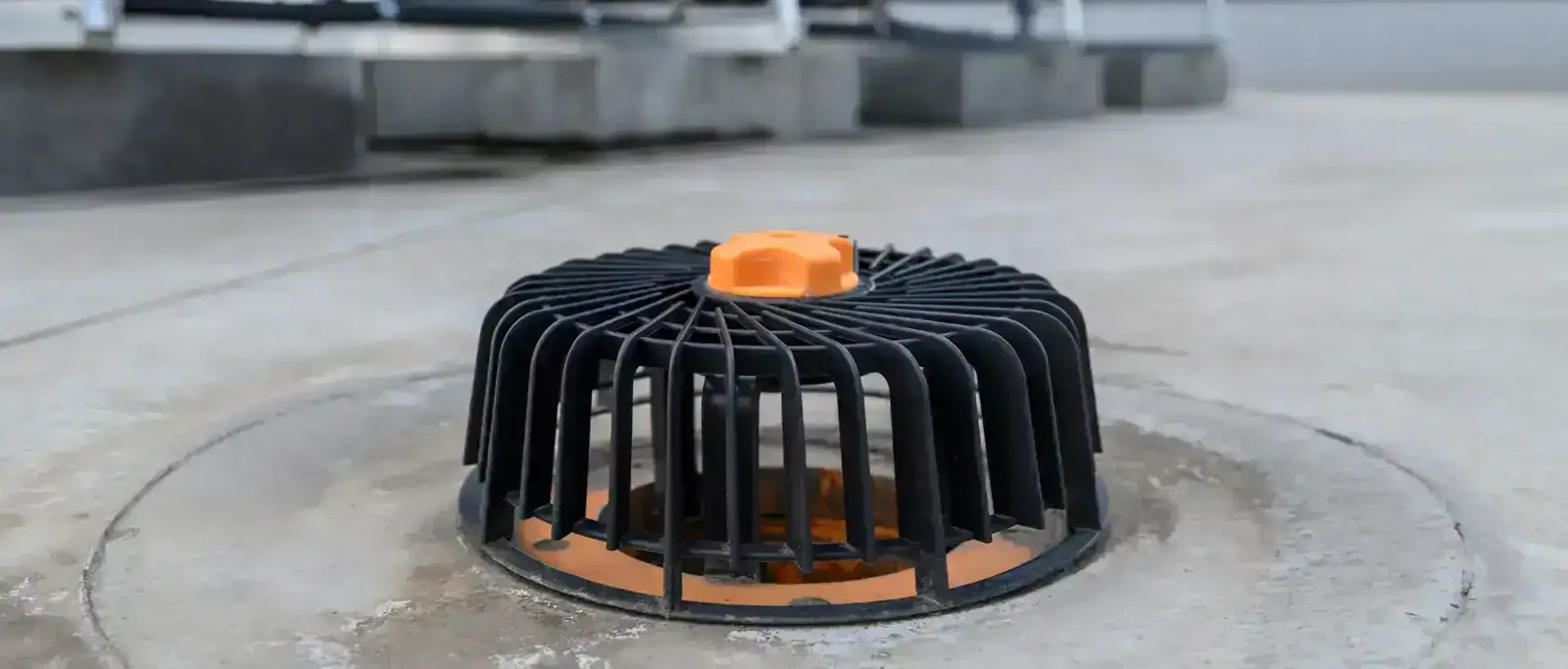
Interior drains carry a lot of water off a big roof, so clogged or damaged roof drains and scuppers cause many leaks. We check the drain flashing, the strainer and whether debris or ponding is building up. Sometimes cleaning is enough; other times the flashing needs replacement or a plumber needs to check the drain body and pipe. If the drainage layout itself needs to change, it gets designed properly first. The estimate lists our roofing work and any plumbing work separately so it is clear who does what.
Wall flashing on tilt-up and block walls is another common problem. New flashing needs solid backing behind it, so we check the wood nailers and the wall surface, and replace what is rotten or loose before fastening. The counterflashing at the top of the flashing matters as much as the seam at the bottom. If wall repairs are needed beyond roofing, we coordinate with the right contractor. When tear-off reveals more damage than expected, we photograph it and price it before going further, so the estimate always matches the real work.
Repair or replace
Before recommending a spot repair, we check the membrane and insulation around the problem. If the material is dry and well attached, a repair will hold. If insulation is wet or seams are failing across a wide area, more testing is needed to decide how much to remove. A coating can extend a sound roof's life but should never go over wet insulation. Comparing options means looking at the full scope, including tear-off, disposal, access and equipment coordination, which can change the price significantly.
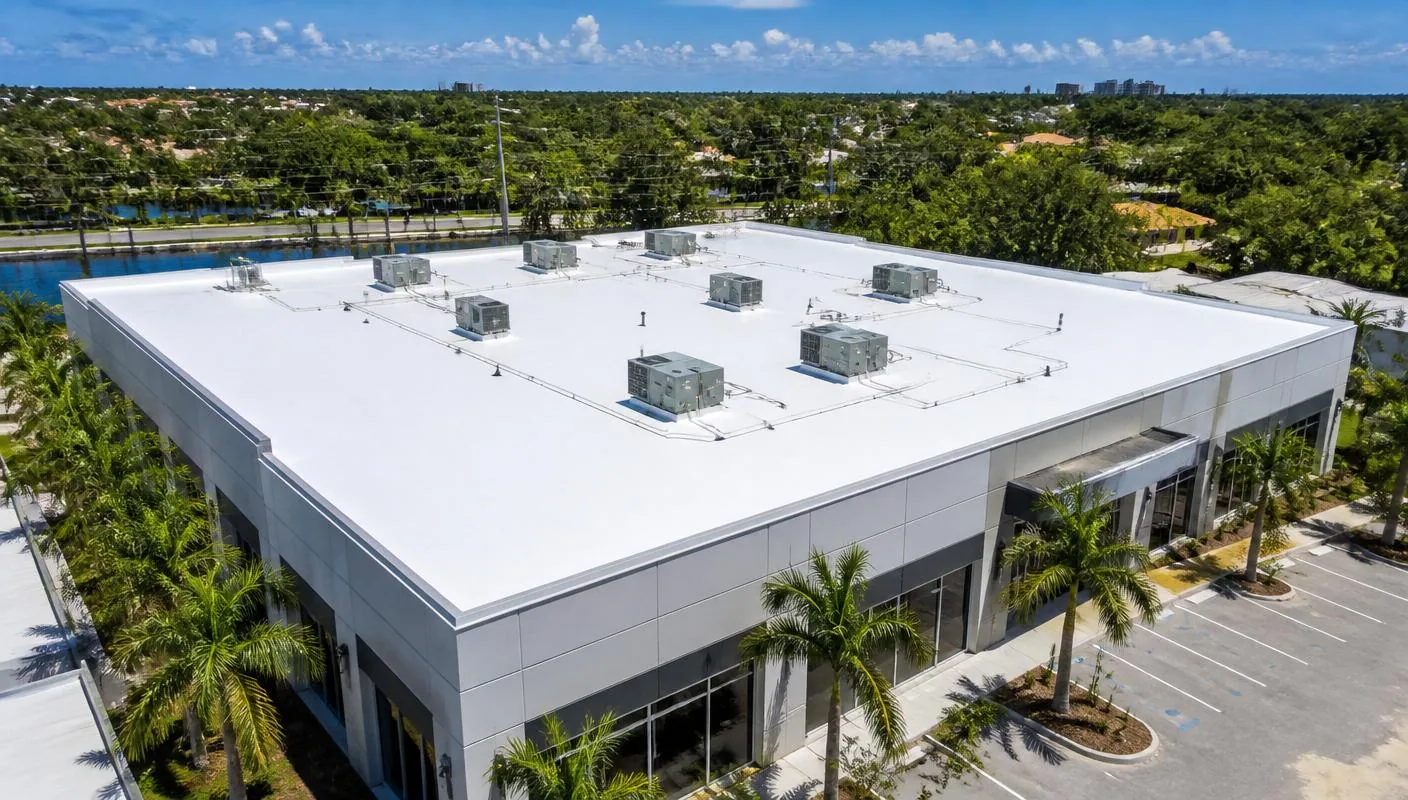
A phased commercial roof replacement lists the new insulation, cover board, attachment and membrane for each phase, along with what is being kept. A warehouse roof has similar logistics, and a cold storage roof adds temperature-control requirements on top. At a distribution center, the phase plan revolves around docks, racking and shipping. Each phase shows the prep work by other trades and the daily protection plan, so your team can plan the floor below.
Reports and maintenance
After a repair, you get photos and locations of the work, the material used and any test cuts we patched. Temporary patches are listed separately from permanent repairs. Any open items for HVAC, plumbing or wall contractors are listed with who owns them. Any special instructions from your facility team stay with the record for that phase. That way, the next person on the roof knows exactly what was done and what still needs attention, instead of guessing.
Regular maintenance can include clearing drains and checking seams, flashing and curbs. Each visit reports what was checked and what was repaired. If hidden damage might affect a future decision, we recommend further testing. Material and warranty information stays with the job records, and warranty questions are answered from the actual paperwork and terms. If water is coming in over product, call us any time, including night shifts, weekends and holidays. Your team arranges access and protects inventory below, and we stop the leak and explain the permanent fix.
Commercial Roofing Questions
How do you keep the distribution center running during roof work?
We plan each phase with your facility manager around docks, racking, forklift routes and product storage, keep equipment away from traffic, and seal each section before the crew leaves.
Can you tell where the roof leak is just from where water lands inside?
Not usually. Water travels along the deck before dripping. We inspect above the wet area and work outward, and use core cuts when we suspect hidden wet insulation.
When does a repair turn into a larger replacement?
When the insulation around the problem is wet or seams are failing across a wide area. We test to see how far the damage goes, then compare the full scope and cost of each option.
What records do we get after the work?
Photos and locations of repairs, patched test cuts, materials used, open items for other trades, and a clear split between temporary patches and permanent repairs.
Plan your distribution center roof work
Have your facility manager contact us to set up an inspection. We will review the findings, how work can fit around your operation, and repair or phased replacement options.
Request a Roof AssessmentAll Property Types We Roof