Home / Commercial Roofing Services / Commercial Roof Replacement
Commercial Roof Replacement in Chandler, AZ
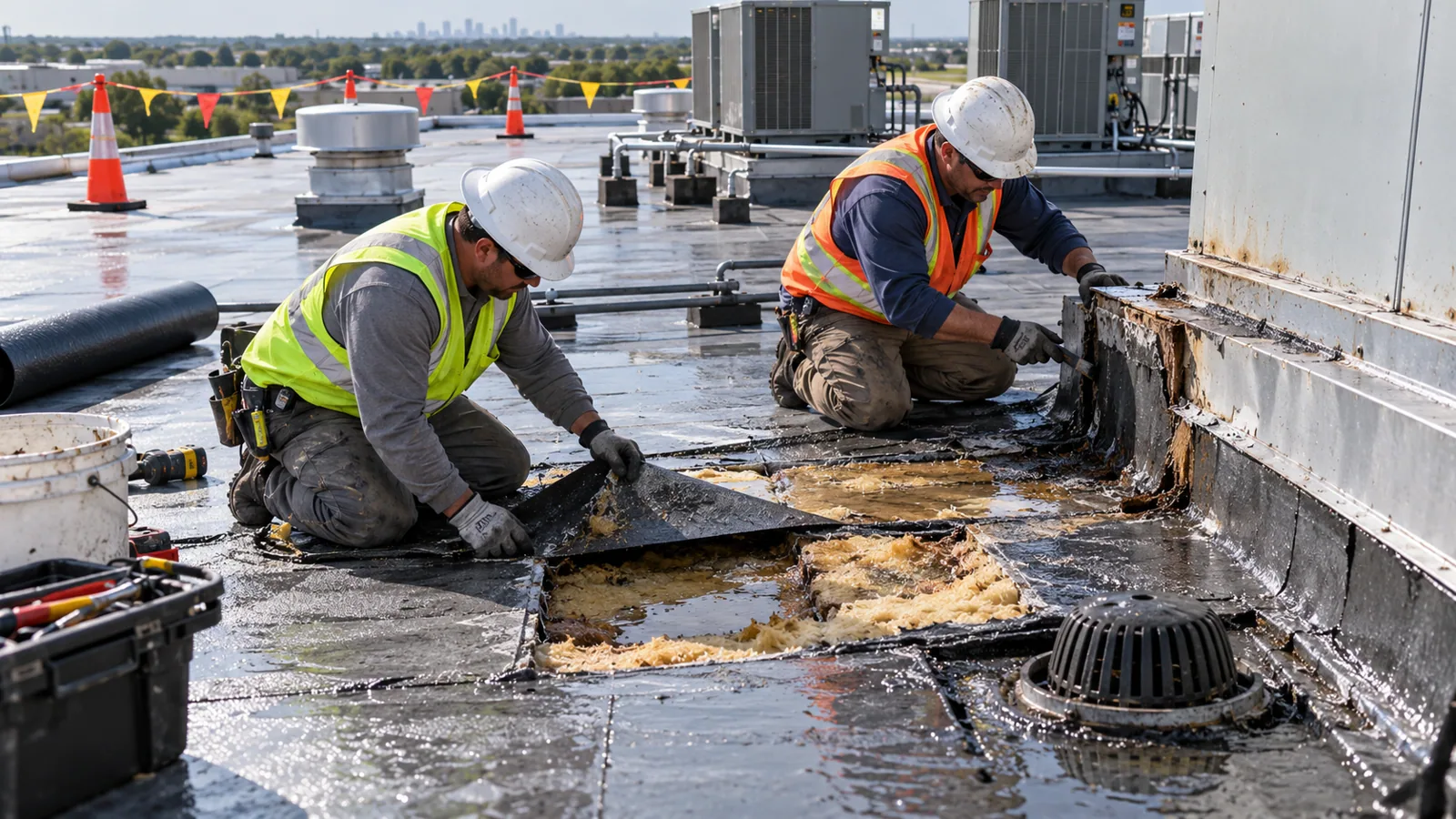
Commercial roof replacement in Chandler, AZ: clear tear-off limits, new insulation and membrane, phased work around operations and monsoon season, and a full.
A commercial roof replacement has to be planned before the first section is torn off. The facility manager tells us what the building needs, such as which operations can't be interrupted, which areas are sensitive to dust or noise and when work is allowed. Our inspection decides how much comes off and what goes back on. One part covers what the crew removes and installs; the other covers how that work fits around the building.
We replace roofs on manufacturing plants, warehouses, offices, retail centers and public buildings across Chandler, including the industrial and tech area around the Intel Ocotillo campus. Before pricing a replacement, we review whatever roof records you have and inspect the roof itself. We mark the areas to be removed and the walls, curbs and edges that tie into them. Any open question about the deck or rooftop equipment is listed separately, so the price is based on what we actually know.
Removal boundaries
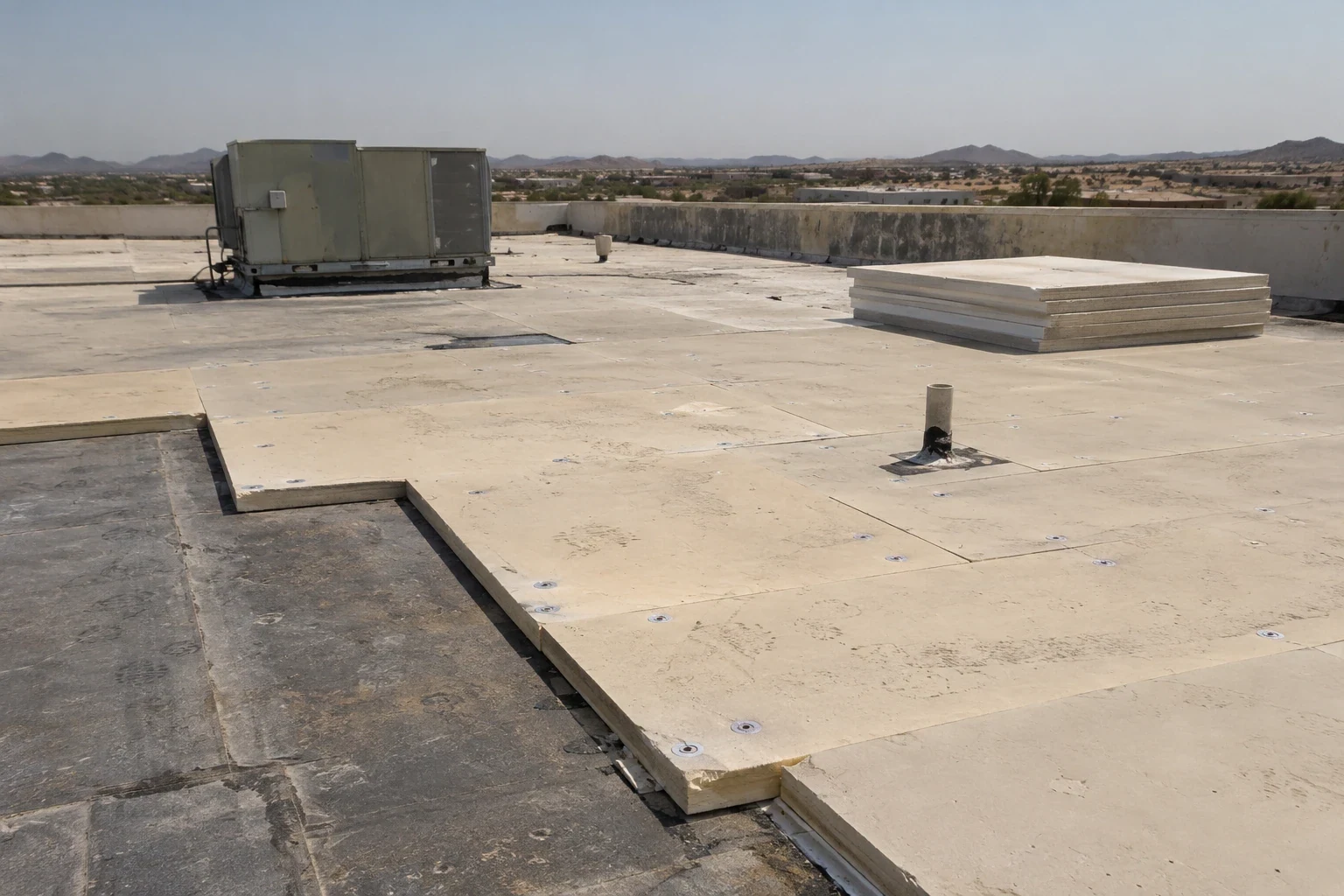
We start by confirming how many layers are on the roof and what's under them. Core cuts at several locations show the membrane, insulation, any older roofs underneath and the deck type. A roof outline on a drawing doesn't tell you what's hidden; test cuts do.
A commercial roof inspection before replacement separates what we've confirmed from what we're estimating. If we know the roof has two layers over a steel deck in most areas but haven't been able to check one section, the proposal says so.
When tear-off reveals something unexpected, like a rusted deck panel, wet insulation in a spot that tested dry or an old roof nobody knew about, we photograph it, mark the location and explain the fix before covering it up. You'll see the finding and the revised quantity, not just a change order.
Receiving construction
Once the old roof is off, the deck has to be ready for the new system. We check it for rust, rot, sagging and loose fasteners. Minor deck repairs are usually part of the roofing scope. Major structural problems, like a badly corroded steel deck or damaged joists, may need an engineer or another contractor, and we flag those clearly rather than burying them in the membrane price.
Above the deck, the new insulation and cover board set the roof's energy performance and give the membrane a solid, smooth surface. We specify the insulation type and thickness, how it's attached and whether a cover board is needed.
If part of the existing roof can stay, such as a sound layer of insulation, we explain why and what testing supports it. If we're not sure, we say what we'd need to check first. Each area of the roof is either ready for installation or waiting on a specific decision, and you can see which is.
Open-area sequence
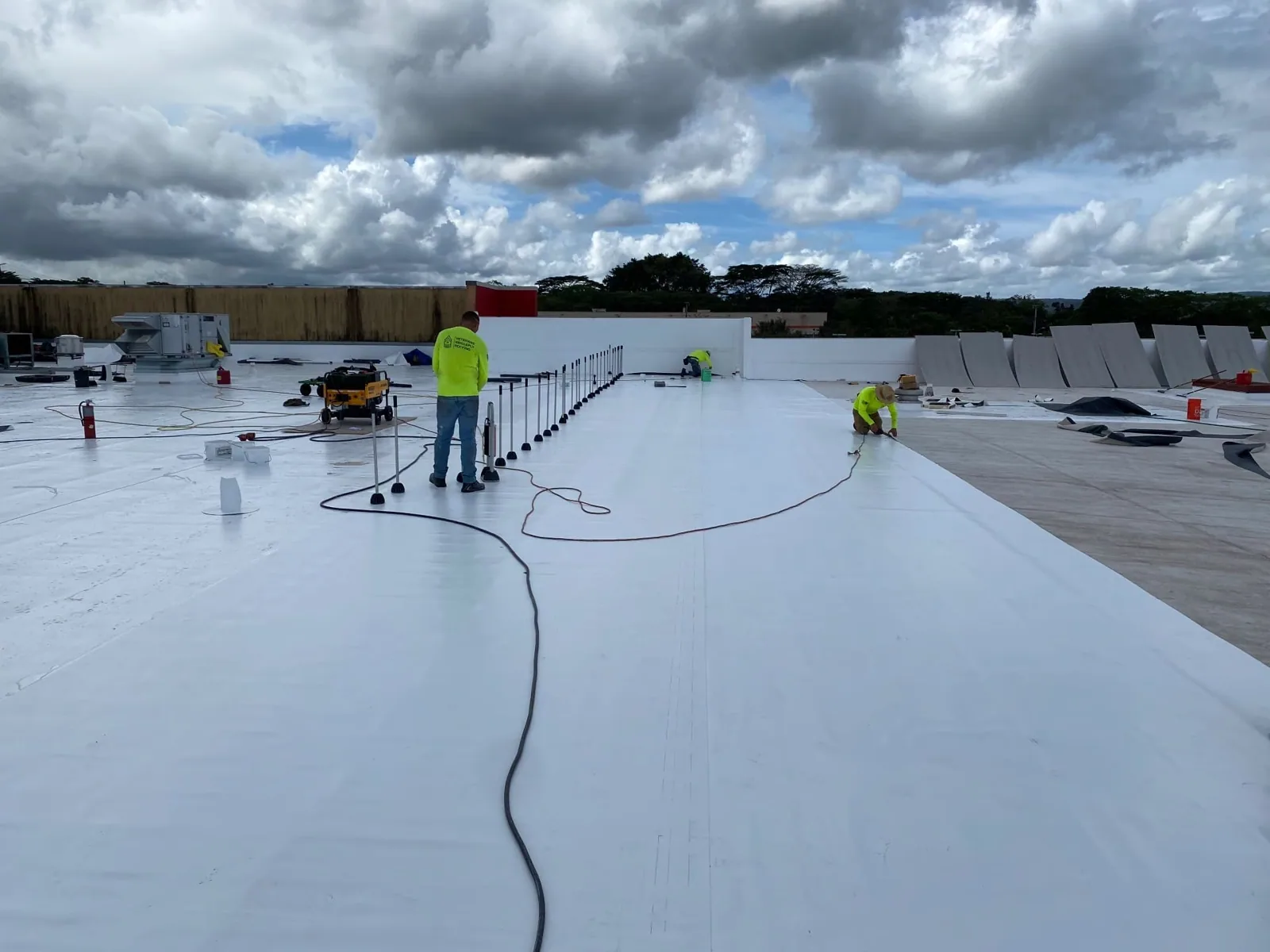
Replacement on an occupied building is usually done in sections. Each day, the crew tears off only what it can make watertight by the end of the day. Curbs, walls and edges in that section get new flashing before the crew moves on. If a rooftop unit has to be lifted or a curb rebuilt, that's scheduled before the section is opened, not discovered halfway through.
In Arizona, the National Weather Service defines monsoon season as June 15 through September 30. Afternoon storms and dust can build quickly during those months, so a summer replacement plan needs a clear process for stopping work, sealing open areas and deciding when to resume. We agree on who makes that call before the job starts.
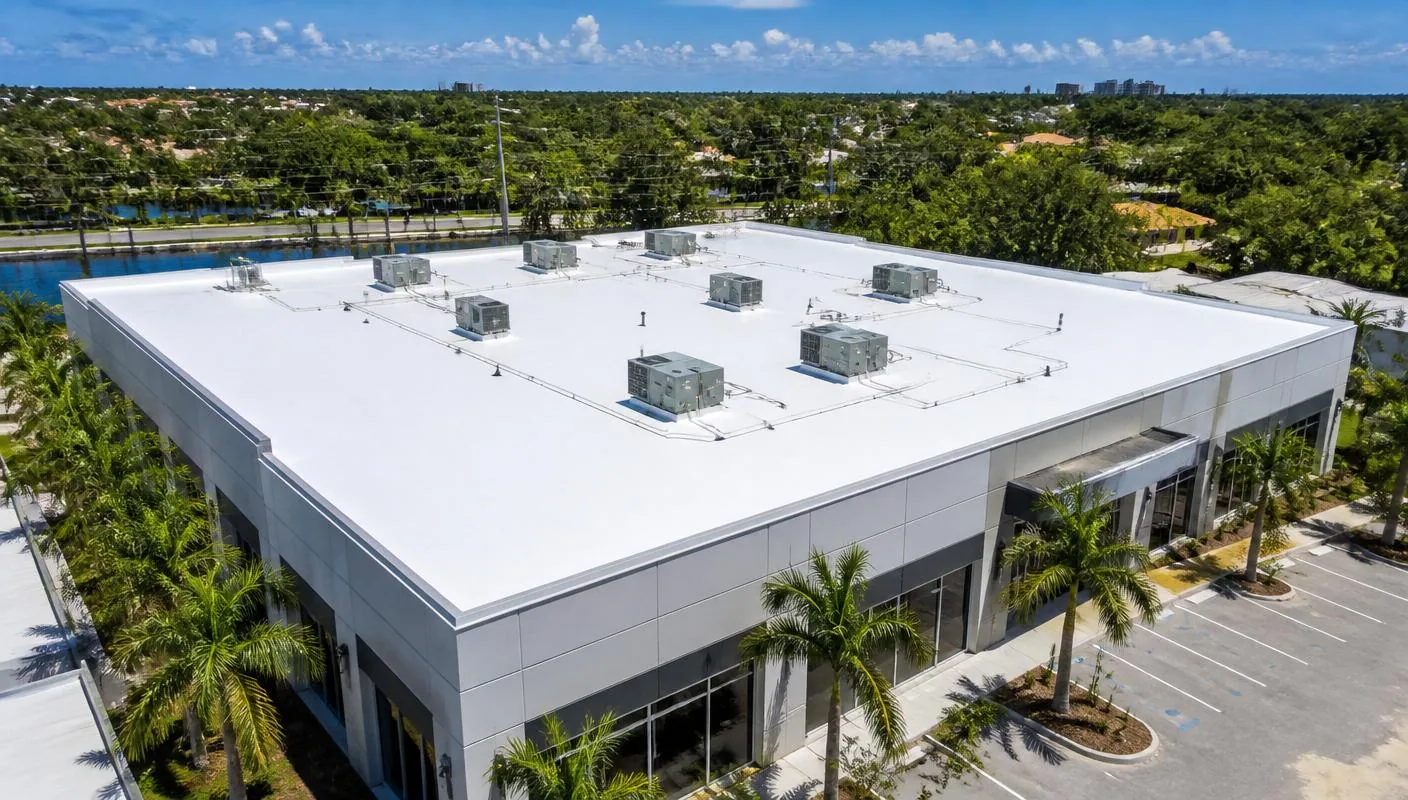
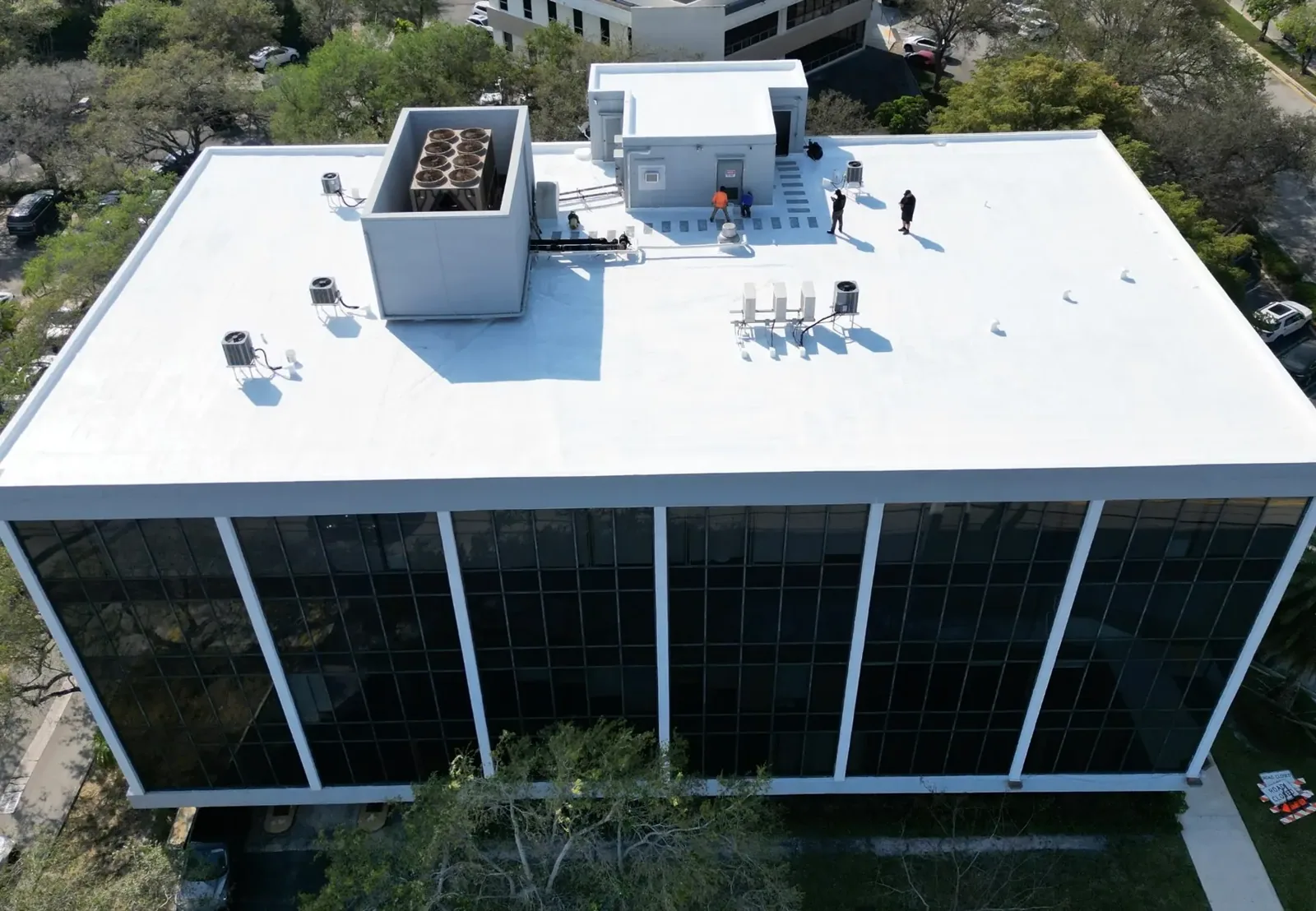
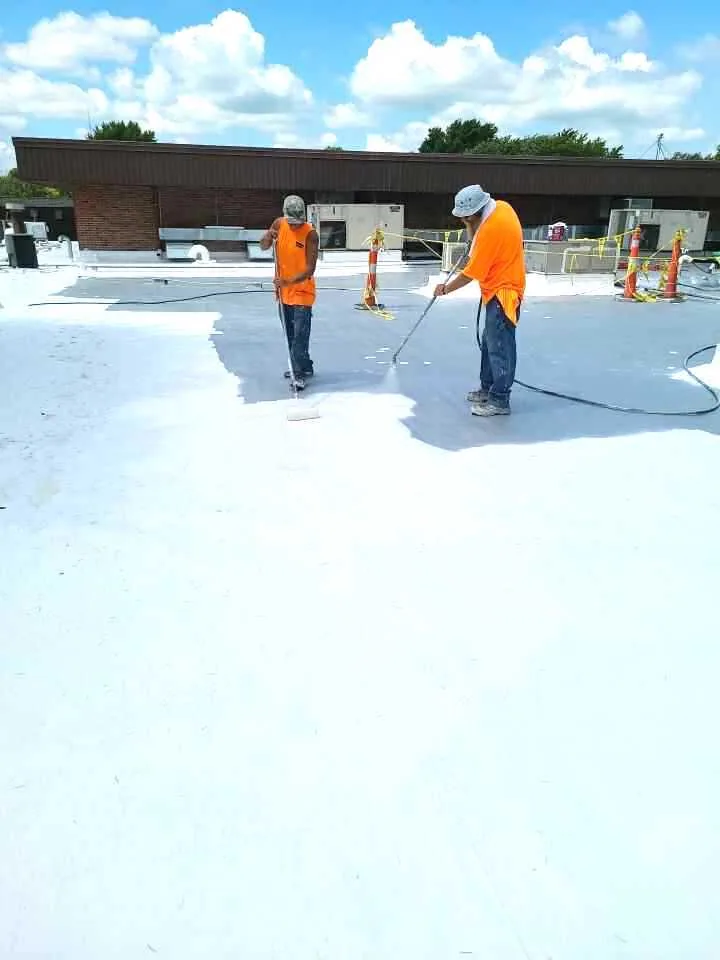
A TPO roof replacement is a common choice in Chandler because the white membrane reflects heat and the seams are heat-welded. Whatever system you choose, its installation requirements are followed section by section, and we spell out how each area will be closed up before the next one is opened.
Building coordination
Before scheduling, we walk the site with the building contact. We identify where materials will be delivered, where the dumpster or debris chute will go and how the crew will get on and off the roof. If rooftop equipment needs to be disconnected or moved, we coordinate with the mechanical contractor.
Sometimes full replacement isn't the only option. A roof recover installs a new roof over the existing one, avoiding most of the tear-off. It only works if the existing roof is dry and there's only one layer in place. We compare recover and replacement side by side, including the work each one requires.
Keep in mind that a recover still involves real work: new flashings, edge metal, curb adjustments and sometimes partial tear-off of wet areas. It's not just a membrane laid over the top, and the proposal should show.
Perimeter and equipment details
New insulation often raises the roof surface. That changes how it meets walls, curbs, edges, drains and doors. Curbs may need to be raised so flashing reaches the proper height. Edge metal and coping may need to be replaced or extended. Drains may need extensions or new bowls. We check every detail against the new roof height before pricing.
A PVC roof is another option, especially where grease, chemicals or process exhaust are present. Like any system, it has its own installation requirements for flashings and seams. We compare membrane options against the same inspection findings, so you're comparing materials, not different assumptions.
If a product substitution changes how a detail is built, we spell out the new detail. A different membrane name on a proposal should come with the installation details that go with it.
Completed replacement record
We photograph each stage of the work before it's covered: the deck after tear-off, any deck repairs, the new insulation and the flashings before membrane goes over them. The final record lists the products installed in each area, how they were attached and any changes made along the way, with the photos that explain them.
For facilities like those around the Intel Ocotillo campus, where equipment changes over time, that record is valuable for years. When a new unit is installed, a curb is added or a leak shows up, the next contractor can see exactly how the roof was built. Questions about rooftop equipment that were outside our scope are listed separately.
A photo of the finished roof is nice, but the photos of what's underneath are what tell you what the replacement actually changed.
Commercial Roofing Questions
How do you decide how much of the roof comes off?
Core cuts and inspection show how many layers exist and what's under them. Where we couldn't check, the proposal says so before the quantity is final.
What should the facility manager prepare before tear-off starts?
The building's work-hour limits, restricted areas, sensitive spaces below the roof and any equipment that needs to be moved, so we can plan the sections around them.
Does the new membrane price include deck repair?
Minor deck repairs are usually listed separately in the roofing scope. Major structural problems are flagged for an engineer or other contractor, not hidden in the membrane price.
What changes when new insulation raises the roof?
Curbs, walls, edges, drains and doorways all need to be checked. Curbs may be raised, edge metal replaced and drains extended so flashing reaches the right height.
How will I know why a quantity changed during the job?
We photograph the finding, mark its location and explain the revised work and cost before covering it. That record stays with the installed materials list.
Plan your roof replacement
Send us the building address and any roof records you have. We'll inspect the roof, define what comes off and what goes on, and plan the work around your building's requirements.
Request a Roof AssessmentAll Commercial Roofing Services