Home / Commercial Roofing Services / Emergency Roof Repair
Emergency Roof Repair in Chandler, AZ
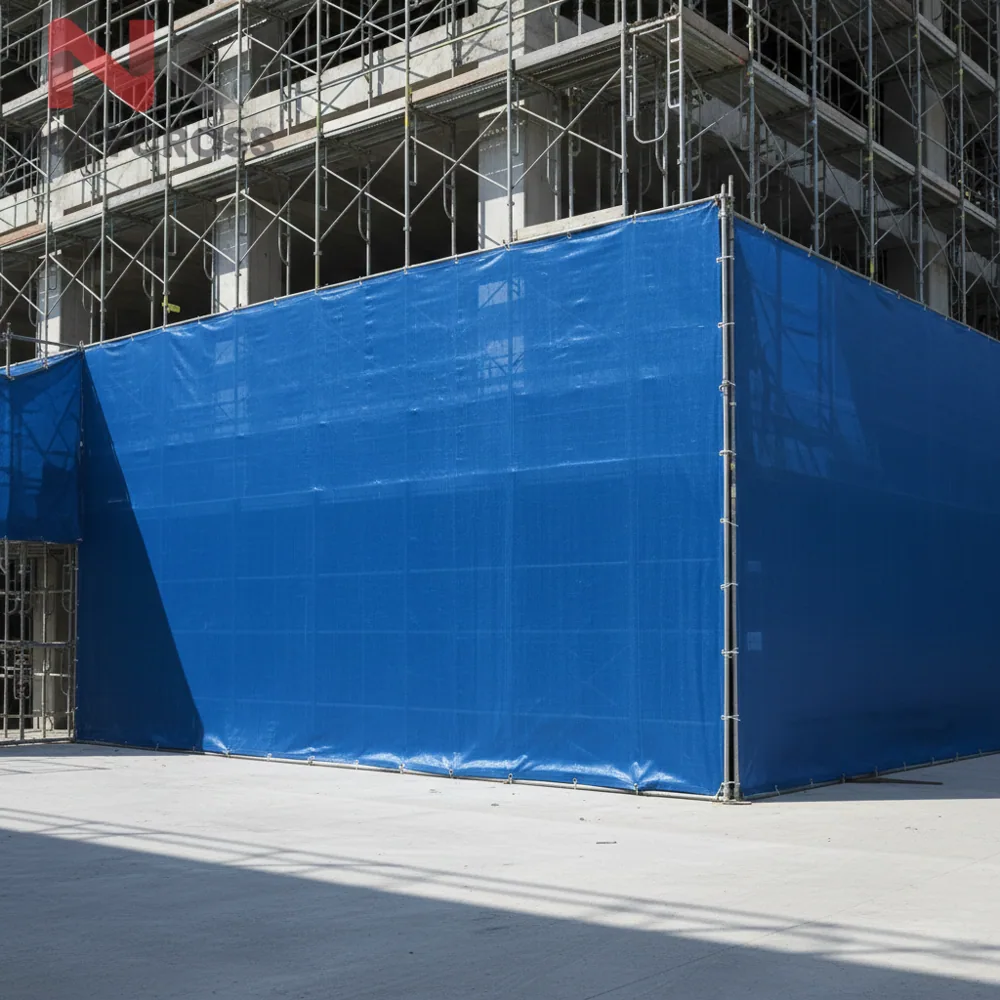
Emergency roof repair in Chandler, AZ: fast response to active leaks and storm damage, temporary protection that's clearly documented, and a plan for the permanent repair.
When water is coming into an occupied building, such as a medical office, the first call needs to be quick and specific. Tell us where the water is, what staff can see and who our contact will be. We'll ask about roof access and anything inside that needs protecting, and we'll consider the weather and roof conditions before sending a crew up. We won't promise a permanent fix before we've seen the damage. The first goal is to stop the water and understand what's going on.
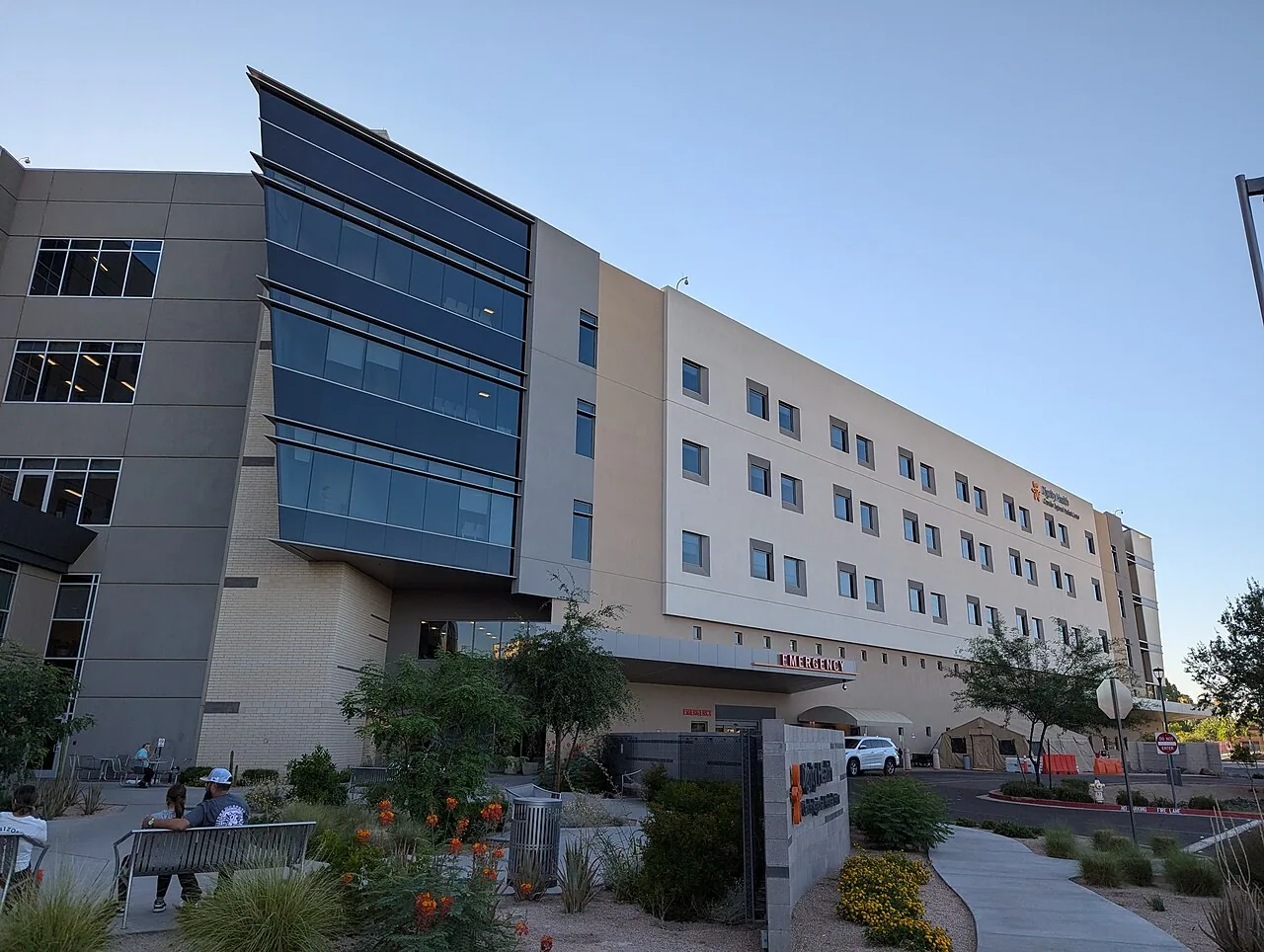
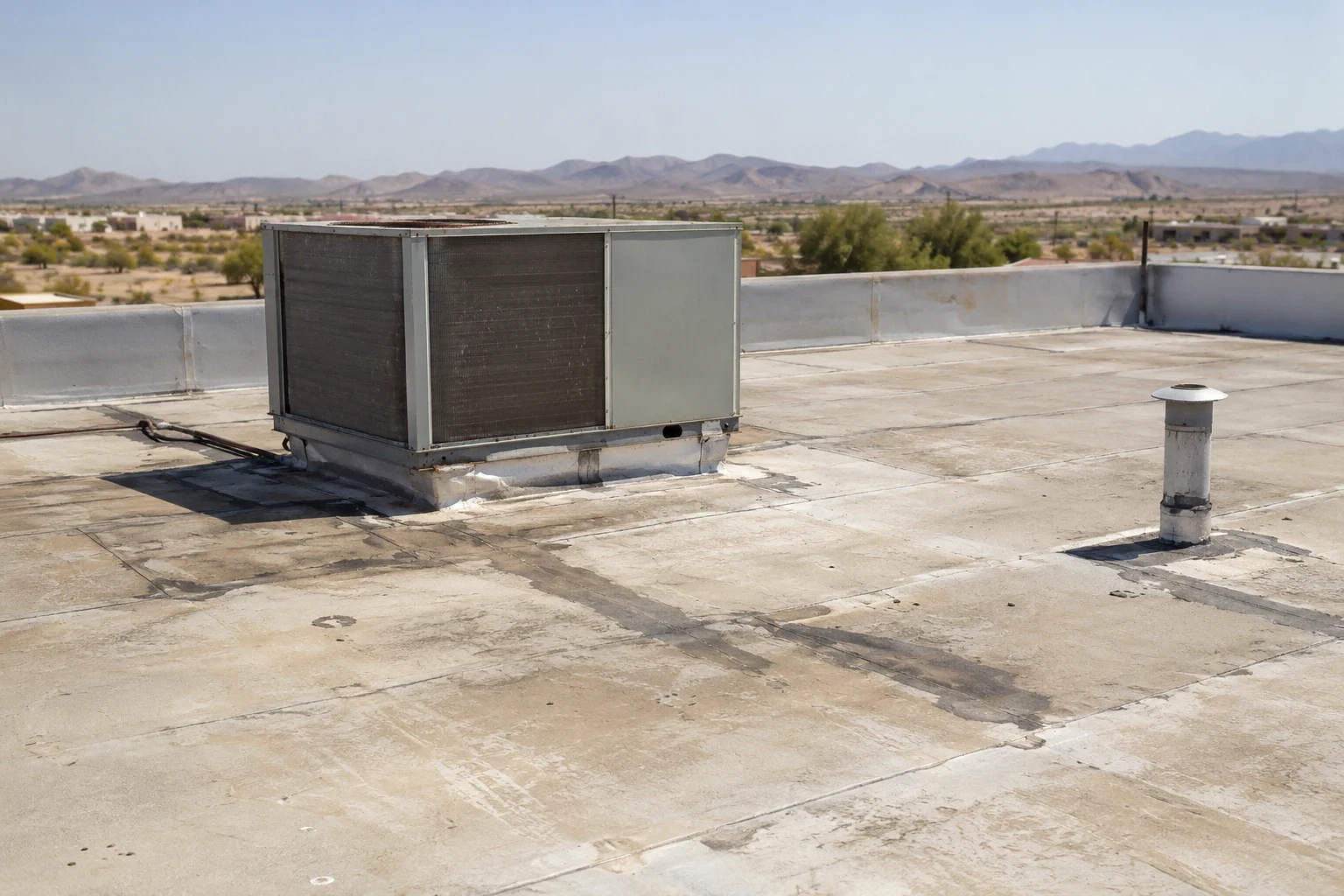
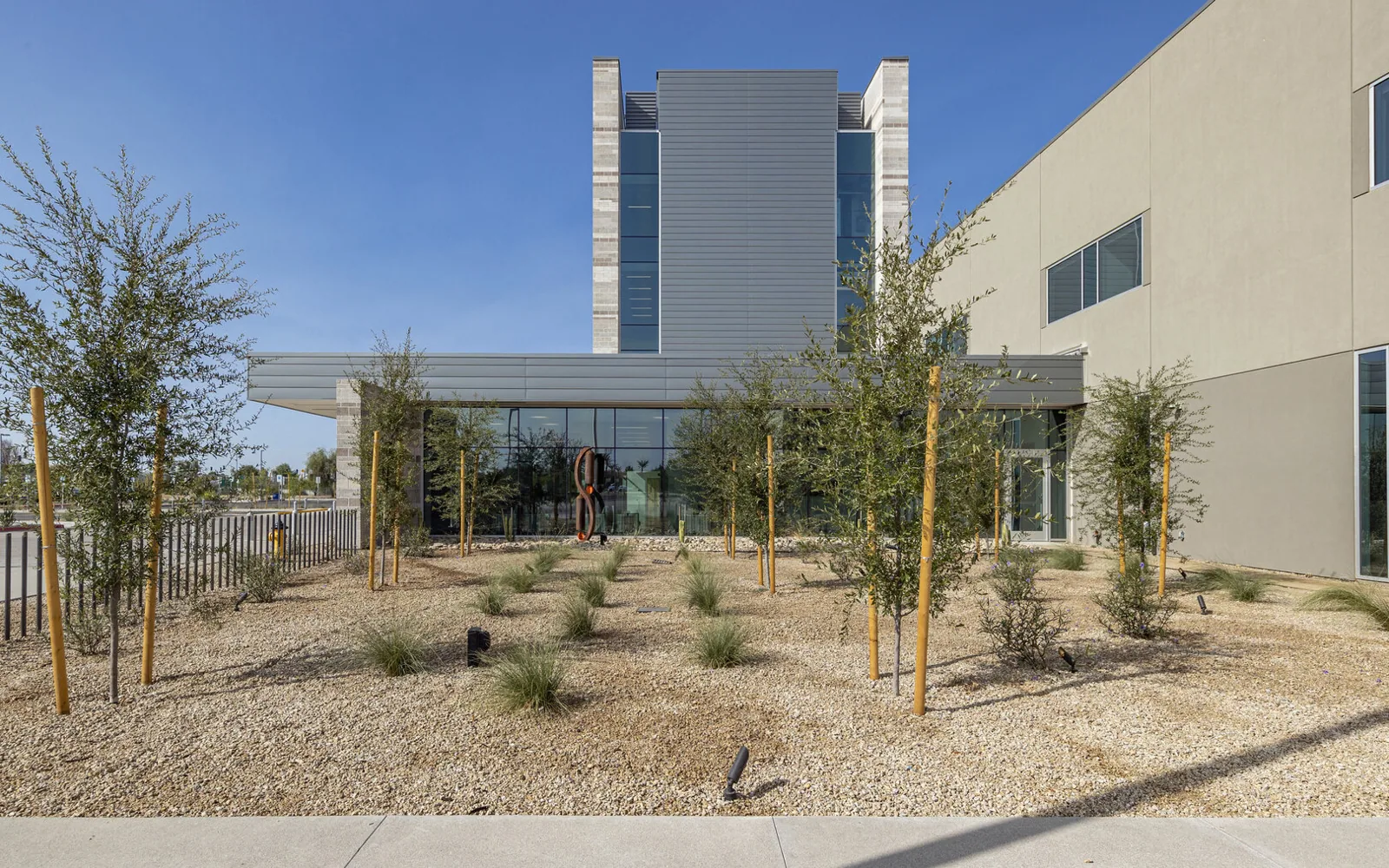
We respond to emergency leaks at medical offices, retail centers, warehouses and other commercial buildings across Chandler, including the area around Banner Ocotillo Medical Center on South Alma School Road. When we arrive, we inspect the reported area and any visible damage, then separate what we can protect right away from what needs a permanent repair later. If an area can't be addressed on the first visit, we tell the building contact plainly so they know where things stand.
Initial report
We start with the location. Where is water coming in, and is it still active? Is there visible damage on the roof, like a torn membrane or missing edge metal? Staff often see water inside without knowing where it's getting in, and that's fine. We just need to know where to start.
For urgent leak repair, we confirm who our site contact is, how to get onto the roof and which areas we're allowed to inspect. If something prevents us from inspecting fully, such as darkness, lightning or a locked roof hatch, we note it.
The building manager gets a clear picture of what we found and what we couldn't check. An emergency call isn't the time to guess at a full repair price. That comes after we've seen the damage and know what's underneath.
Immediate protection responsibilities
Inside the building, the property manager or facility staff decide how to protect the space: moving people and equipment, covering furniture or setting containment. We'll recommend what makes sense based on where the water is coming in. If water is near electrical equipment, the building's electrician or facilities team should handle that before anyone works nearby.
For healthcare buildings, there are often specific rules for contractors, such as infection control, restricted areas and patient privacy. We ask for those rules before we start and follow them. Every facility is different, so we don't assume one building's rules apply to another.
We also confirm the route to the roof and where we can stage materials. If something inside the building has to happen before roof work can begin, we wait for the facility to confirm it's done.
Roof-work conditions
We check the weather, the roof surface and the type of damage before starting temporary work. Lightning, high wind or a wet, slippery roof can make it unsafe to work immediately. If that's the case, we tell you and plan to return as soon as conditions allow. In the meantime, we can recommend interior protection.
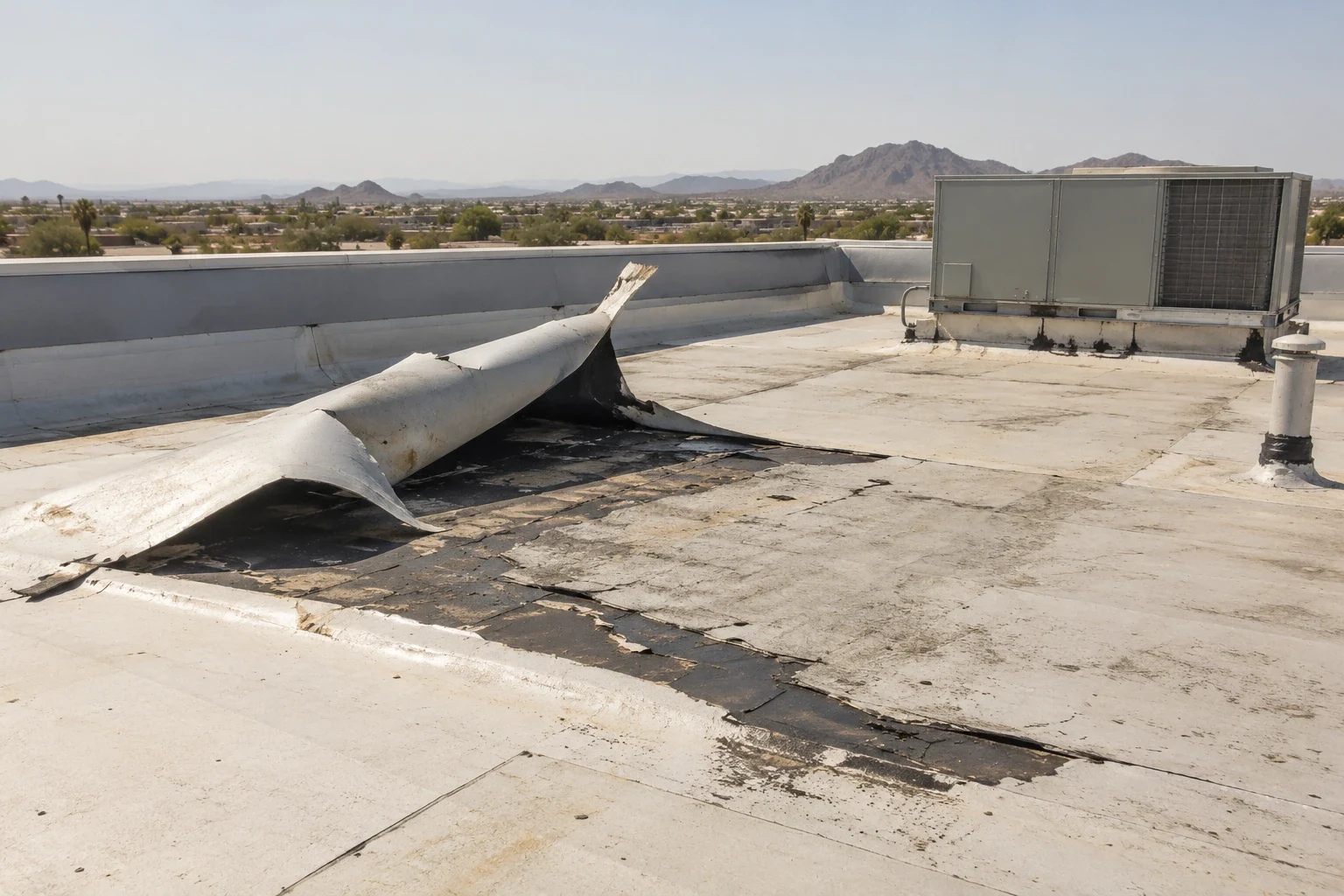
In Arizona, the National Weather Service defines monsoon season as June 15 through September 30. Storms during those months can bring heavy rain, wind and dust with little warning, and many emergency calls come in during that window. For a wind damage repair, we look at lifted membrane, displaced edge metal and debris on the roof, and plan the temporary fix around what we see.
If we can't complete temporary work on the first visit, we explain why and tell the contact exactly which areas remain exposed. A pause isn't the same as a repair, and we make sure nobody confuses the two.
Temporary repair boundary
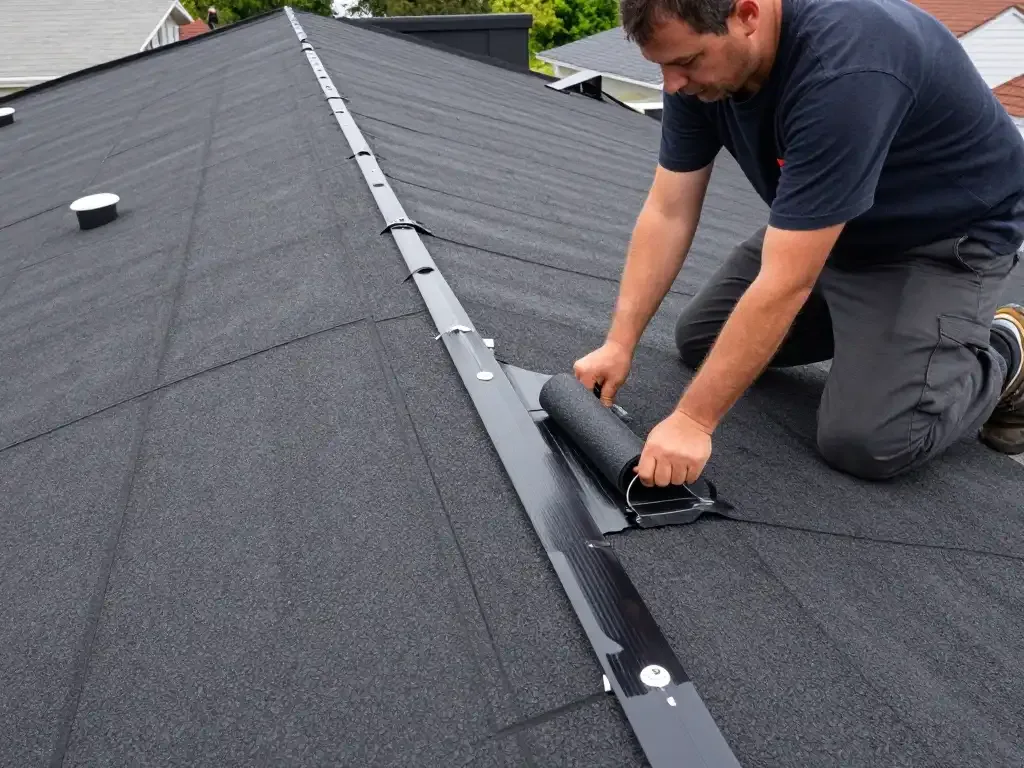
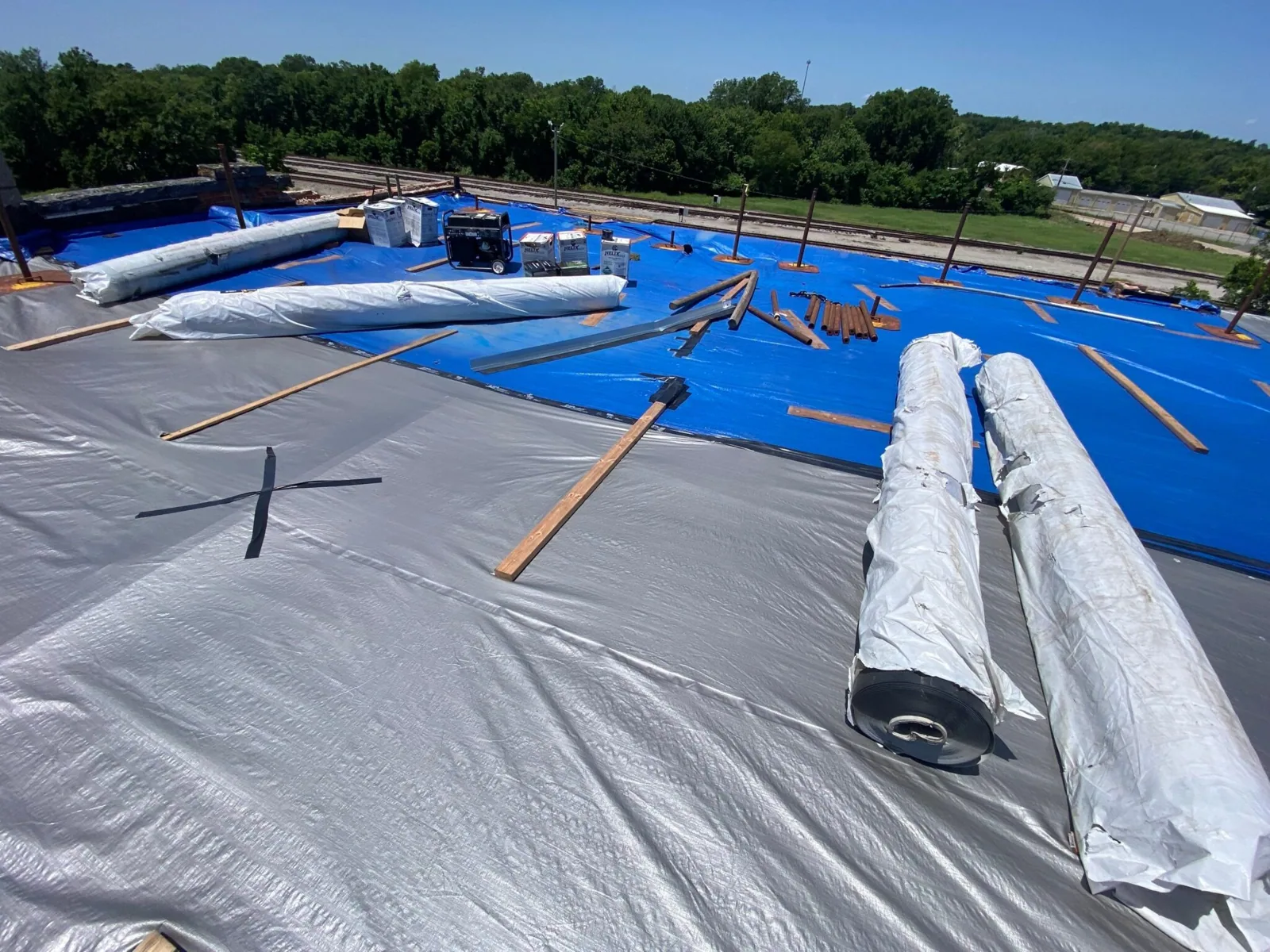
Temporary repairs are meant to stop water until a permanent fix can be made. That might mean sealing a seam, covering a puncture, installing a temporary membrane patch or tarping a damaged area. We choose the method based on the roof type, the damage and the conditions. Each temporary repair has a specific location and purpose.
For storm damage, temporary work often comes first, followed by an inspection to find everything the storm affected. We record what materials we installed and where, and we tell you what follow-up the temporary repair needs.
We don't promise a temporary repair will last a set amount of time. That depends on the method, the weather and the roof. What we do promise is a clear explanation of what was done, what it covers and what still needs to happen.
Unresolved exposure and handoff
Some areas may still be exposed after the first visit, either because we couldn't reach them, conditions didn't allow it or the damage was more extensive than expected. We identify those areas using the same reference as the rest of the report, and we tell the building contact before we leave.
The permanent repair proposal comes next. If we're not sure yet how much material needs to be removed, the proposal says so. Any work another trade needs to do, such as repairing a rooftop unit or a wall, is listed with who's responsible.
The temporary crew's notes go straight into the permanent repair plan. The facility contact knows what's been done, what's still open and what happens next, so they can schedule the follow-up inspection or other contractors without starting over.
Permanent-work record
We photograph the damage before and after temporary work. When the permanent repair is done, those photos, plus any new findings, become part of the job record. If we find hidden damage, like wet insulation or a rotted deck, the permanent repair is based on what we actually find, not just a bigger version of the temporary patch.
For properties near Banner Ocotillo, the record shows the full story: the initial report, the temporary work, what was found once the roof was opened and the permanent repair. The next crew can see exactly what was done and where.
That record is useful long after the emergency is over. It helps with insurance claims, maintenance planning and any future leak calls, and lets the facility manager review the whole job from the first call to the final repair.
Commercial Roofing Questions
What should we tell you when we call about an emergency leak?
Where water is coming in, whether it's still active, what you can see, who our site contact is and how we get onto the roof.
Who decides how to protect the inside of the building?
Your property manager or facility staff. We'll recommend what makes sense, but your team handles electrical equipment and any building-specific rules.
Can the same temporary fix be used for every leak?
No. The method depends on the roof type, the damage and the conditions. We choose what will work for that spot and explain what it covers.
What happens if some areas are still exposed after the first visit?
We tell the building contact exactly where they are, why they weren't addressed and what needs to happen next, before we leave.
Does the temporary repair decide the permanent fix?
No. The permanent repair is based on a full inspection of the damage, including anything hidden under the roof surface, not just the temporary patch.
Call us about a roof emergency
Tell us where the water is coming in and who our contact on site is. We'll respond, protect the roof and give you a clear plan for the permanent repair.
Request a Roof AssessmentAll Commercial Roofing Services