Home / Service Areas / Chandler Airpark Area
Commercial Roof Repair in the Chandler Airpark Area
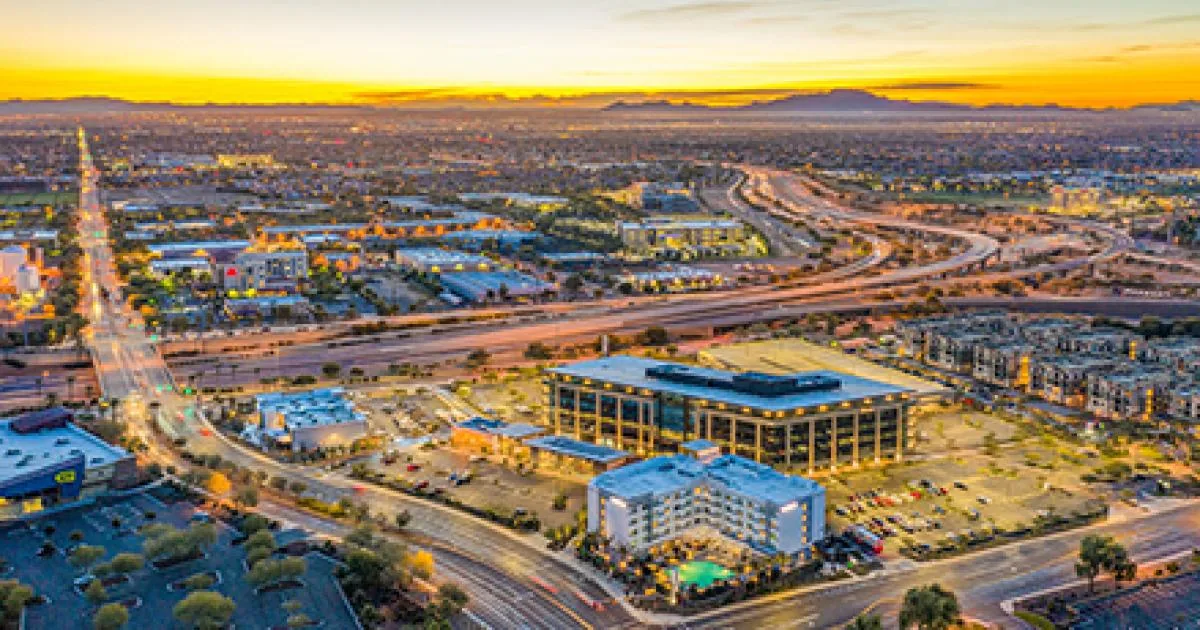
Commercial roof repair in the Chandler Airpark area: hangars, metal panels and flat membrane roofs, with work planned around hangar doors, deliveries and tenant operations.
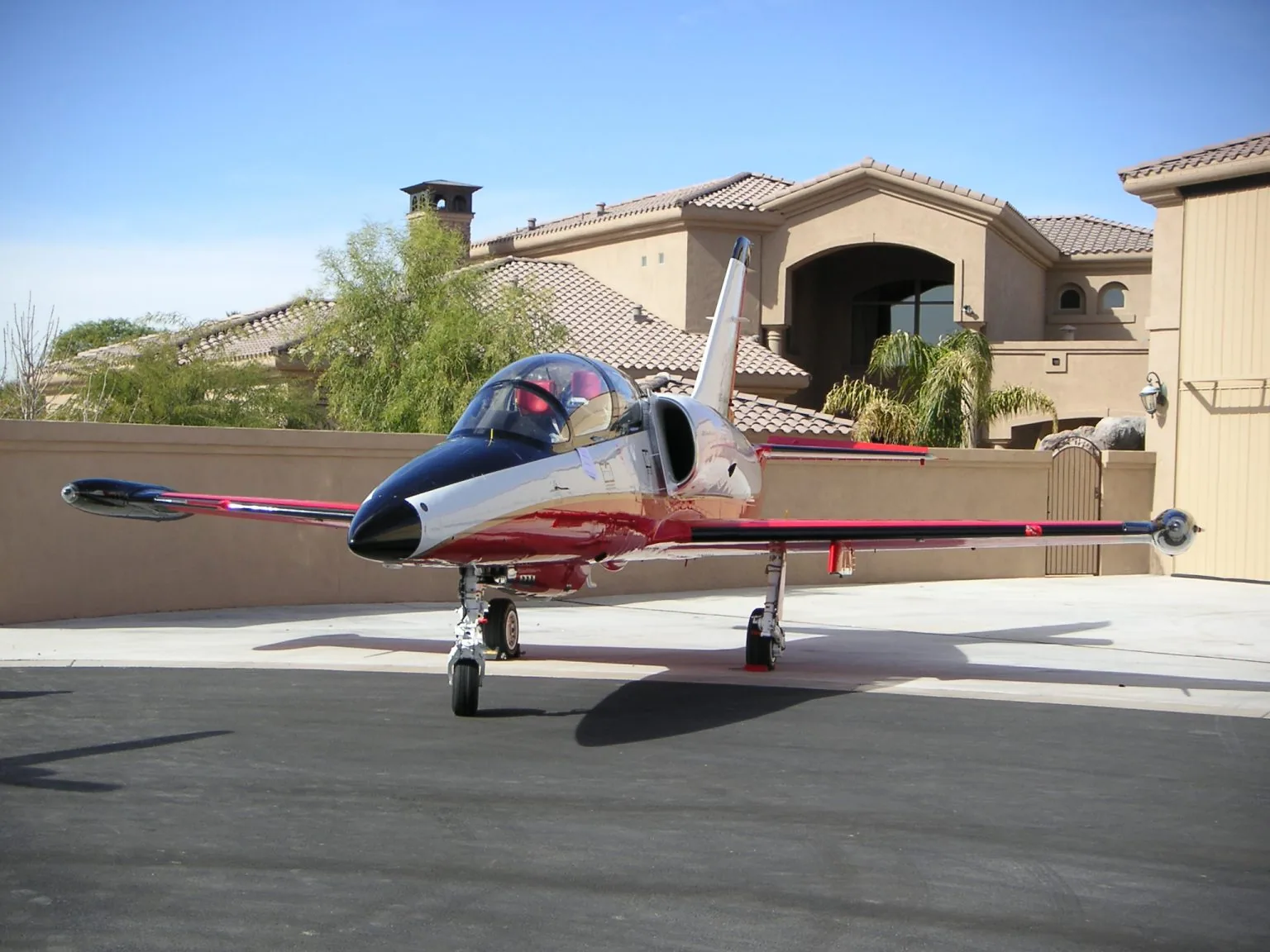
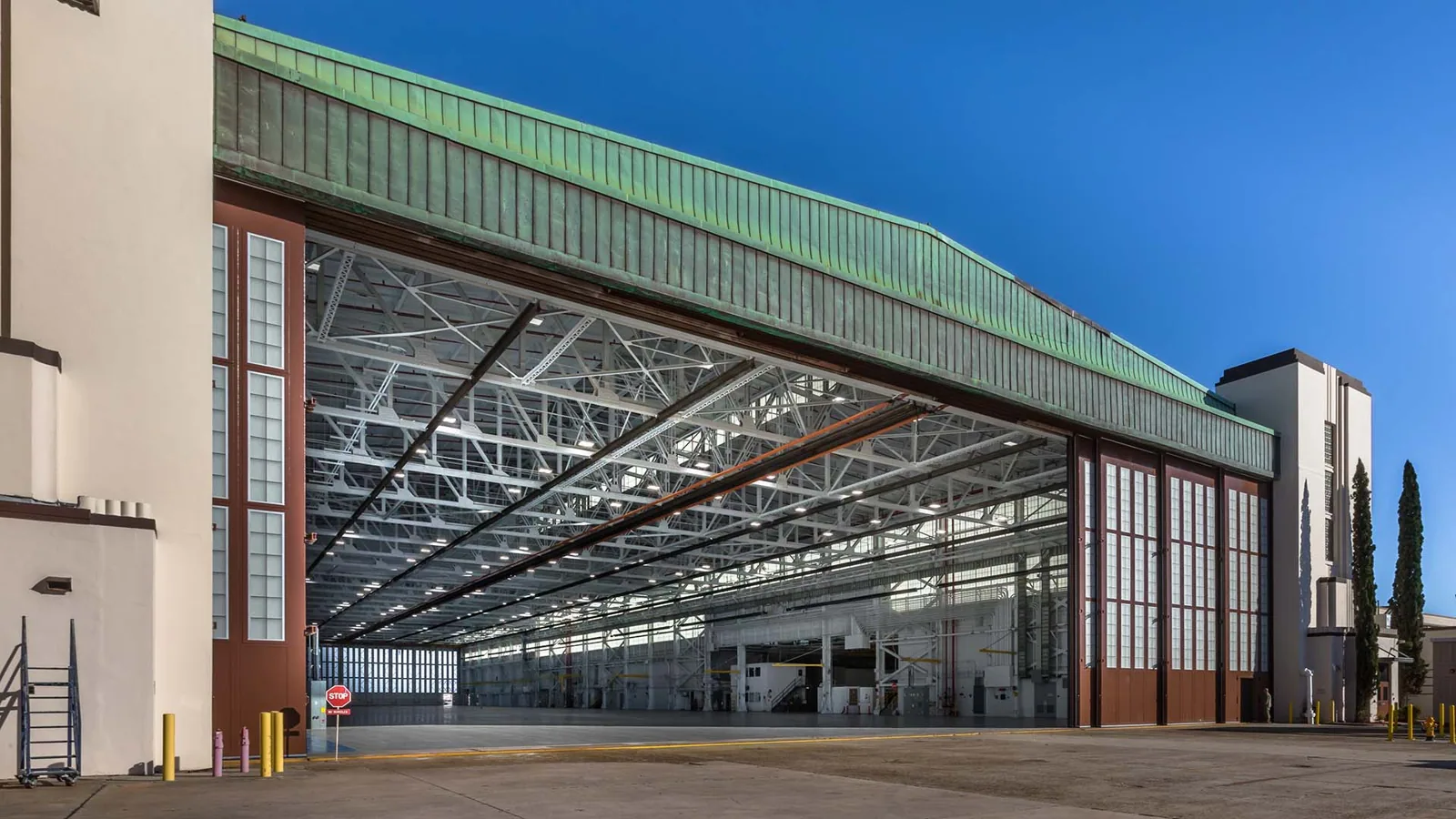
Hangar and business-park roofs around the Chandler Airpark come with a schedule that isn't ours. Aircraft move, hangar doors open and close, and tenants need their loading areas clear. Before we put a crew on a roof here, we sit down with the operator or property manager and work out where the truck can park, where materials can be staged and which doors or equipment must stay usable. A small panel repair might need one pallet and a ladder. A full tear-off needs a dumpster, a lift and a lot more room, so we talk through that difference before anyone picks a date.
The Airpark grew up around Chandler Municipal Airport and includes a mix of hangars and business parks. We also work at Stellar Airpark and on industrial and flex buildings in West Chandler, and each property gets its own inspection. You get a plain explanation of what failed, what the permanent fix is, and any question we still need answered.
Operator movement and work area
Most of the planning on an airpark job is about the ground, not the roof. We need to know where a delivery truck can stop without blocking a taxiway or a neighbour's hangar, where tear-off debris can go, and whether a lift can be set up without crowding aircraft or parked vehicles. We mark the repair area on a photo or roof sketch so the operator can see exactly where the crew will be working and which spaces sit underneath it.
For hangar roofing, we also ask who should get our notices, whether noise or dust is a problem for anything going on inside, and whether certain hours are off limits. A maintenance shop with open engines below has different concerns than a storage hangar. Those rules get written into the work plan for that building only; a different hangar on the same field gets its own conversation.
If the roof needs more than a repair, the job footprint grows. Replacement brings more deliveries, more debris and a longer stay on site. We lay out both options side by side so the operator can see what each one means for daily operations, and we flag any access question we still can't answer.
Metal panels and connections
Many hangars and shop buildings here have metal roofs, and metal leaks usually start at the same handful of places: lapped panel seams, loose or backed-out fasteners, worn washers, ridge and eave trim, and the flashing around vents, skylights and curbs. We walk the roof, find what actually failed and check the panels around it. A loose fastener or split seam needs that part fixed or replaced. Painting a coating over a missing fastener or a torn panel doesn't solve anything, so we don't propose it.
On a standing seam metal roof, we first confirm what panel profile and clip system is up there, because replacement parts and sealants have to match. We look for earlier repairs around penetrations and patched panels, since old caulk-and-tar fixes often hide the real problem.
Where a pipe, exhaust fan or rooftop unit comes through the roof, the flashing gets its own inspection. Sometimes the equipment has to be reset or repaired by the mechanical contractor before we can flash it properly. When that happens, we tell the operator who needs to do what, and in which order, so the opening isn't left half-finished.
Membrane details and reported water
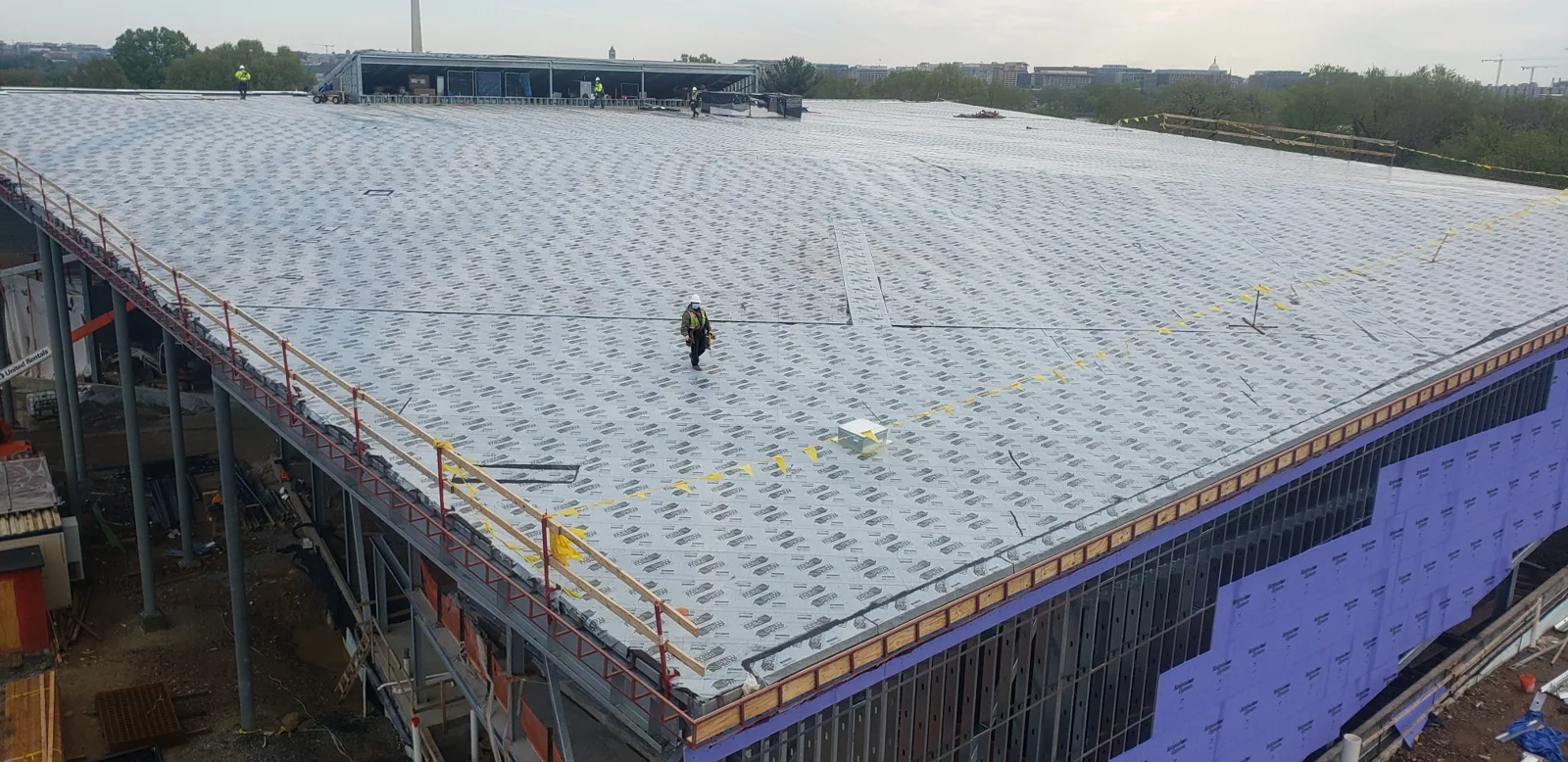
Office and flex buildings in the area often have flat membrane roofs instead, usually TPO, built-up or spray foam. On those roofs we look closely at the sheet around the leak: open seams, cracked or blistered areas, punctures from foot traffic and failed patches. Old patches that are peeling or made of the wrong material come off first, because new membrane won't bond to them. Then the area is cleaned and primed so the repair actually sticks.
A commercial leak repair starts inside. We match the stain or drip with the facility contact, then go up and check the seams, flashings and penetrations above and upslope of it. Water can run along the deck before it shows up inside, and sometimes the source is an HVAC condensate line, not the roof. If we can't prove where the water is coming from on the first visit, we say so and explain what we'll check next.
Roof drains and scuppers get the same treatment. Clearing out debris is one task. Repairing cracked flashing or a torn membrane around the drain is another. We price them separately so the operator knows what's being paid for.
Concealed support and option scope
What you see on the surface doesn't always tell the full story. A repair that looks small can sit on top of wet insulation or a rusted deck, and a new patch fastened into rotten material won't last. When we open a roof and find that, we photograph it, explain what has to be removed or replaced and get approval before the repair grows. If the decision takes a few days, the opening is temporarily sealed and the operator knows who to call.
A roof condition report records what we inspected, where we found damage and where we couldn't see. One test cut tells you about that spot, not the whole roof. If the building is a candidate for a recover or replacement, we check more areas before giving a price.
Before recommending a recover over the existing roof or a full replacement, we look at how many layers are already there, how the roof is attached, the condition of the insulation and the state of the edges and flashings. We then put that next to the cost of a targeted repair and show how each option affects deliveries, staging and how long we're on site. That gives the operator something real to compare.
Openings and final handback
Some jobs take more than one visit. If we're waiting on a part, a mechanical contractor or an approval, any opened area is sealed with temporary protection before we leave. The operator knows exactly what is permanently fixed and what is still temporary, who to call if water shows up, and when we expect to come back. During monsoon season that matters, because a summer storm can arrive with little warning.
If extra tear-off changes the plan, for example more debris or a different staging spot, we walk it through with the operator again before continuing. Their approval and any revised instructions go into the job file along with photos of what we found. If another trade needs to finish its work first, we don't close up the roof until they confirm it's done.
At the end of the job, the operator gets before, during and after photos, a list of what was repaired, any approved changes and anything we left out of scope. If there's an unresolved leak somewhere else, it's noted as a separate item for follow-up. The next time someone calls about this roof, that record shows exactly where we worked and what we found.
Commercial Roofing Questions
What do you need from the airpark operator before work starts?
We need to know where trucks can park, where materials and debris can go, which hangar doors or equipment must stay usable, and any rules about noise, dust or working hours at that building.
How do you repair a leaking metal hangar roof?
We find the failed seam, fastener or flashing, confirm the panel type, and replace or rebuild the damaged parts with matching components. A coating alone won't fix missing or broken parts.
What if the building has a flat membrane roof instead?
We identify the membrane, remove failed patches, clean and prepare the surrounding sheet, and install a compatible repair at the seam or penetration that is actually leaking.
Why might a repair get bigger once the roof is opened?
Wet insulation or a damaged deck can sit under a small surface problem. We photograph what we find and get your approval before replacing it, so nothing is hidden under new roofing.
What happens if the job needs a second visit?
Any open area is temporarily sealed before we leave. You'll know what is finished, what is temporary, who to call if water appears and when we plan to return.
Schedule a Chandler Airpark roof inspection
Tell us which building and who manages access. We'll inspect the metal or membrane roof, explain the repair, and plan deliveries, staging and any second visit around hangar and tenant operations.
Request a Roof AssessmentAll Service Areas