Home / Roof Systems / EPDM Commercial Roofing
EPDM Commercial Roofing in Chandler, AZ
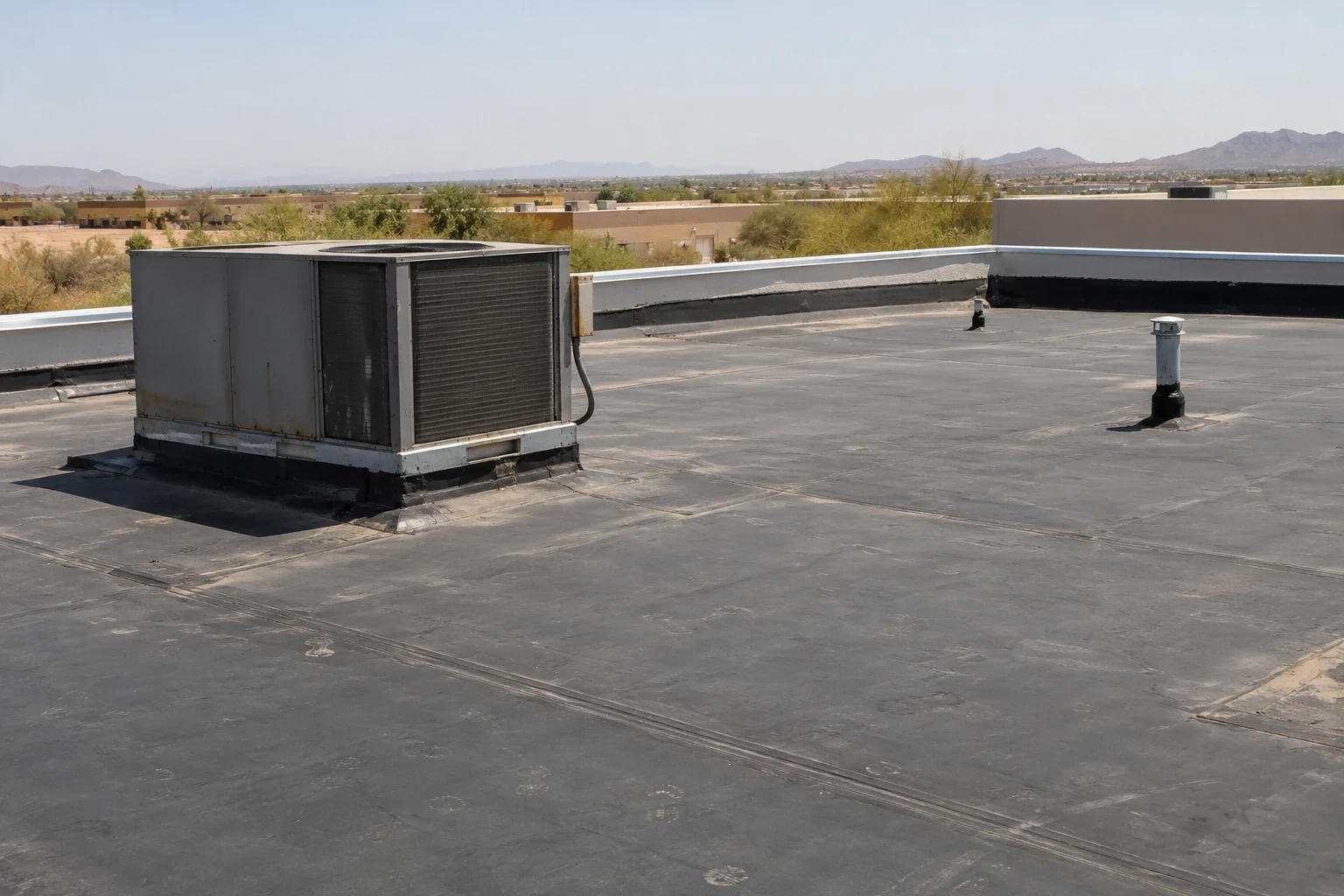
EPDM rubber roofing in Chandler, AZ: taped seam repairs, puncture and patch work, curb and pipe flashing, drain details and replacement options for commercial buildings.
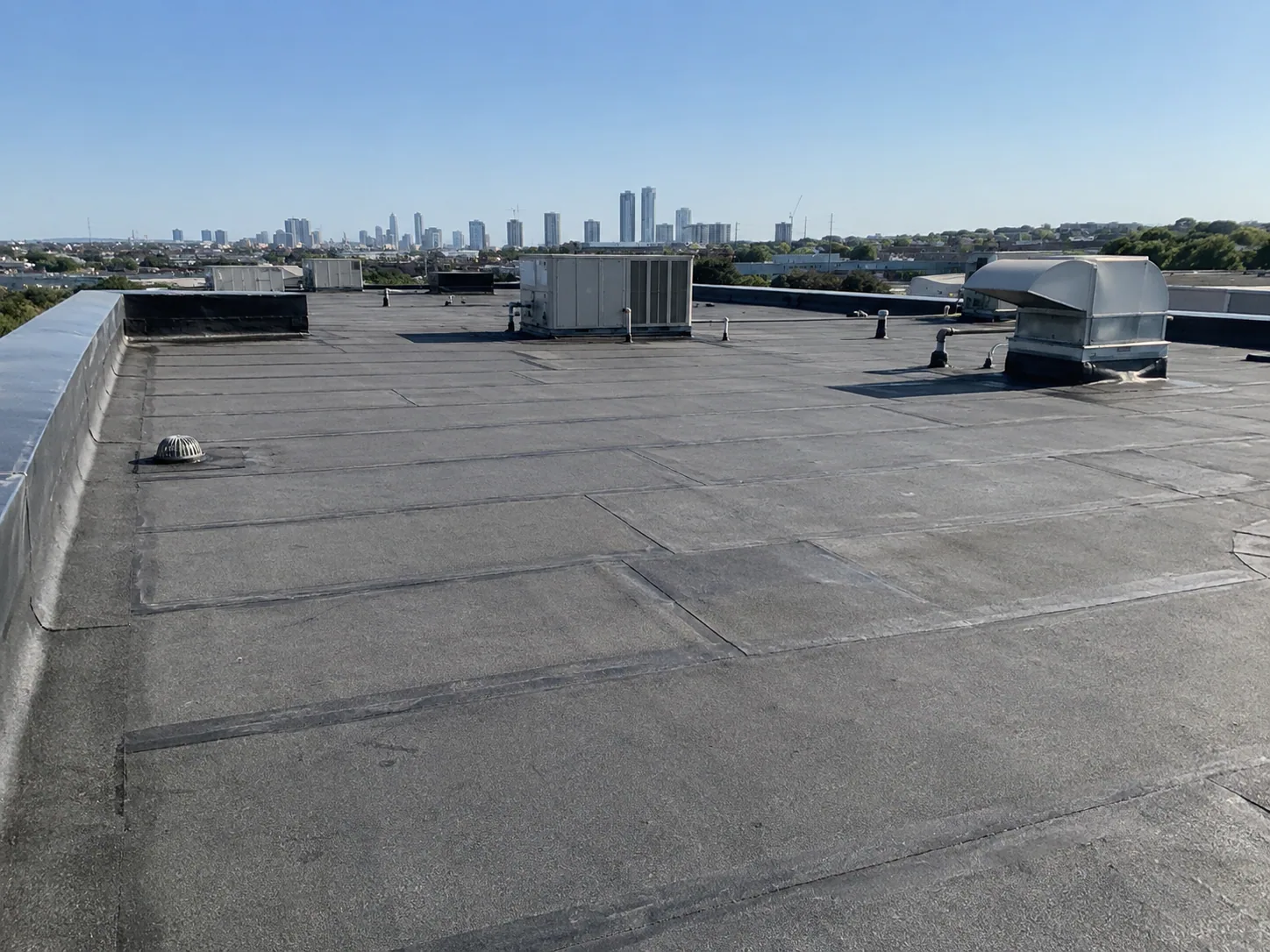
EPDM is the black rubber membrane found on many warehouses, offices and industrial buildings. It holds up well, but seams, punctures and flashing around curbs and pipes wear out over time, and Chandler's heat and UV speed that up. For EPDM roofing in Chandler, AZ, we start by identifying the membrane and the seam products on the roof, and checking any old patches. A good repair bonds to sound rubber. If nearby flashing or a curb also needs work, we tell you, because one patch will not fix two problems.
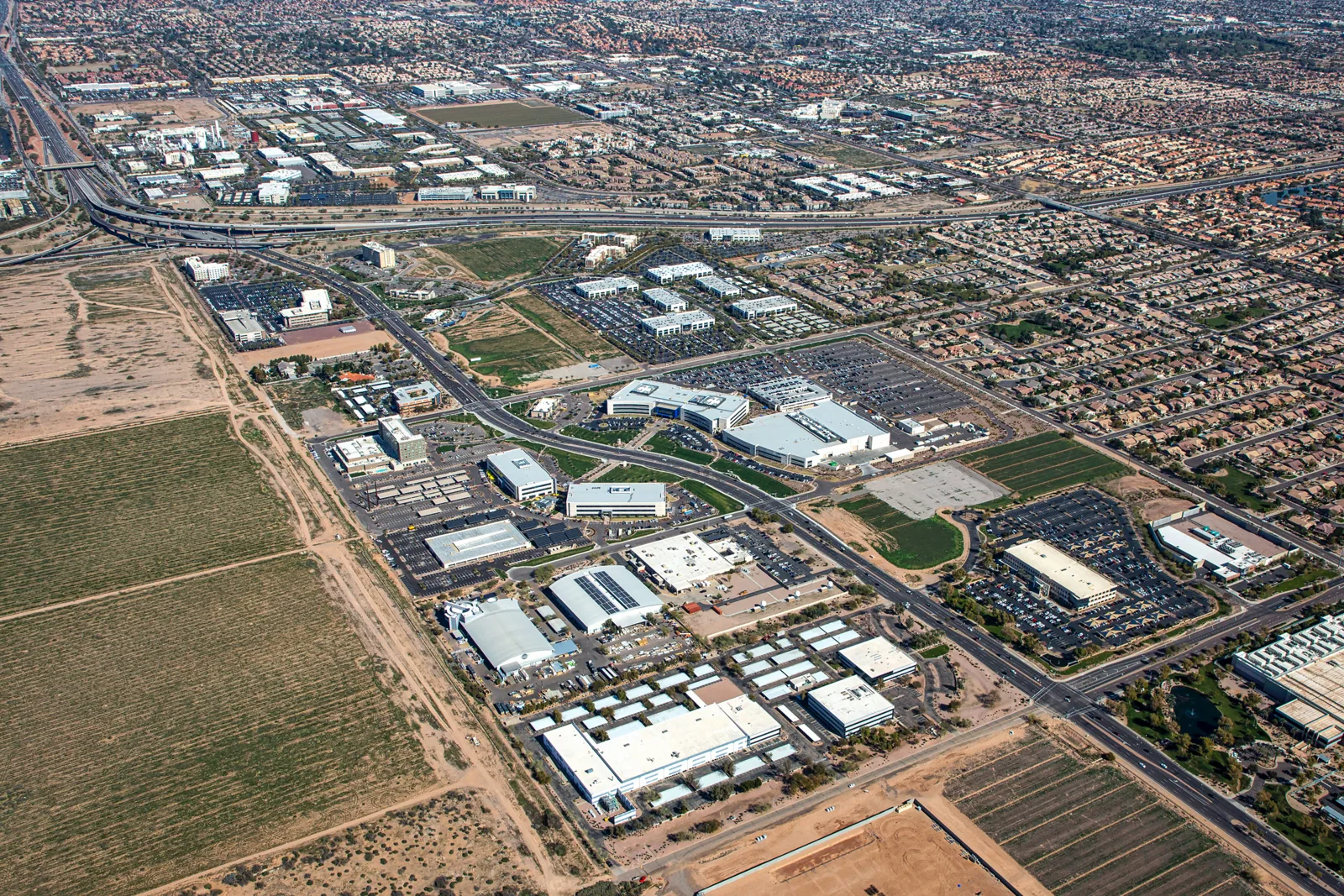
Around the Intel Ocotillo area and other industrial parts of Chandler, many buildings have large EPDM roofs with years of repairs on them. Send us the building address and any roof records, and we will identify the membrane and check its condition. We mark each repair location and the materials needed. If replacement makes more sense, we show what would be removed and what would stay. Every recommendation is based on what we see on your roof.
Seam tape and primers
Holcim Elevate's QuickSeam Splice Tape is used to splice RubberGard EPDM panels and flashing in the field. Its technical sheet calls for specific QuickPrime primers and cleaning the mating surfaces with a QuickScrubber pad. Tape, primer and cleaning go together as one method. Skip a step and the seam can fail. Before we make a permanent splice, we confirm the membrane and use the products that go with it.
When the roof is RubberGard, the Holcim Elevate EPDM details guide our repair. We keep product labels and installation instructions on site so the crew follows them. A tape product name on an estimate does not tell you much; the prep and how the seam is made matter just as much.
Old repairs often cross where a new seam needs to go. Some are made from unknown products or have pulled loose. We sort those out before deciding where the patch starts and stops. If a small hole needs a bigger patch because the rubber around it is in bad shape, we explain why.
Patching punctures and splits
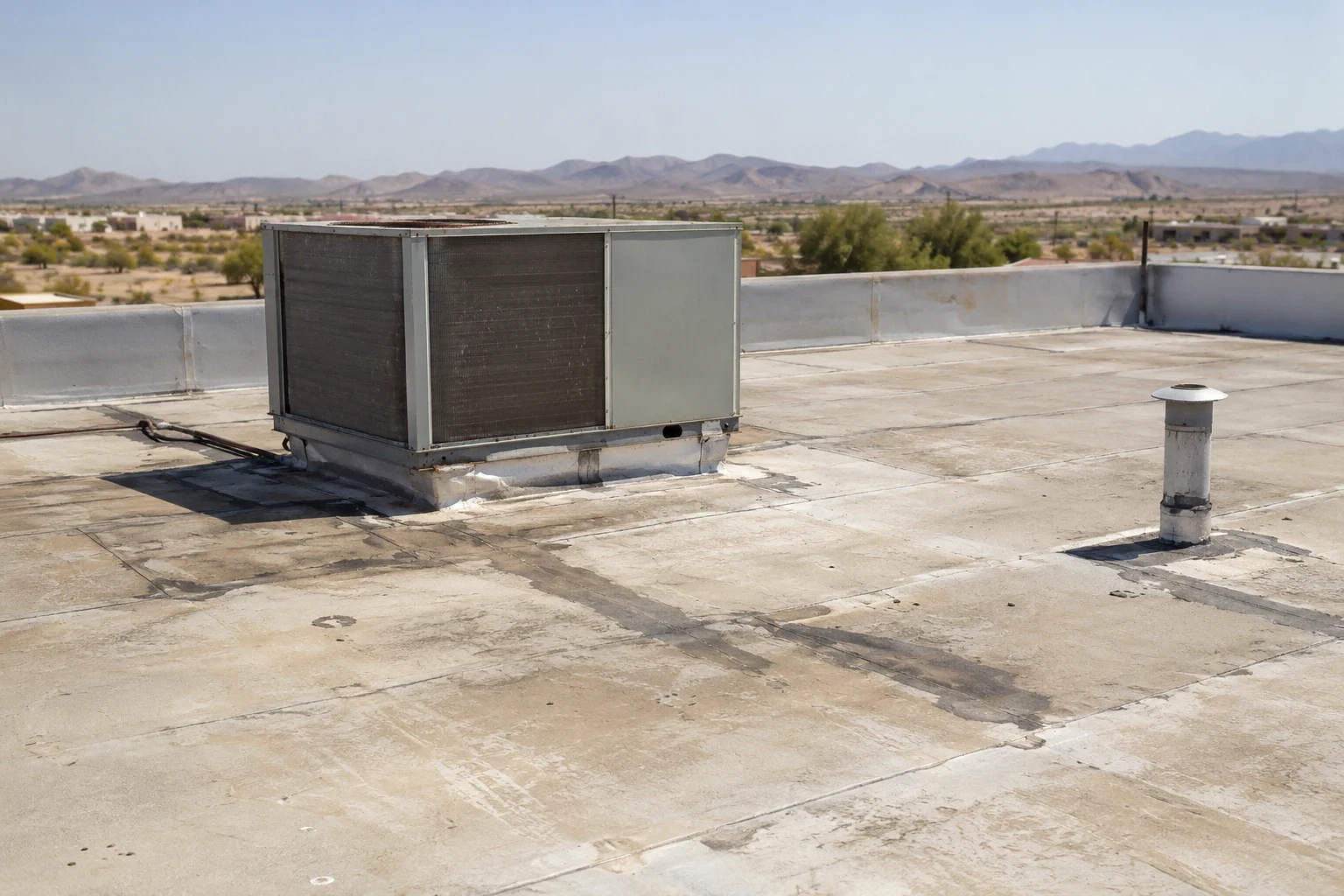
We check the rubber around the damage for splits, punctures, shrinkage and old patches layered on top of each other. The patch needs to bond to clean, sound membrane. If the roof moves a lot or the insulation underneath is damaged, we check that too. The estimate shows whether we are cutting out damaged rubber or patching over it, since that affects both cost and how long the repair lasts.
A proper commercial roof repair lists those steps separately. If we suspect wet insulation under the rubber, we say so and recommend a test cut. Each finding is photographed and located. If the repair area grows once the work starts, we show you what we found and why.
The same approach applies whether the building is a downtown library or a suburban warehouse. We confirm the exact roof area, find the damaged rubber and plan the repair around it. Any wall or curb work needed is listed as its own item, not buried in a general patch price.
Corners, pipes and curbs
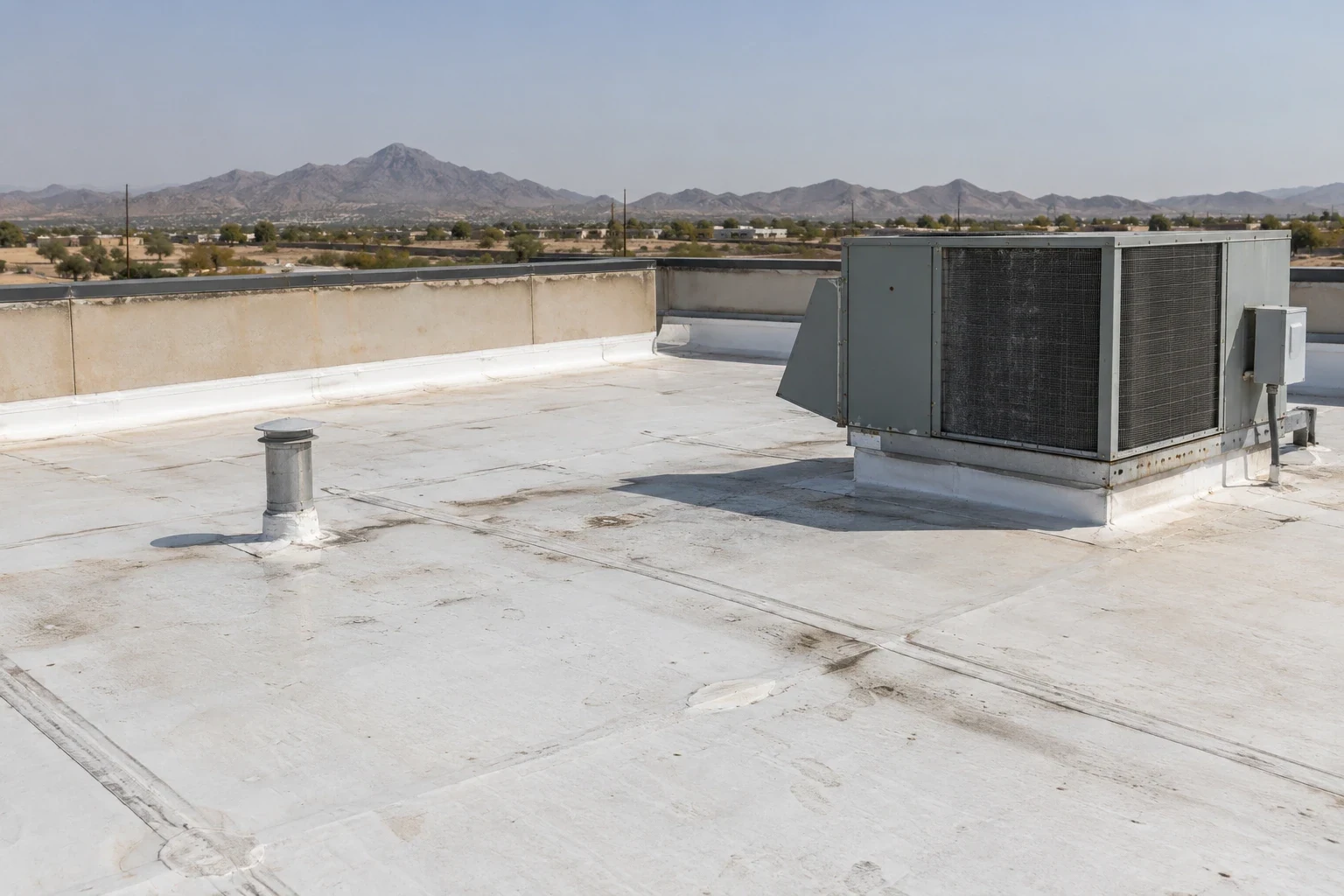
Corners, pipes and curbs are where EPDM roofs most often leak. Each detail needs the right pre-formed corner, pipe boot or flashing strip, installed on a solid surface. We measure the pipe or curb, check old flashing and look at the surface the new flashing will bond to. If a curb is loose or a pipe support is damaged, that gets fixed first, or the new flashing will pull apart.
Some owners ask about TPO roofing as a replacement option, and we can price it. But repairing an existing EPDM roof requires EPDM-compatible products. TPO is heat-welded and EPDM is taped or glued, so methods do not transfer between them, even when the curbs look the same.
We also separate movement problems from roof problems. If an HVAC unit is shifting or a pipe is vibrating, the equipment contractor needs to fix that. If equipment work changes a curb or pipe, we adjust the flashing plan before installing it, so both crews work from the same detail.
Drains, walls and roof transitions
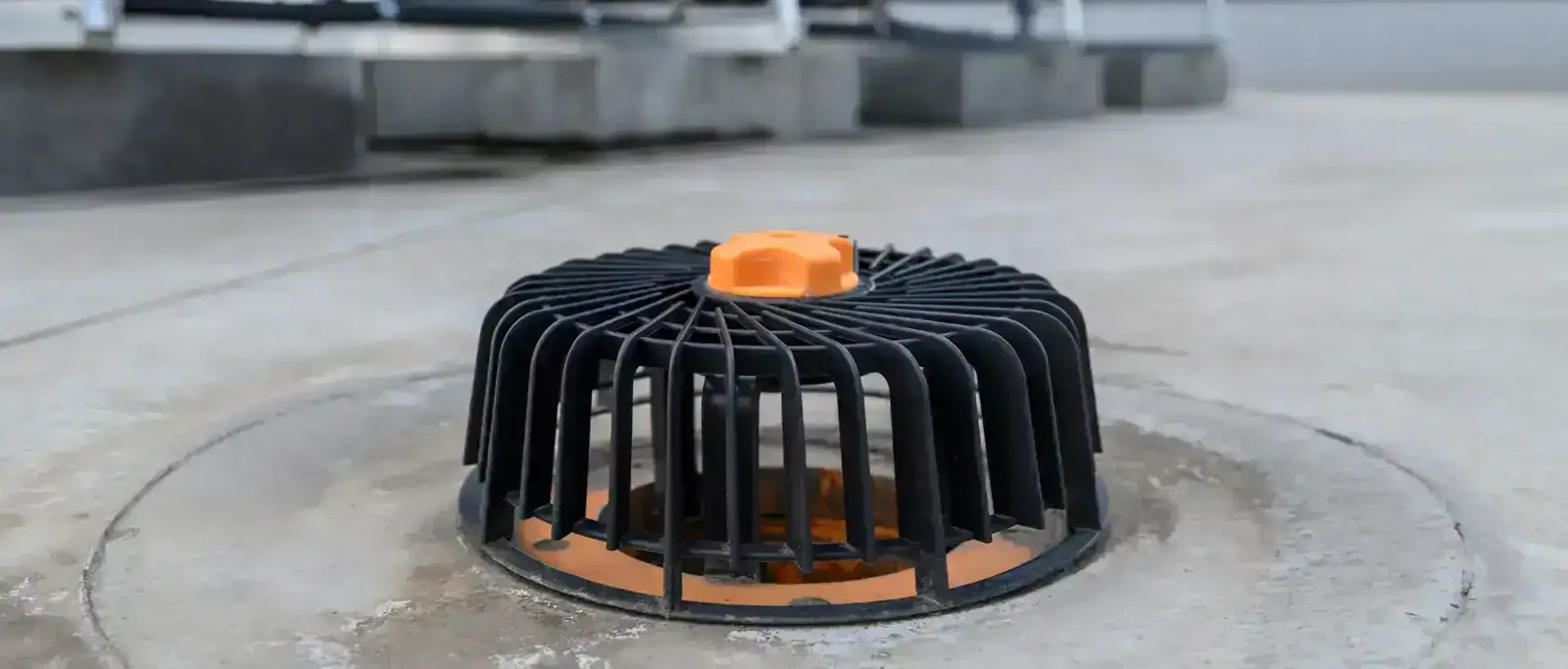
Where a repair reaches a drain, a wall or a change in roof level, we check the connection and the condition of the rubber around it. A cracked drain body is a plumbing problem, not a membrane problem, and the two need separate fixes. The drain is repaired first, then the membrane is flashed to it. A patch should never hide a drain that still needs attention.
Roof drain and scupper work is split clearly between trades: the plumber repairs or resets the drain, and we flash the membrane to it afterward. If the drain size or height changes, we confirm the new dimensions before finishing the flashing.
If you are considering replacement, we can compare EPDM with modified bitumen roofing and other systems. Each option shows tear-off, deck repairs and drain details, so you are comparing complete jobs, not just the color of the top layer.
Planning the work and keeping records
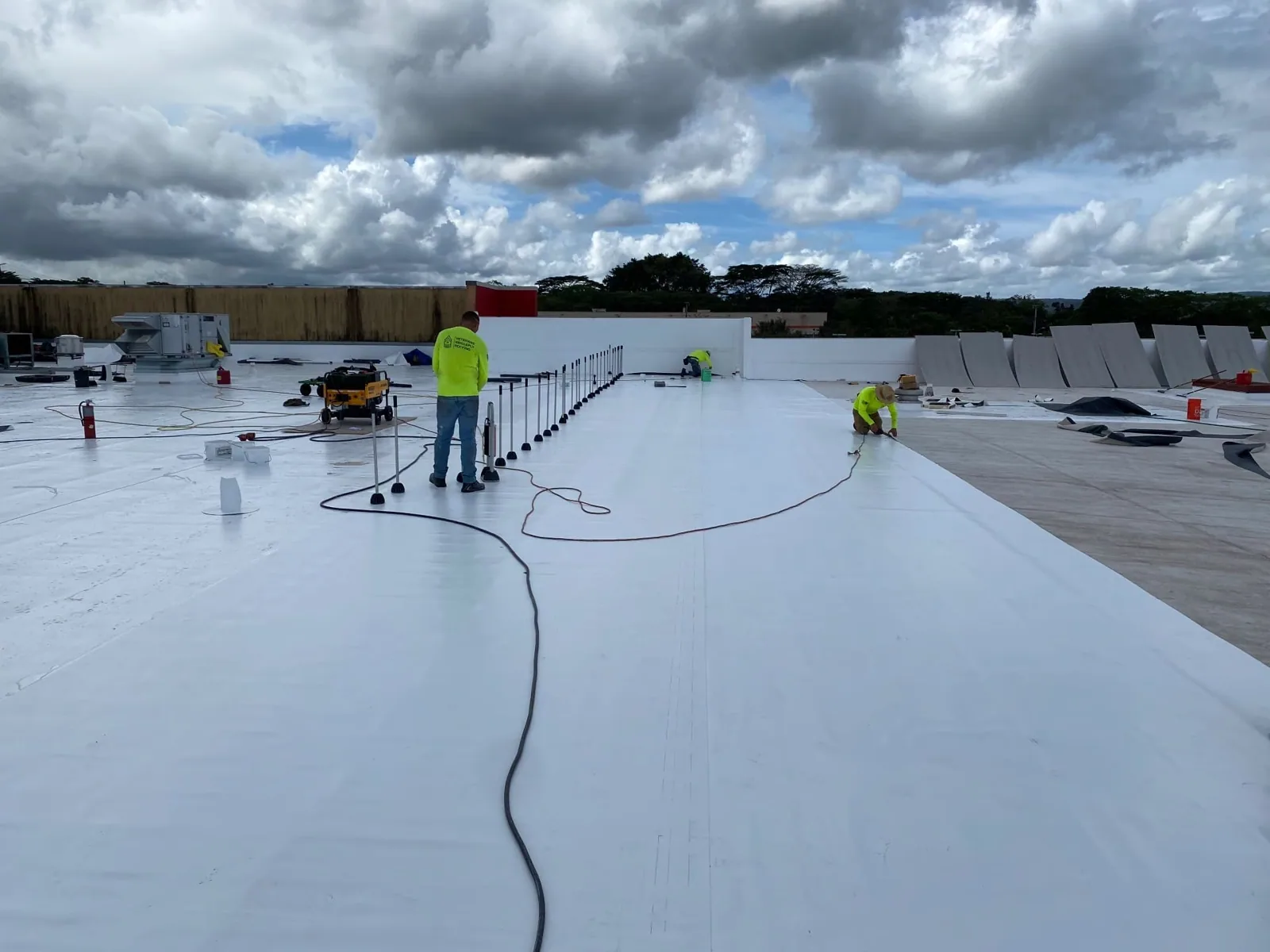
We plan repairs around roof access, material delivery and building hours. Any curb or drain work by other trades happens before seam work. The crew has the product instructions and a marked roof plan showing each repair. Known problems are included in the plan, and anything left unresolved is listed plainly for the facility manager.
For buildings in the Price Corridor and elsewhere in Chandler, we coordinate access and timing with the property manager. Past records help us find earlier repairs that affect the new work. The repair plan is built from what we find on the roof.
When the job is done, you get the membrane and seam products used, photos of any repairs to backing or curbs, and the locations of finished patches. Recommended future work is listed separately. That helps when new equipment goes on the roof later or someone needs to check the same area again.
We also tie the work back to the original problem: which leak or defect was fixed, and what still needs a decision from the owner.
Commercial Roofing Questions
What should an EPDM seam repair include?
The membrane identified, the matching seam tape and primer, and proper cleaning of both surfaces. Holcim Elevate's QuickSeam tape for RubberGard EPDM, for example, calls for specific QuickPrime primers and QuickScrubber cleaning.
Why check the rubber around a puncture?
The patch must bond to sound membrane. Splits, shrinkage or old patches nearby can mean the patch needs to be larger than the hole.
Will new EPDM flashing fix a loose curb?
No. The curb has to be secured first, by us or the equipment contractor, and then the flashing goes on. Otherwise the new flashing will pull apart.
How are drains handled in an EPDM repair?
If the drain itself is damaged, a plumber repairs or resets it first. Then we flash the membrane to the drain at its final position.
What records should we get after an EPDM repair?
The membrane and seam products used, locations of finished repairs, photos of any backing or curb work and a list of recommended future work.
Get your EPDM roof checked
We will identify your membrane, check seams, patches and flashing, and recommend repairs with the right products, or explain replacement options.
Request a Roof AssessmentAll Roof Systems