Home / Roof Systems / Standing Seam Metal Roofing
Standing Seam Metal Roofing in Chandler, AZ
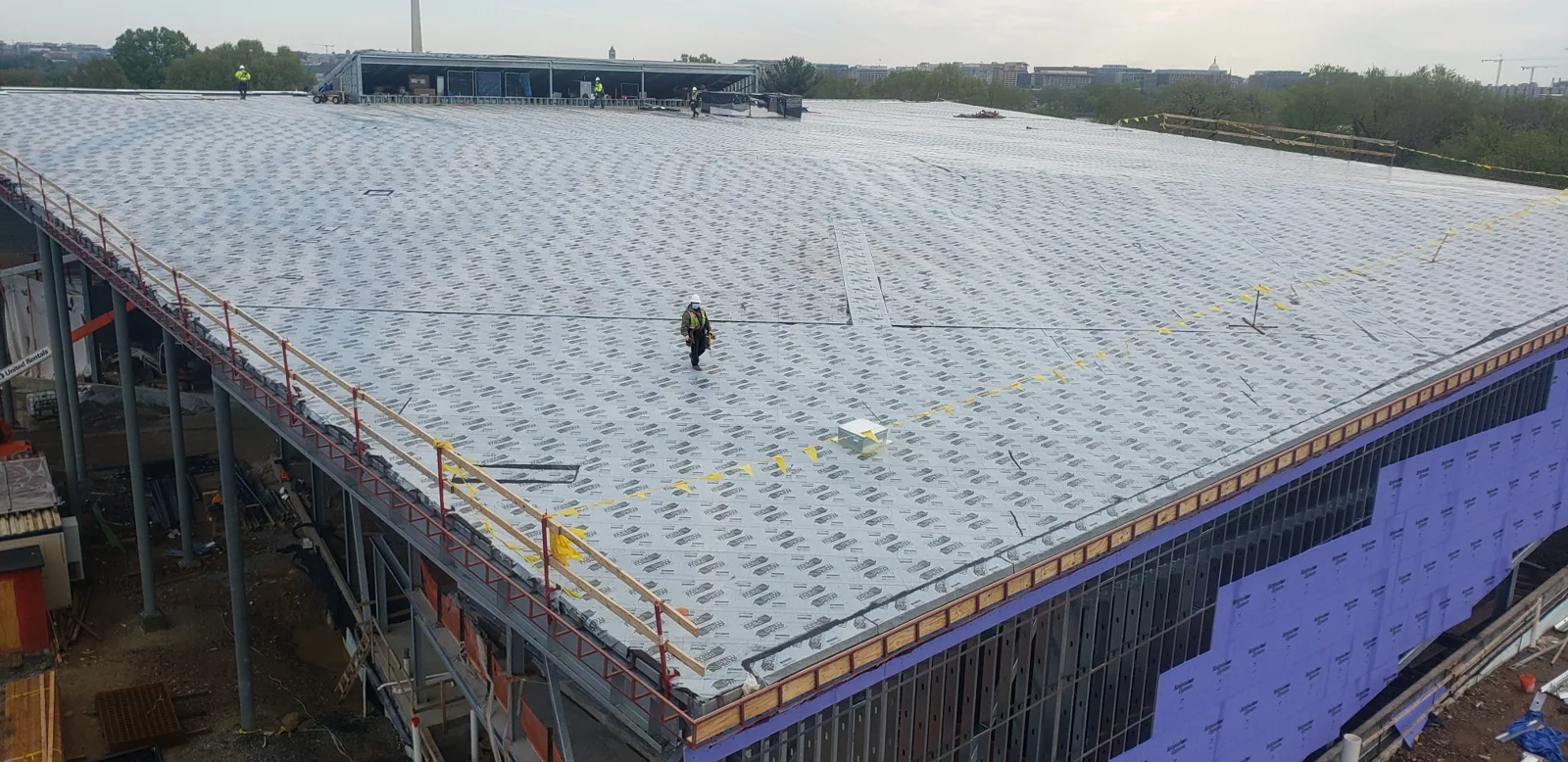
Standing seam metal roofing in Chandler, AZ: identifying panel profiles, clip and movement problems, seam and curb leaks, panel replacement and retrofit options.
Standing seam metal roofs are durable, but repairs only work if the new parts match the panels already on the roof. For standing seam metal roofing in Chandler, AZ, we start by identifying the panel profile and seam type, then check the seams, clips, trim and the curbs and penetrations that have been added over the years. We explain how the repair ties into the existing panels and what else, such as replacing supports or trim, is needed to finish it properly.
Many warehouses and industrial buildings around the Chandler Airpark have standing seam roofs. Send us the building address and any panel records or drawings. We inspect the roof, find the leak or damage and check nearby details. We do not assume a generic metal patch fits every profile. If replacing panels makes more sense, we show which panels come out, what stays and how the edges of the new work tie in.
Panel profile and seam type
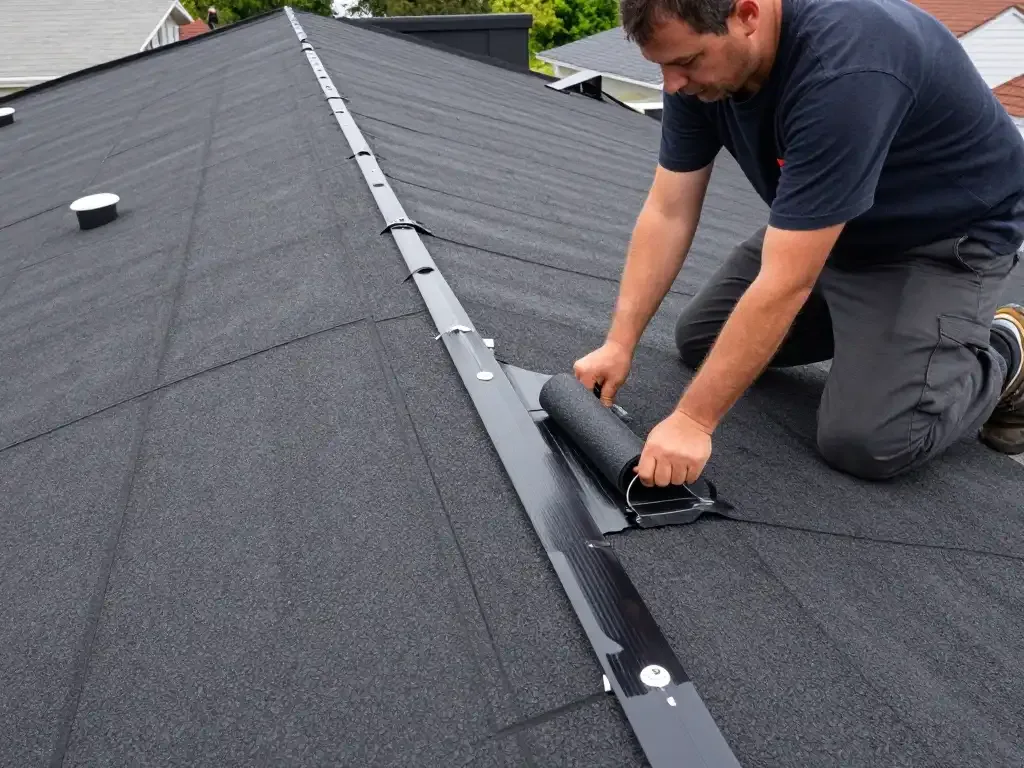
MBCI describes standing seam as a concealed-fastener metal roof, meaning the screws are hidden under the panels instead of going through them. Its panels come in snap-lock and mechanically field-seamed types, and they are held by clips that let the panels expand and contract with temperature. We identify which profile and seam type your roof has and match repair or replacement parts to it.
Some owners are weighing a metal roof retrofit, where a new roof system is built over the existing one. That is a different project from replacing a few panels on the existing roof. We price each option separately, with what stays in place and what support work is needed.
If there are no records of the panel, we measure the rib height, panel width and seam style, and check for manufacturer markings. Panels that look alike from the ground may not fit together. We confirm the profile before ordering parts, and tell you if anything is still uncertain.
Clips and thermal movement
Clips hold the panels to the roof structure while letting them slide as they heat and cool. Chandler's hot days and cooler nights put metal through big daily swings. We check how panels are attached and look for loose or damaged clips where we can reach them. Some clips are hidden under the panels, and we say when more investigation is needed instead of guessing.
Repairs must keep that movement working. Screwing a panel down tight to stop a leak can lock it in place, and the panel will buckle, split or pull its fasteners over time. We follow the manufacturer's details for fixed points and sliding connections, and fix the defect without adding restraint where it does not belong.
A commercial roof inspection on a metal roof records the panel type, clip and attachment findings, and the condition of trim and flashing. Where hidden parts affect the recommendation, we flag them. The facility manager can see what is confirmed and what still needs a closer look.
Finding metal roof leaks
Metal roof leaks usually show up at seams, end laps, ridge and eave trim, transitions to walls and around penetrations. We start above the leak inside and check the seams, trim and penetrations around it. A suspected seam problem and a confirmed open seam are listed as different findings. The repair is tied to the specific defect we find.
A commercial roof leak repair on metal also looks at old patches, such as sealant smeared over seams or caulk at curbs, and at changes other trades made, like new pipes or vents cut through panels. Those often cause new leaks. Where we cannot see the cause, we explain what further checking is needed instead of guessing.
Public buildings like those around Chandler City Hall can have mixed roof systems, so we never assume a roof is standing seam without looking. On any building, we confirm the roof area, review records and identify the actual problem before recommending a repair.
Curbs and penetrations
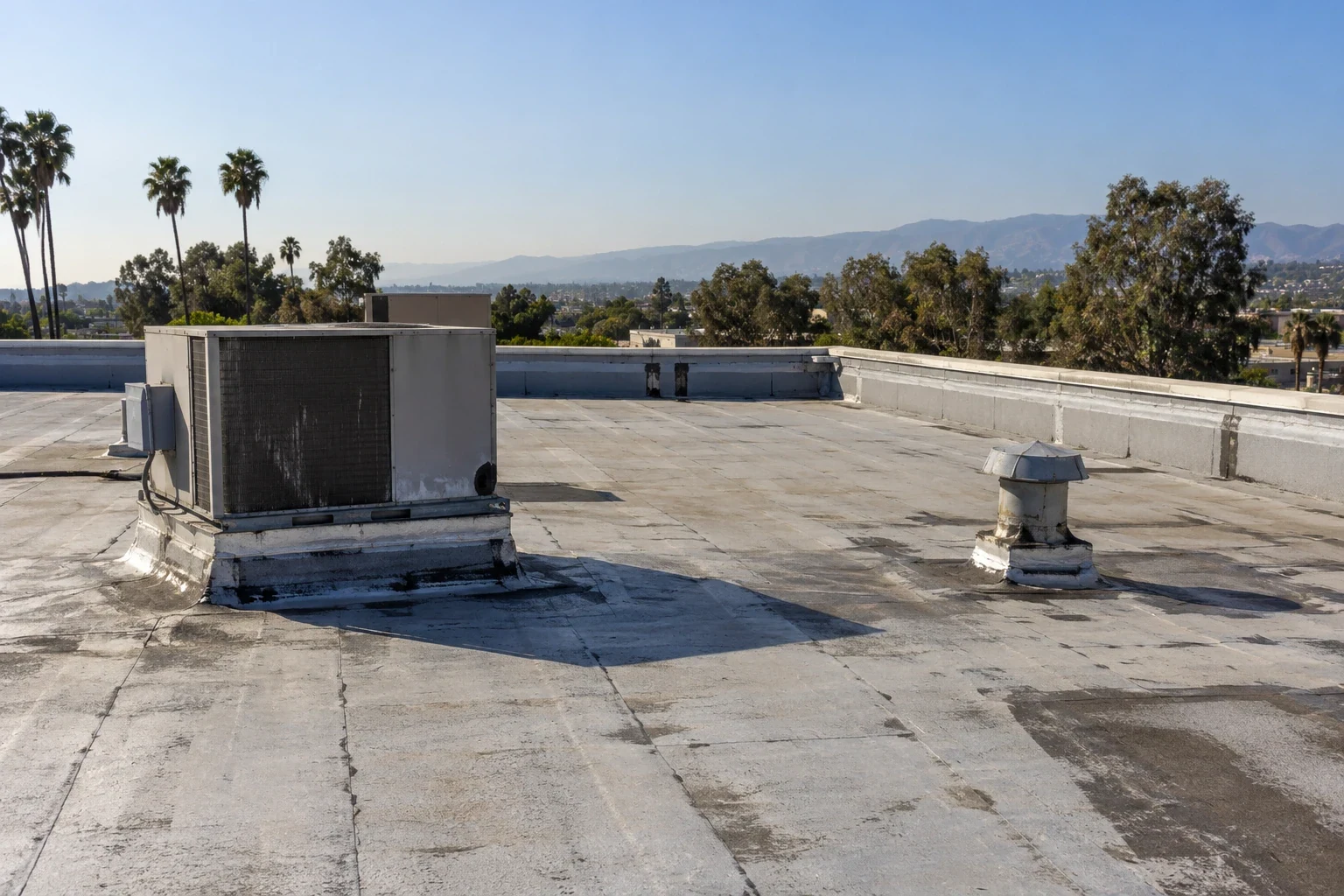
Curbs and penetrations on a standing seam roof need flashing that works with the panel ribs. We measure the curb or pipe, check where the ribs and seams fall around it, look at the existing flashing and check the curb's support. The detail is built to suit both the panel and the curb. Water has to be diverted around the upslope side of a curb, so that side gets special attention.
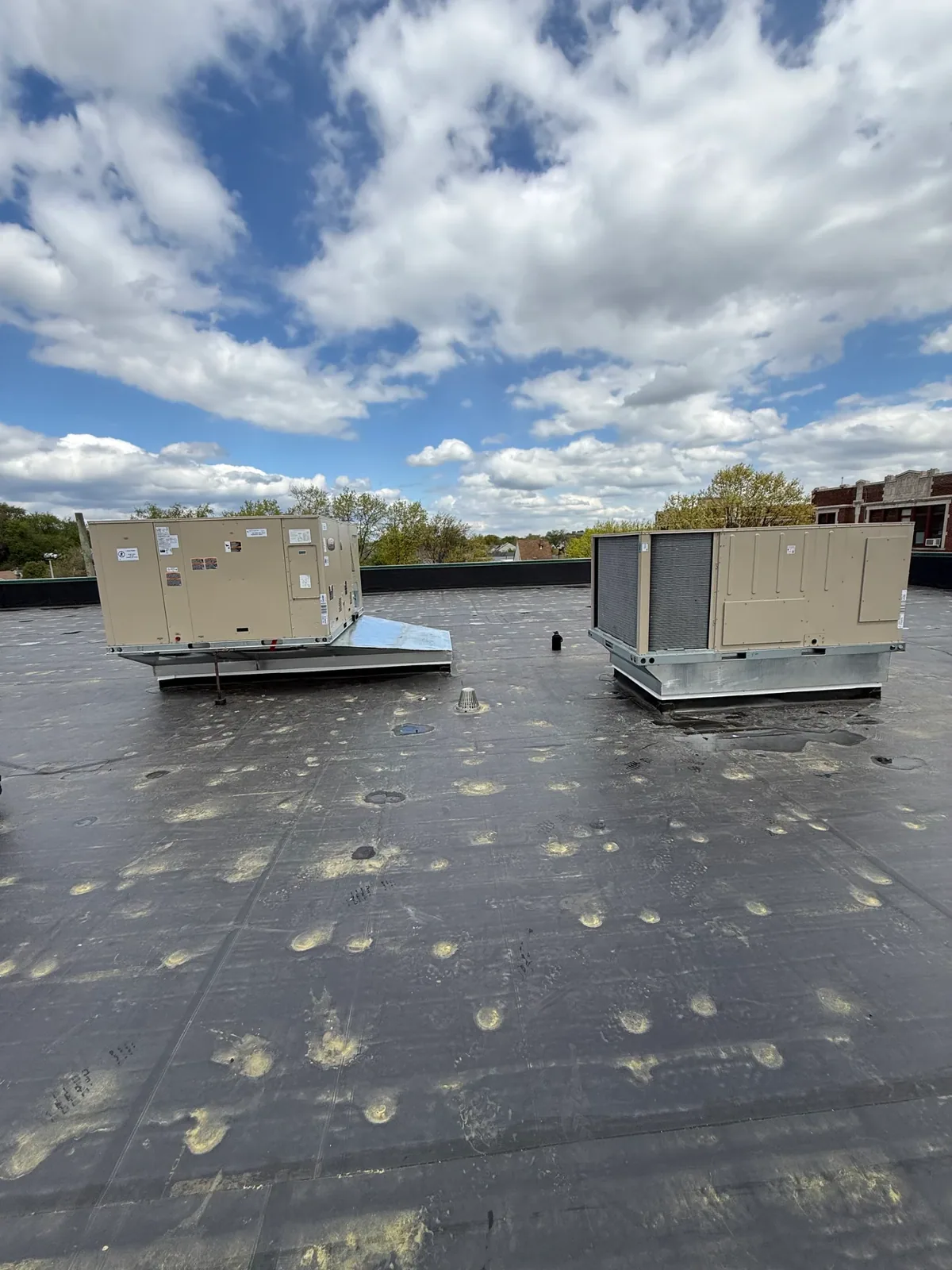
Work on rooftop equipment curbs and supports is coordinated with the HVAC or mechanical contractor. If a new unit has a different curb size, we update the detail before installing it. A replacement unit can leave a different opening than the old one.
Structural support for heavy equipment is a design question, and an engineer handles it. We build the roofing detail around whatever support is approved, and keep the drawings and changes so both crews work from the same plan. The facility manager knows who is responsible for each part.
Replacing panels
When panels need replacing, we mark which ones come out, how removal reaches their seams and clips, and what stays. Damaged supports found during removal are fixed before new panels go on. The estimate shows how the new panels seam into the existing ones and how trim, eaves and curbs are finished at the edge of the work.
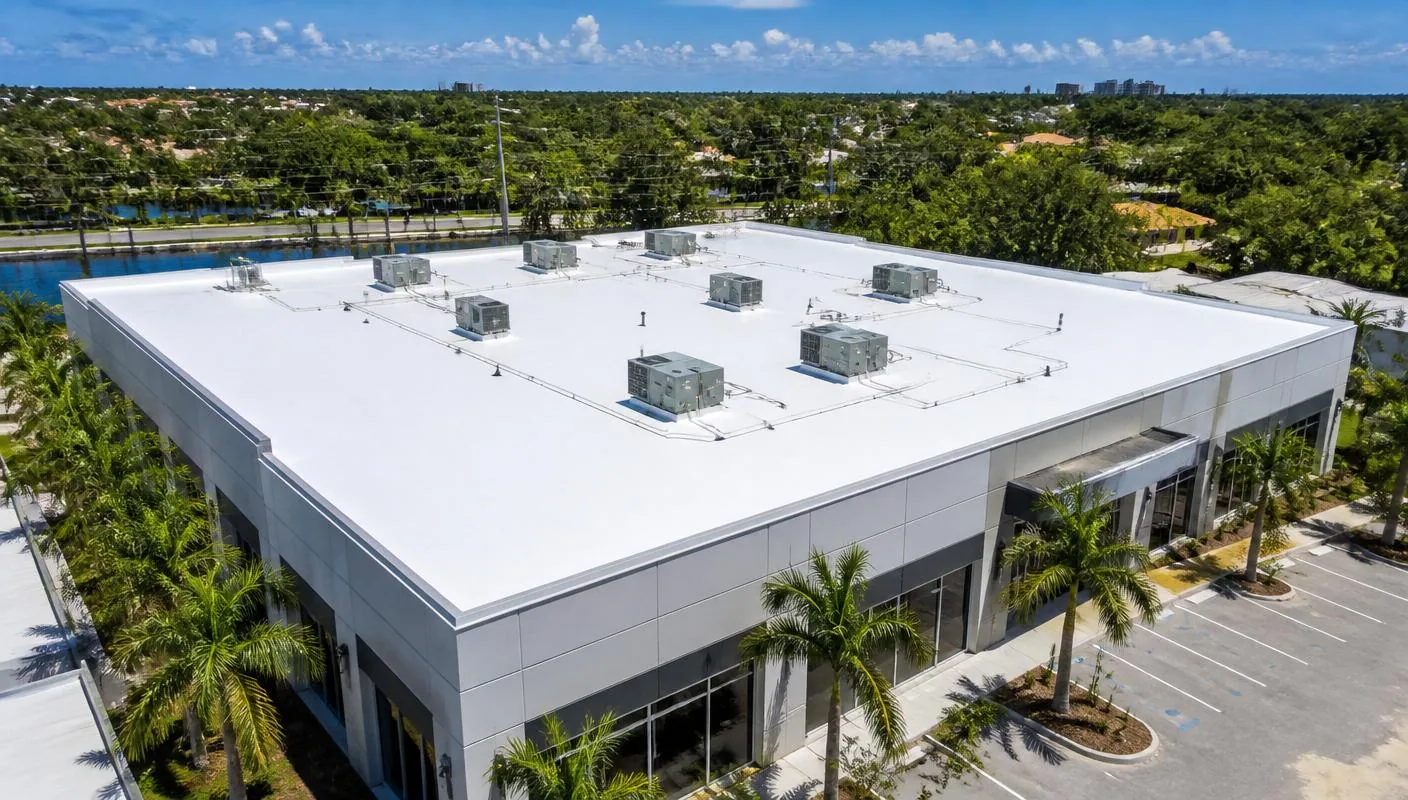
Some owners compare metal with TPO roofing, especially on low-slope sections. That is a different system with its own insulation, attachment and edge details. We price it as its own job, not as a membrane swapped onto a metal roof scope.
For metal roof work in the Airpark Area around Chandler Municipal Airport, we arrange roof access and material delivery with the property manager and confirm any site rules before scheduling. Long panels may need a crane or lift, and that is planned ahead.
Records after the work
When the work is done, you get the panel profile installed, the locations of repairs, photos of clips and supports before panels covered them, and any curb changes and flashing details. That shows the facility manager exactly what was done.
Recommendations for other areas are listed separately, with their location and suggested next step. A future crew can find the repaired panels and know which parts of the original roof are still in place. That is far more useful than a note saying the metal roof was repaired.
Commercial Roofing Questions
How do you start a standing seam repair?
By identifying the panel profile and seam type, whether snap-lock or mechanically field-seamed, and checking clips, trim and nearby details. Repair parts have to match the existing panels.
Why does panel movement matter for repairs?
Standing seam panels are clipped so they can expand and contract with heat. Screwing them down tight can lock them in place and cause buckling or split seams. Repairs must keep that movement.
Does a leak inside always mean a failed seam?
No. Metal roof leaks also come from end laps, trim, wall transitions, curbs and old sealant patches. We confirm the actual source before repairing.
What happens to the flashing when equipment changes?
If a new unit has a different curb size or position, we update the flashing detail to match before installing it, and coordinate with the HVAC contractor.
What should standing seam repair records include?
The panel profile used, repair locations, photos of clips and supports before they were covered, curb changes, flashing details and any recommended future work.
Get your metal roof checked
We will identify your panel profile, inspect seams, clips and curbs, and explain the right repair or replacement for your standing seam roof.
Request a Roof AssessmentAll Roof Systems