Home / Roof Systems / TPO Commercial Roofing
TPO Commercial Roofing in Chandler, AZ
TPO roofing in Chandler, AZ: identifying the membrane, probing heat-welded seams, finding wet insulation, flashing curbs and penetrations, and repair or replacement options.
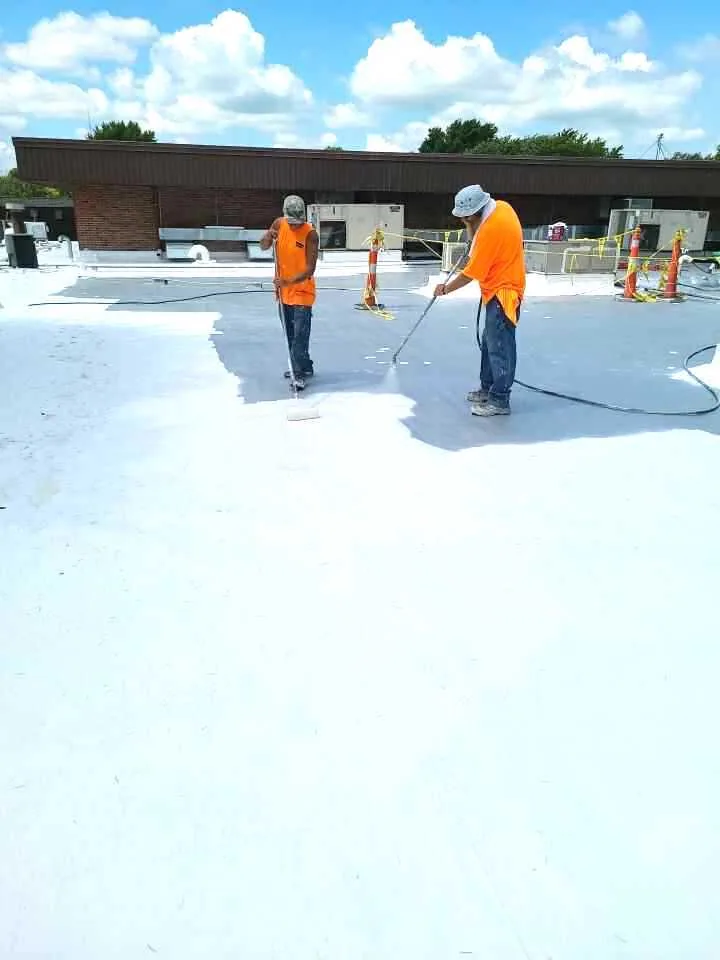
TPO is the white single-ply membrane on many newer warehouses, offices and production buildings in Chandler. It reflects heat well, which helps in Arizona summers, but seams, flashing and the insulation underneath still fail. For TPO roofing in Chandler, AZ, we check the membrane and seams together, identify the product, and look for old patches and spots where equipment was added or changed. A surface scuff, an open seam and a wet insulation board are three different problems, even when they sit side by side, and each needs its own fix.
Around the Intel Ocotillo area and other industrial parts of Chandler, many buildings have large TPO roofs. Tell us the building and roof area, and send any product records. We arrange access with the property manager, identify the membrane and test anything uncertain. The crew brings the right membrane and detail products for that roof. If replacement makes more sense, we show what layers stay and what comes off, so a simple repair does not quietly turn into an undefined replacement.
Identifying the membrane
TPO stands for thermoplastic polyolefin. Versico, one manufacturer, describes its TPO as a membrane with heat-welded seams. That tells us the basic type, but not which product is on your roof, or what was used for older patches. We look for labels and records and compare them with what we see on the roof, noting any spots where earlier repairs used a different product.
Some owners also consider PVC roofing as a replacement. That is a separate membrane with its own welding and accessories, and we price it as its own job. Repairs on your existing TPO need products that are compatible with it. When the roof is Versico, the Versico product documents guide which detail materials to use. Both TPO and PVC are heat-welded, but their accessories are not interchangeable.
If we cannot identify the membrane, we find out more, such as by checking records or testing a weld, before pricing a permanent repair. You will know which work can go ahead and which depends on that answer.
Checking welded seams
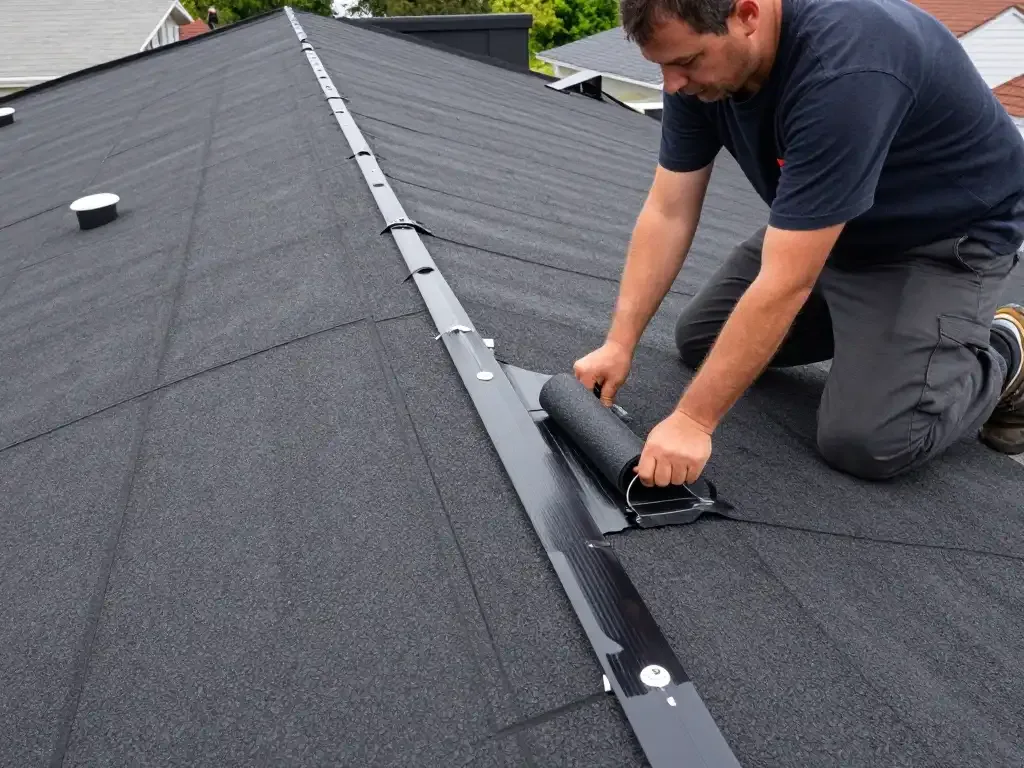
Seams need a close look, not a glance from across the roof. We look for open edges, wrinkles, fishmouths and old patches laid over seams, and check the weld itself. Versico's instructions call for probing welds after they cool, then fixing any weak spots and checking again. We follow the instructions for the specific membrane rather than using one welder setting for every roof.
Versico also points out that a weld can pass probing while the membrane next to it has been damaged by too much heat. Overheated TPO may need an overlay patch even though the seam checks out. So we look at the sheet around each seam, not just the seam. A photo of a closed seam does not tell the whole story.
A commercial roof leak repair on TPO starts above the leak inside and checks seams, flashing, drains and any changed equipment nearby. We keep suspected seam problems and confirmed open seams as separate findings, so the repair is aimed at the real cause.
Insulation under the membrane
A patch is only as good as what is under it. We check the membrane and the insulation below at each repair location. Soft spots, movement or wet insulation can mean the repair needs to go deeper. Where we cannot see what is underneath, we recommend a test cut. If insulation has to be replaced, we mark the area and explain why a membrane patch alone would leave a problem behind.
Public buildings like those around Chandler City Hall often have roof histories worth reviewing first. On any building, we confirm the exact roof area, review records and show what is staying, what is removed and how the new work ties in. Photos of exposed layers back up those decisions.
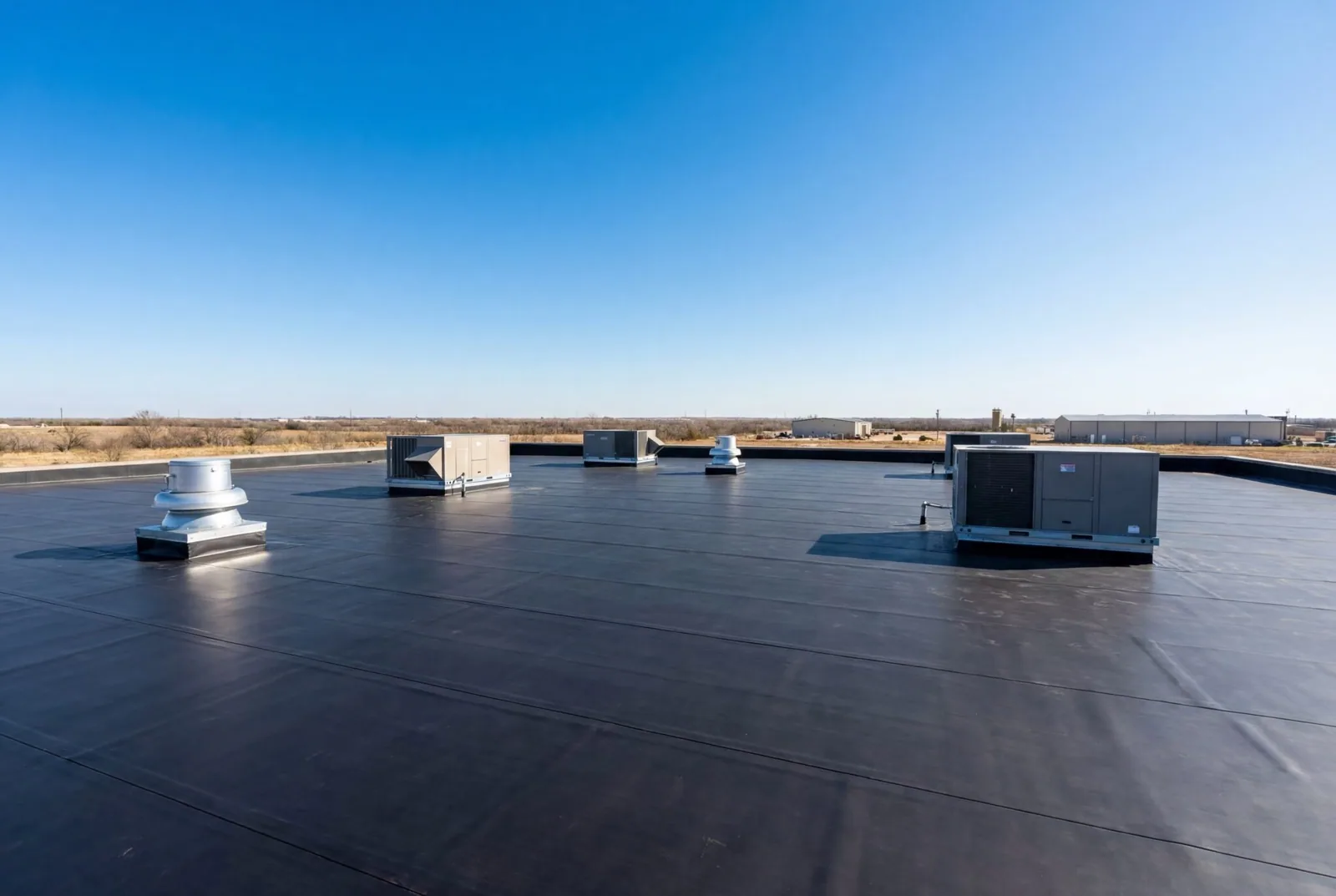
If you are comparing replacement options, EPDM roofing uses a different membrane and seam method. We price each option with the same tear-off, insulation and flashing work visible, so the membrane name does not hide differences underneath.
Curbs, pipes and walls
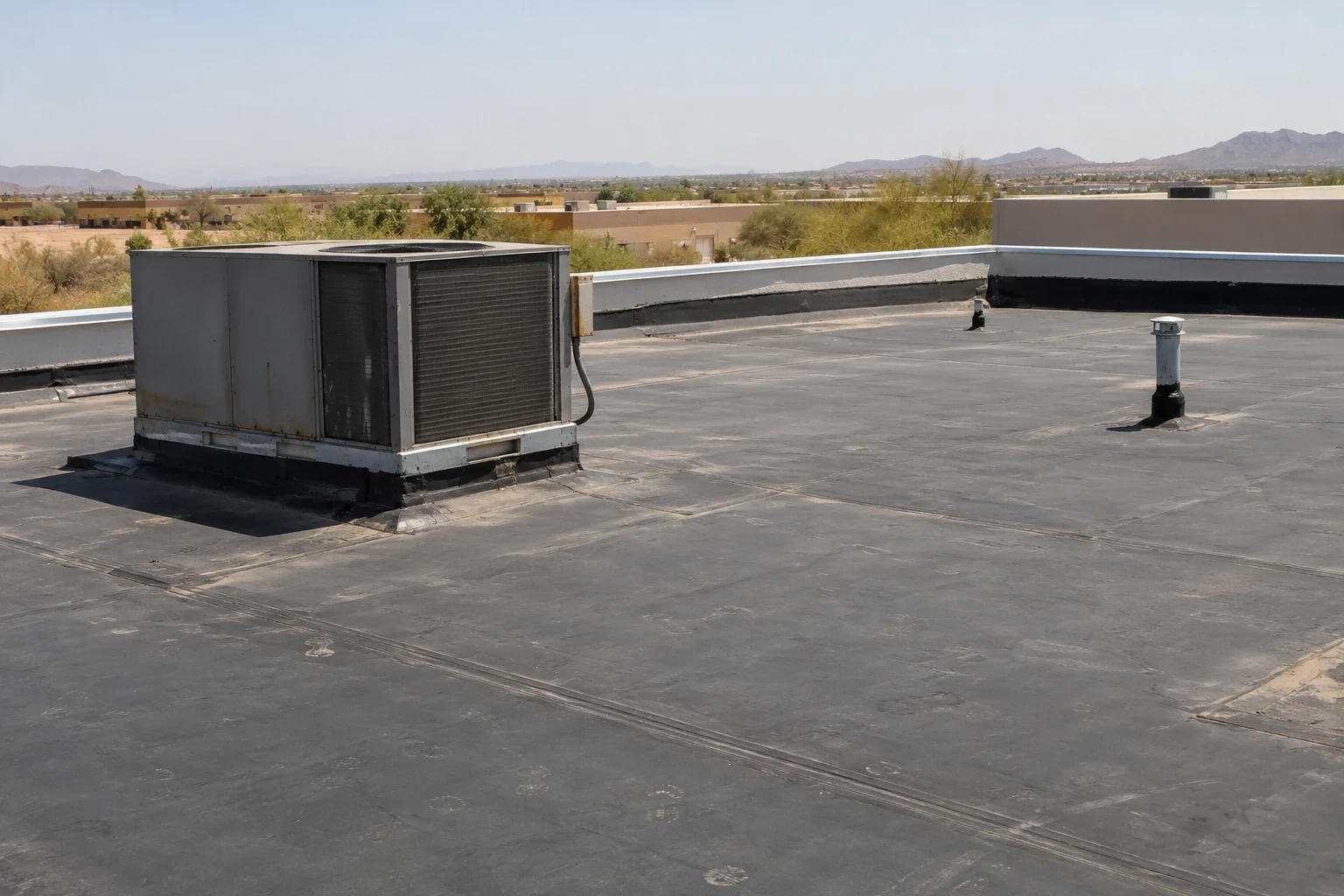
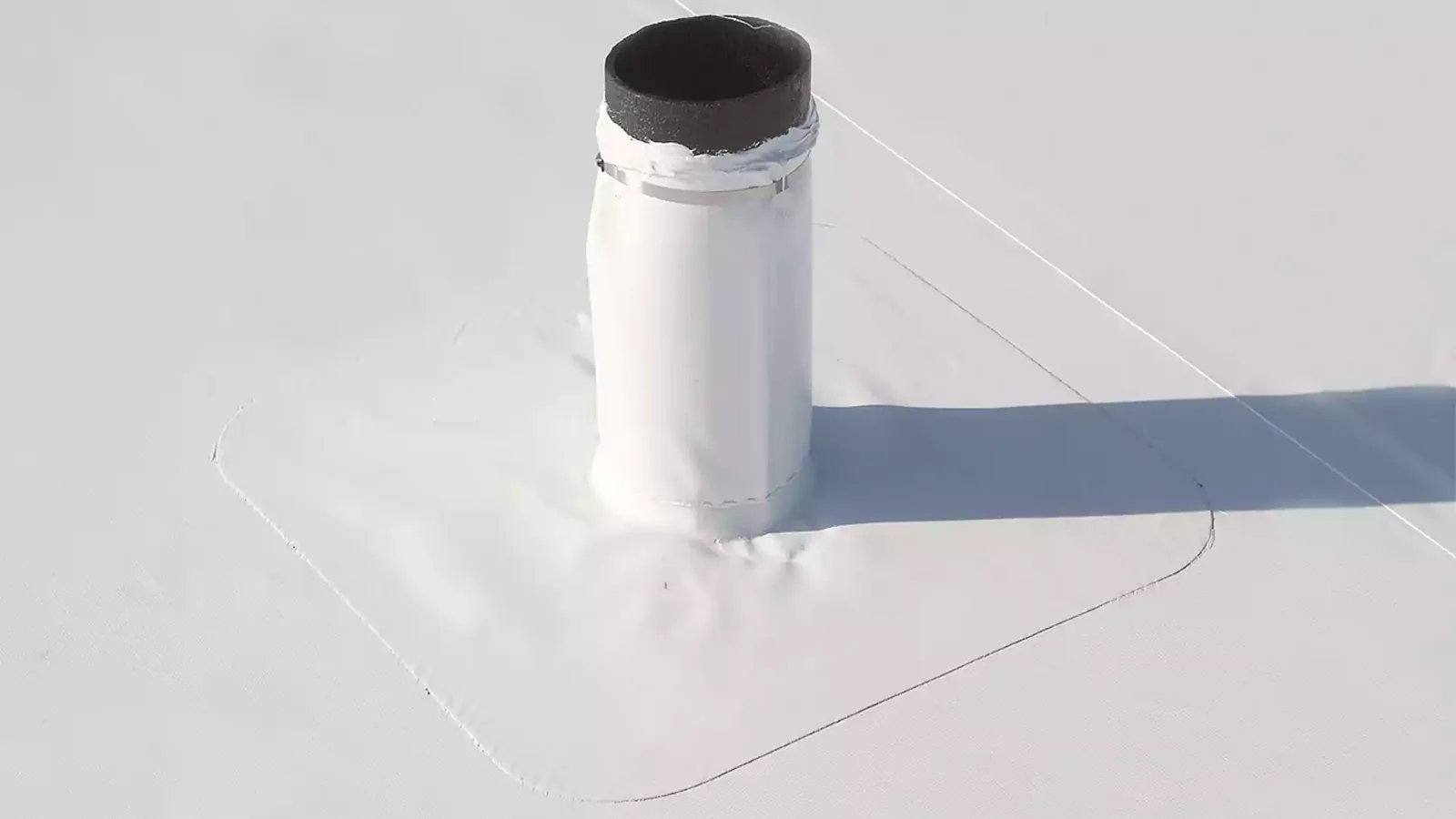
TPO flashing has to fit the actual shape of each curb, pipe or wall. We measure them, note corners and tight spots, and use the matching pre-formed corners, pipe boots and flashing membrane. If a curb is loose or a wall surface is damaged, it gets fixed first so the flashing has something solid to bond to.
Skylight and penetration flashing often involves two jobs: fixing the curb and flashing the membrane to it. The curb repair goes to whoever is responsible, and we flash it after. If HVAC or equipment work changes the curb, we update the detail before finishing.
Where new membrane meets the old roof, we mark the edge clearly. The old membrane at that edge must be sound and weldable. A clean new corner still needs a good connection to the rest of the roof.
Phasing and final checks
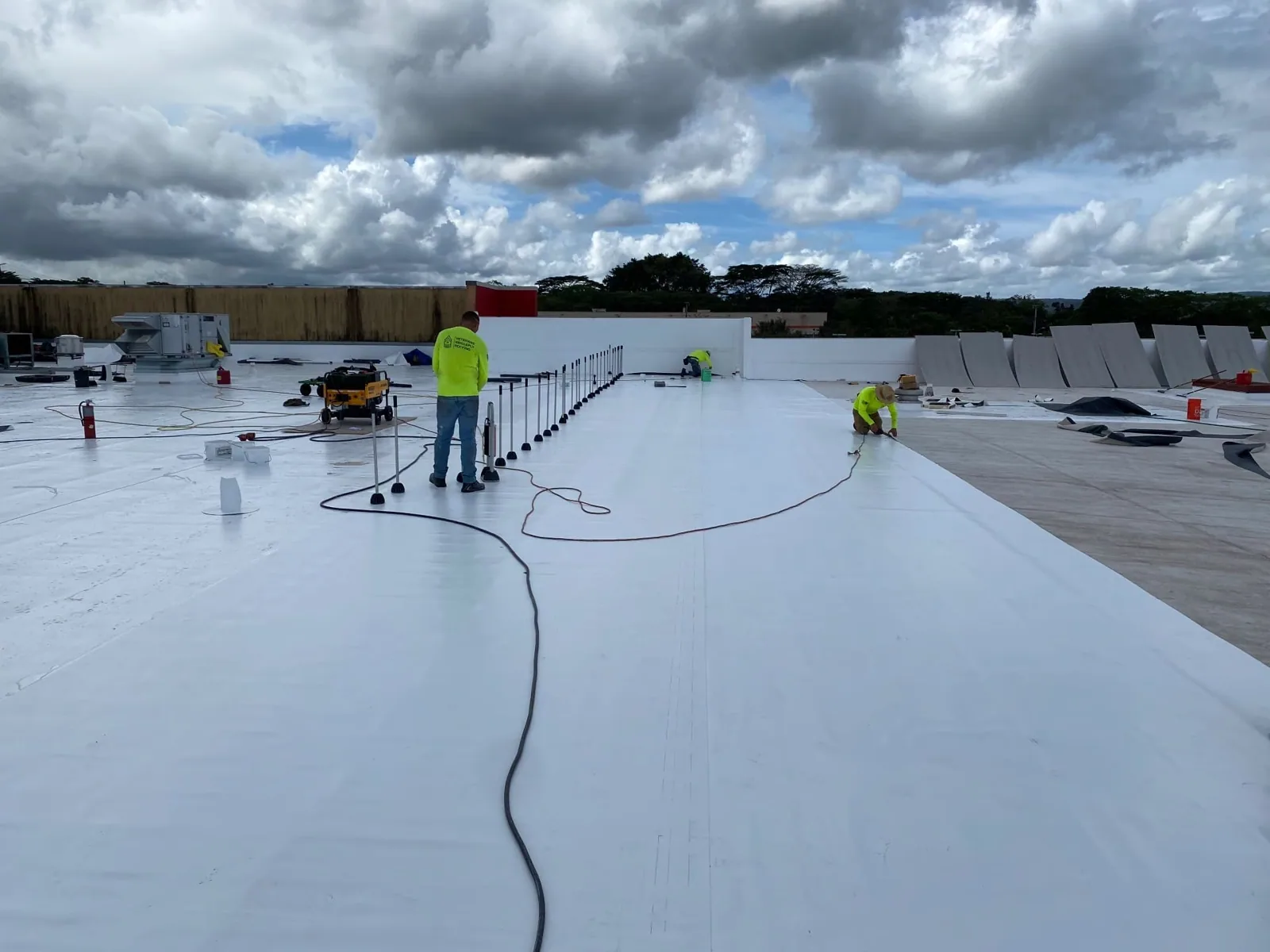
We divide the work into areas the crew can finish properly each day. Material delivery and access are set with the property manager, along with any building rules. Torn-off areas get their new insulation and membrane the same day, and finished seams are probed before the crew leaves. Known seam problems are fixed during the job, not left for a later visit.
For TPO roof work in the Airpark Area around Chandler Municipal Airport, we confirm the building and the property manager's requirements first. Those requirements shape delivery, work areas and scheduling.
When the job is done, you get the membrane installed, repair locations, flashing details, photos of exposed layers and seam probe results. Anything still unresolved is listed separately. That lets the facility manager tell completed work from recommendations that still need a decision.
Commercial Roofing Questions
Where does a TPO repair start?
With identifying the membrane, checking seams and old patches, and looking at the insulation underneath. Repairs need products compatible with the TPO already on the roof.
If a seam passes a probe check, is the area fine?
Not always. Versico notes that overheated TPO next to a weld can be damaged even when the seam passes, and may need an overlay patch. We check the surrounding sheet too.
Why would a TPO patch need work below the membrane?
If the insulation is wet, soft or damaged, a surface patch will not fix it. That insulation is replaced first so the patch has a sound base.
What happens to the flashing when equipment changes?
We update the flashing detail to fit the new curb or penetration before finishing, and coordinate with the HVAC or equipment contractor.
What should TPO completion records include?
The membrane used, repair locations, flashing details, seam probe results, photos of exposed layers and a list of any open items.
Get your TPO roof inspected
We will identify your membrane, check seams and insulation, and recommend the right repair or replacement for your roof.
Request a Roof AssessmentAll Roof Systems