Home / Service Areas / Intel Ocotillo Campus Area
Commercial Roof Repair in the Intel Ocotillo Campus Area
Commercial roof repair for manufacturing and industrial buildings in Chandler's Ocotillo area: penetration flashing, PVC roof repairs, condition reports and work planned around operations.
On a manufacturing roof, nothing gets scheduled until the operator signs off. The plant manager tells us which equipment and spaces are below the repair area, which rooftop units can't be disturbed and when we're allowed to work. We find the problem on the roof, then explain exactly what the repair involves step by step. Sometimes another trade has to finish its part first, like resetting a fan or reworking a pipe support, and we put that order in writing before the roofing work is approved.
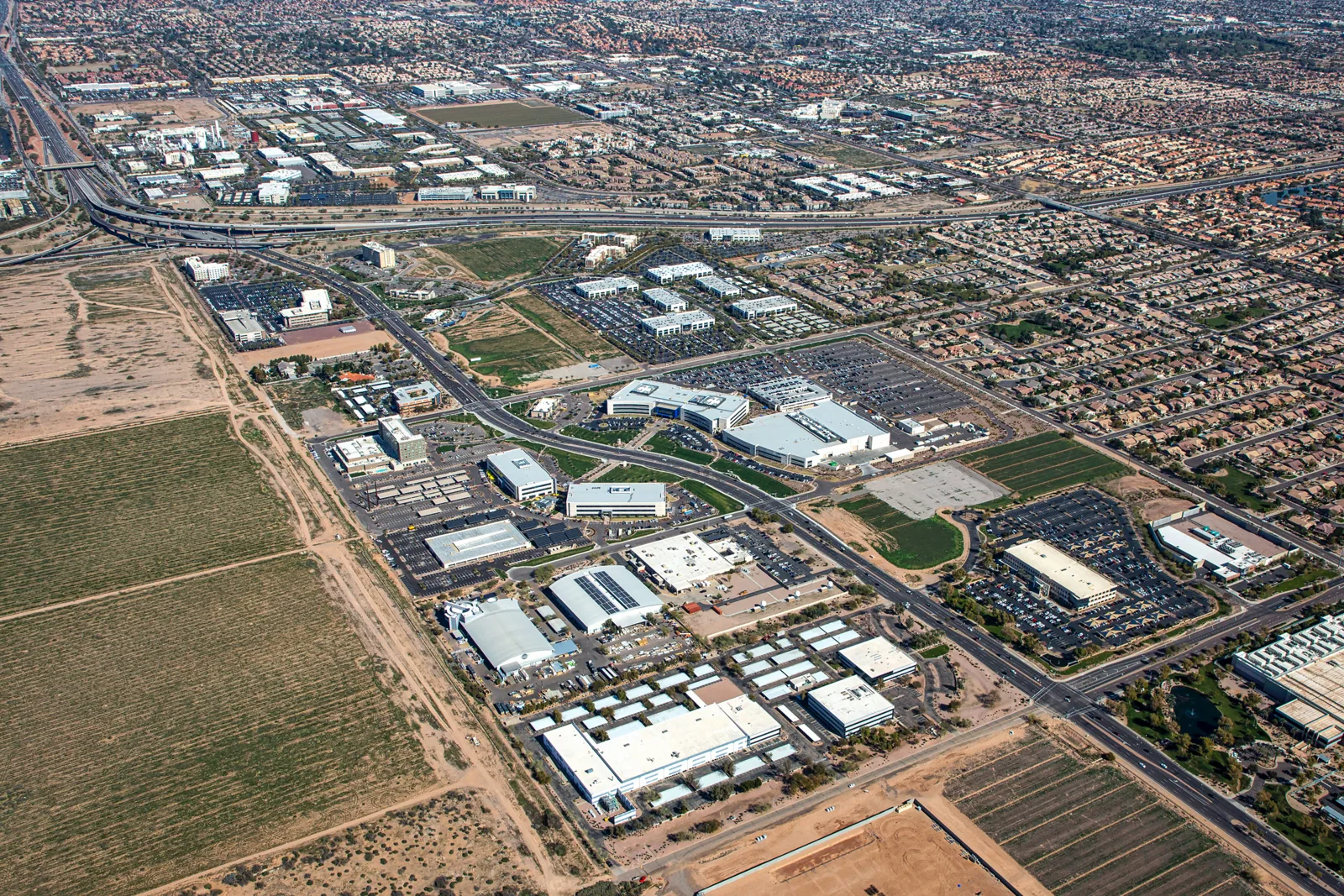
Intel's Ocotillo campus anchors a large manufacturing and industrial area in south Chandler, surrounded by suppliers, flex buildings and support facilities. Tell us which building you manage and what's going on, and we'll inspect it. We also work along the Price Corridor and in West Chandler. Each visit ends with clear findings and a practical plan for the fix.
Equipment position and operator instructions
Manufacturing roofs carry a lot of equipment: exhaust fans, makeup air units, process stacks, piping and conduit. Some of it runs around the clock and can't be shut down, and some exhausts can be hot or corrosive. Before any work begins, we ask the operator which units are critical, what's coming out of each stack and which air intakes need protecting from dust and roofing fumes.
For manufacturing plant roofing, we also ask about the space below. Clean areas, production lines, warehouses and offices all have different tolerance for vibration, noise and dust. Some plants want roof work only during scheduled shutdowns or on weekends. Others allow weekday work if we stay clear of certain areas.
We plan truck parking, lift placement, material staging and debris removal around forklift traffic and shipping docks. Plant safety rules, including check-in, required protective equipment and escort requirements, get built into the schedule from day one.
Roofing failure and water investigation
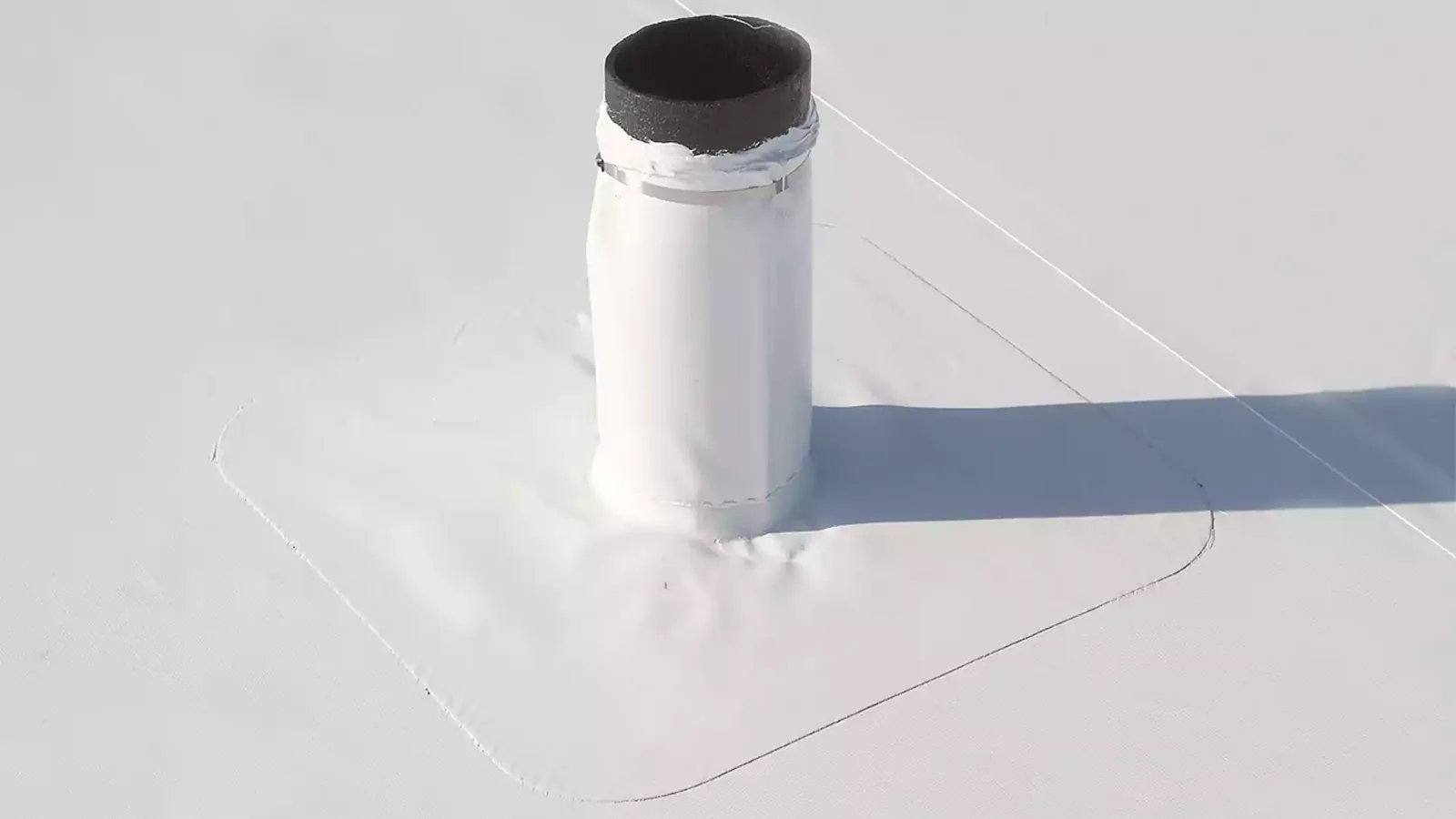
Most leaks on equipment-heavy roofs start at penetrations. Pipe boots crack, sealant at conduit entries dries out, curbs settle and the flashing around exhaust stacks breaks down from heat. We inspect each penetration near the reported leak, checking the flashing, the sealant, the curb and the equipment itself.
A penetration flashing repair sometimes depends on another trade. If a fan housing is rusted through, a pipe support is cutting into the membrane or a unit was set without a proper curb, the equipment has to be fixed first. We tell the operator who should handle it and wait for their confirmation before flashing it permanently.
If the leak source isn't clear, we say so. Water can enter at one penetration and travel along the deck or a pipe before it drips. Process equipment can also create condensation that looks like a leak. We explain what we ruled out and recommend the next step, such as a controlled water test.
Covering and permanent connection
Many industrial roofs in the area are single-ply membranes, including PVC, which holds up well against grease, chemicals and some process exhausts. Repairs have to match. For PVC roof repair, we confirm the membrane type and thickness, clean the area thoroughly and heat-weld new PVC to sound existing material. TPO and PVC look similar but don't weld to each other, so getting this right matters.
Old patches made of mastic, tape or the wrong membrane usually have to come off first. New PVC won't bond to them. We also check the membrane around the damage. If it's brittle, shrinking or pulling away from the edges, a patch may hold for a while but the surrounding roof is getting close to the end of its life.
At flashings and curbs, we install new PVC flashing welded to the field membrane, using prefabricated corners and pipe boots where possible. Each step is photographed so the operator has a record of what was done.
Retained support and changed scope
What's under the membrane matters. If the insulation is wet or the deck is corroded, a new patch won't last. When we suspect moisture, we use a meter or take a small test cut. If we open the roof and find more damage than expected, we stop, photograph it and explain the fix before expanding the work.
A roof condition report records what we found, where we found it and which areas we couldn't inspect. One test cut tells you about one spot, so we're clear about what's confirmed and what's still unknown. That keeps a small finding from being treated as proof that the whole roof is fine, or that the whole roof is failing.
If a recover or replacement is on the table, we check more areas before pricing it. Then we lay out the options side by side, including how much of the roof would be open at once and how each option affects plant operations.
Work-period protection and final account
Industrial jobs often happen in stages, around production schedules or shutdown windows. Before the crew leaves each day, any open area is sealed with temporary protection. The operator knows what's finished, what's temporary, what comes next and who to call if water appears.
If another trade has to complete equipment work before we can close up the roof, we wait for their confirmation and note it in the job file. Any approved change in scope is recorded along with the photos and the reason it was needed.
At closeout, the operator receives before and after photos, documentation of any hidden repairs, approved changes and a list of anything we noticed but didn't fix. That record supports maintenance planning and future capital budgets, and gives the next contractor a clear picture of what's already been done.
Commercial Roofing Questions
What does the operator need to tell you about rooftop equipment?
Which units can't be shut down, what each exhaust stack carries, where the air intakes are and which areas below are sensitive to dust, noise or vibration.
Who confirms when equipment work is done so you can flash it?
The operator or the trade that did the equipment work. We wait for that confirmation before installing permanent flashing.
What if you can't find the leak source right away?
We explain what we checked and ruled out, then recommend a next step such as a controlled water test or checking for process condensation.
How can what's under the roof change the repair?
Wet insulation or a corroded deck has to be replaced before new roofing goes on. We photograph it and get approval before expanding the work.
When is a recover or replacement ready to compare against repairs?
Once we've checked moisture, layers and deck condition across enough of the roof to support a recommendation, not just one test cut.
Schedule an Ocotillo area roof inspection
Tell us which building you manage and who the operator contact is. We'll inspect the roof and equipment details, explain the repair and plan it around your operations.
Request a Roof AssessmentAll Service Areas