Home / Service Areas / Price Corridor
Commercial Roof Repair in the Price Corridor
Commercial roof repair for offices and corporate campuses in Chandler's Price Corridor: leak tracing, TPO roof repair, condition reports and work planned around occupied buildings.
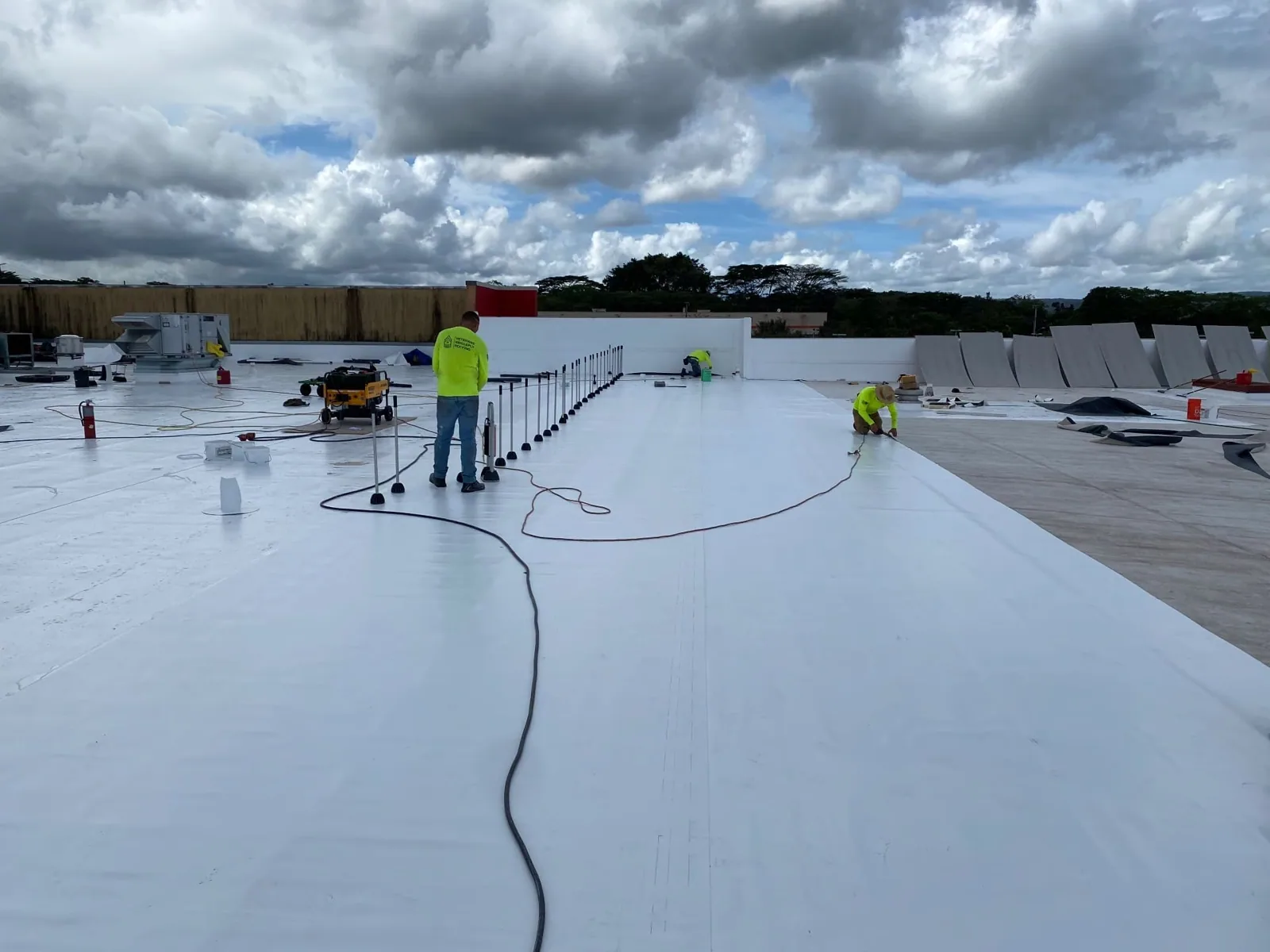
Office roof work in the Price Corridor starts with access. The facility contact tells us which entrances, parking areas and spaces sit near the repair, and we find the problem on the roof before agreeing on dates. A seam repair can be done in a morning with almost no disruption. A larger tear-off brings noise, deliveries and a dumpster for days. We show both the roofing work and the site plan together, so the facility manager can see the full footprint before approving anything.
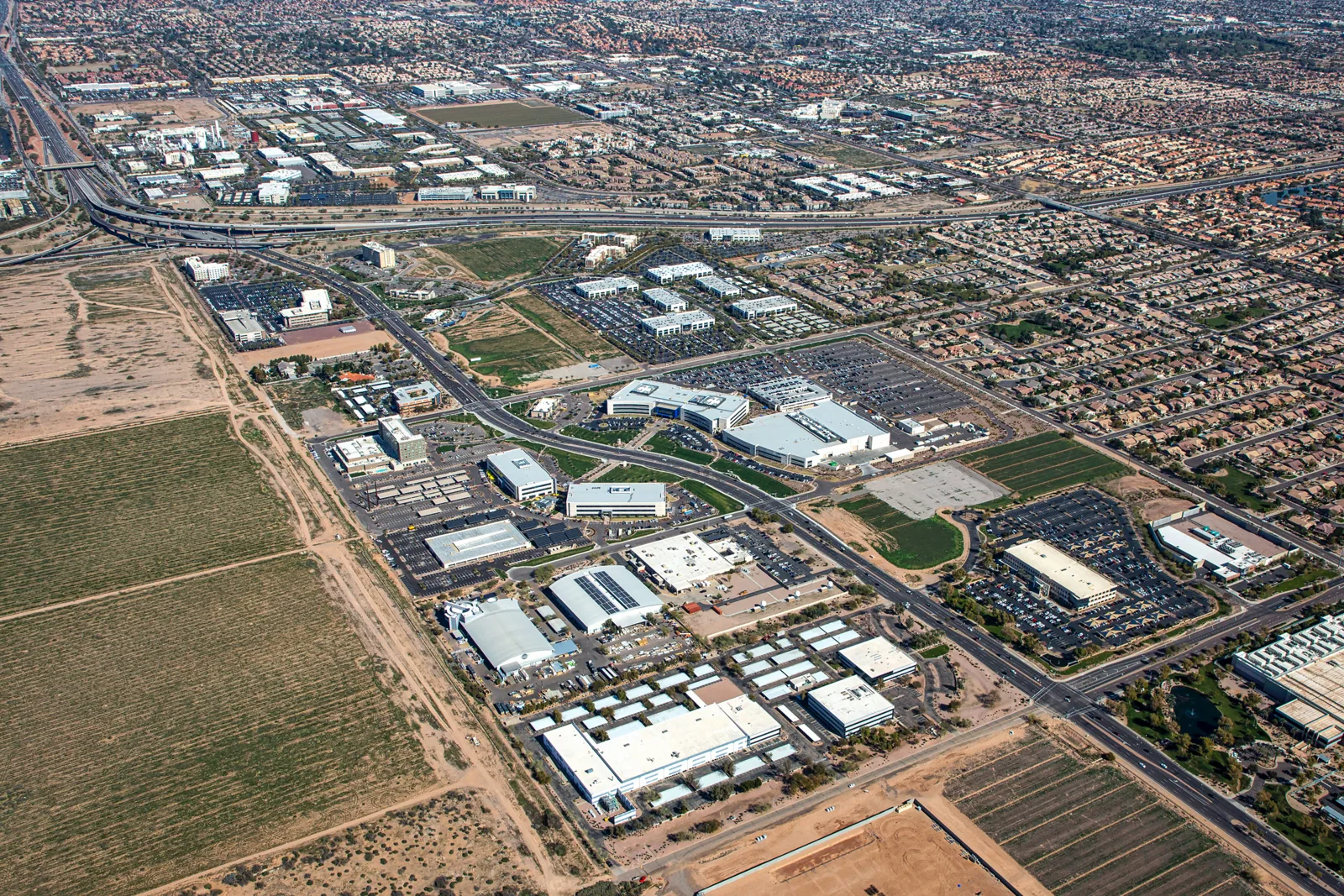
The Price Corridor is home to offices and corporate campuses along the Price Road and Loop 101 area. Send us the building address in Chandler and a contact, along with where the problem is showing up. We also work in West Chandler and around Chandler Fashion Center. If one manager handles several properties, we can report on each, but every building still gets its own inspection and its own plan.
Access and affected spaces
Corporate offices are occupied during roof work, and the people inside notice it. We ask the facility manager which spaces are below the repair area, where employees and visitors park and enter, and where our truck, lift and materials can go without blocking anyone. Entrances under the work area may need overhead protection or a temporary detour.
For office building roofing, noise and odor are the usual concerns. Tear-off and fastening are loud, and some adhesives and primers have a smell that rooftop units can pull inside. We ask whether certain hours are better, whether air intakes can be shut down briefly and who will notify employees or tenants. Some campuses also have security check-in or badge rules for contractors, and we build those into the schedule.
If water is already coming through, we recommend protecting what's below it: moving workstations, covering equipment or setting containment. The facility team knows the space better than we do, so we plan that together.
Water report and inspection position
We start inside where water appears, then inspect the roof above and upslope: seams, wall flashings, drains, pipe boots and equipment curbs. On office roofs, water often enters at one detail and runs along the deck before it drips through a ceiling several feet away.
For commercial leak investigation, we separate roof problems from equipment problems. Rooftop AC units can leak from condensate lines and cracked pans, and window or wall systems on upper floors can let water in during wind-driven monsoon rain. If the roof isn't the source, we tell you who should look at it.
If the first visit doesn't pin down the source, we say so plainly. We explain what we checked and ruled out, and recommend the next step, such as a controlled water test on a specific seam or wall. Every defect is photographed and marked on a roof sketch so the follow-up visit starts in the right place.
Membrane and failed details
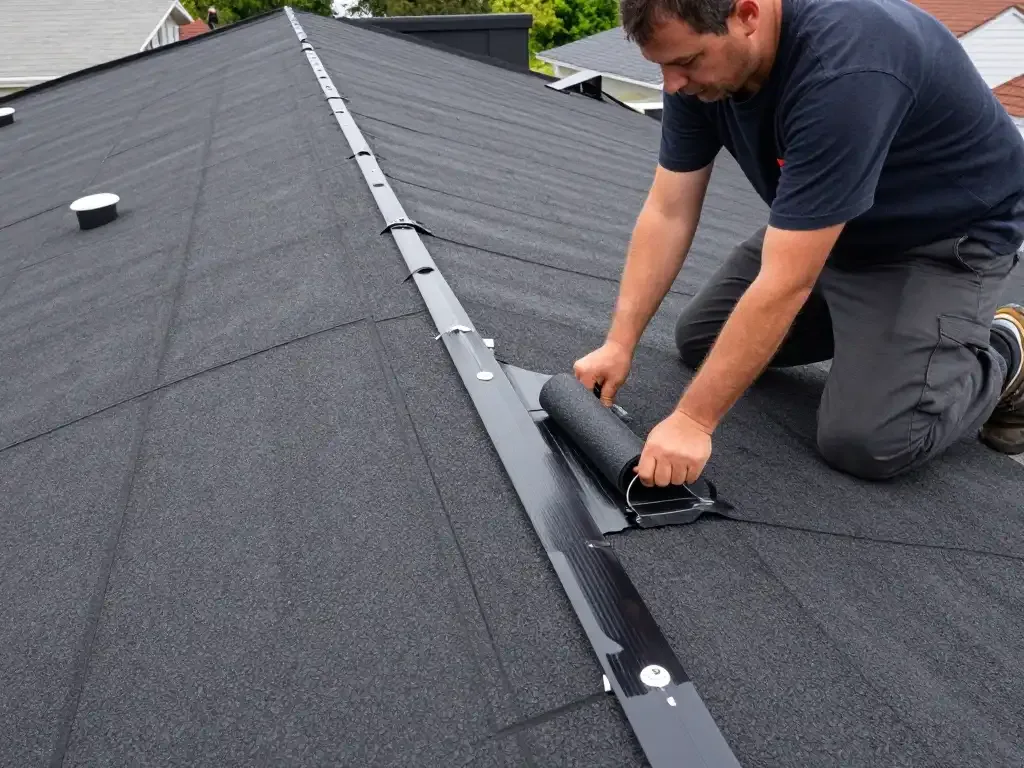
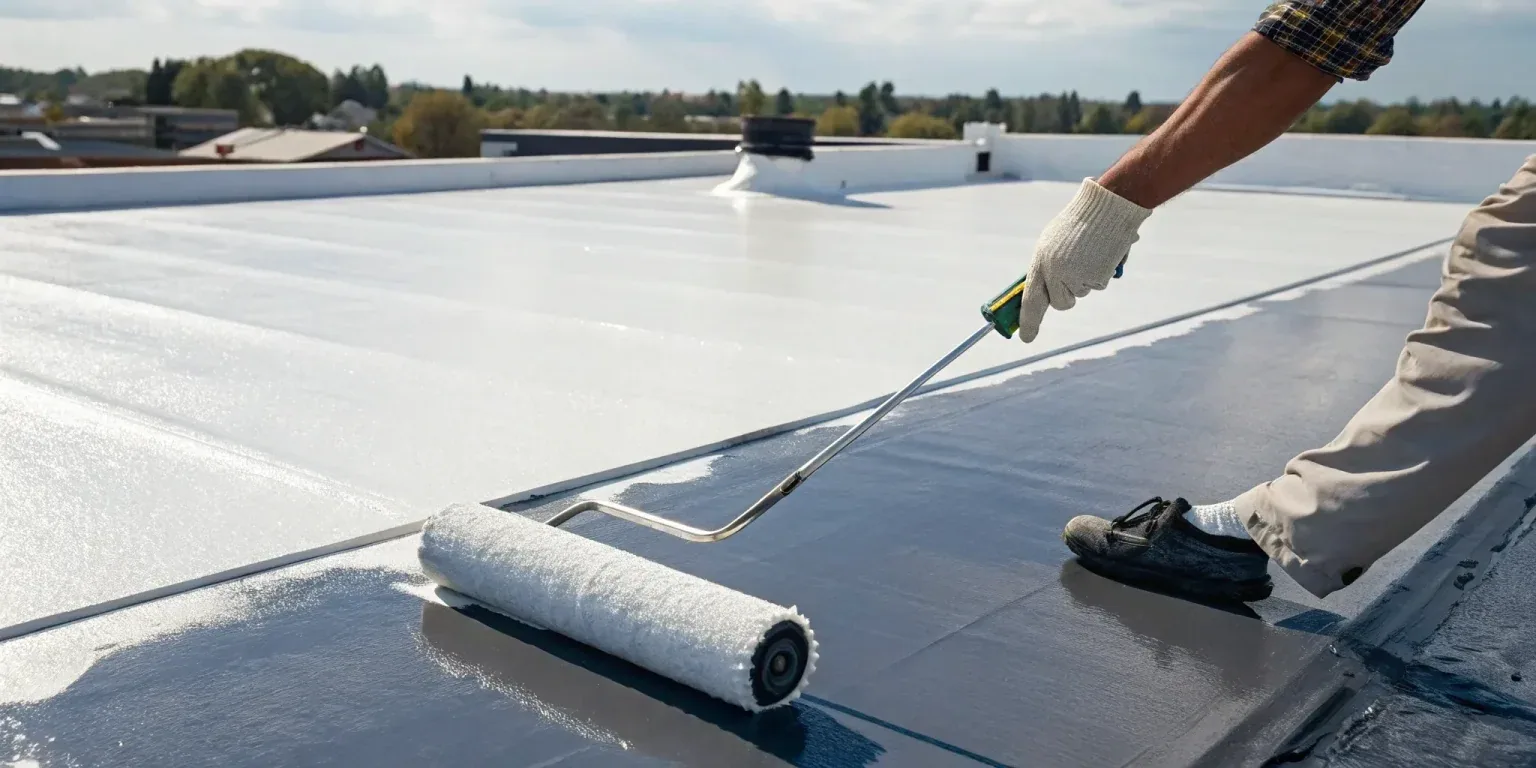
Many office buildings in the corridor have TPO roofs. TPO is a single-ply membrane with heat-welded seams, and it performs well in the sun when it's installed right. Over time, though, seams can open, the membrane can puncture near equipment and flashings at walls and curbs can pull loose as the sheet shrinks.
For TPO roof repair, we confirm the membrane is TPO and not PVC, since they look alike but don't weld to each other. Older TPO needs thorough cleaning before it will weld reliably. New material is heat-welded to sound existing membrane, patches extend well beyond the damage and corners and pipe boots use prefabricated pieces where possible.
Old patches of tape, mastic or the wrong membrane usually have to come off first. If the TPO around the damage is brittle or cracking when we probe it, we'll tell you. A patch may hold for a while, but that's a sign the roof is getting close to the end of its life.
Supporting layers and scope changes
What's under the membrane decides whether a repair lasts. Wet insulation won't support a patch for long and slowly damages the deck. When we suspect moisture, we use a meter or take a small test cut. If we open the roof and find more damage than expected, we stop, photograph it and explain the added cost before going further.
A roof condition report records what we found, where we found it and what we couldn't see. One test cut tells you about one spot, so the report is clear about what's confirmed and what's still unknown. That keeps a single finding from being stretched into a conclusion about the whole roof.
If a recover or replacement is worth considering, the report says what additional testing is needed to price it properly. The facility manager gets a clear next decision instead of a vague recommendation.
Work periods and handback
Some jobs take more than one visit. Before the crew leaves each day, any open area is sealed with temporary protection. The facility manager knows what's finished, what's temporary, what comes next and who to call if water appears. If we're waiting on an HVAC contractor or a delivery, we explain how that affects our return.
Changes are handled the same way every time. If hidden damage turns up, we photograph it, explain the fix and get approval before expanding the work. The approval and the photos go into the job file.
At closeout, the facility receives before and after photos, documentation of any hidden repairs, approved changes and a list of anything we noticed but didn't fix. That record helps with budgeting, lease questions and insurance, and gives the next inspector a clear starting point if a leak shows up somewhere else. On a campus with several buildings, keeping that record consistent makes long-range planning much easier.
Commercial Roofing Questions
What building information helps you plan the repair?
Which spaces are below the leak, where people park and enter, where our equipment can go, any security or check-in rules and who will notify occupants.
What if you can't find the leak source on the first visit?
We explain what we checked and ruled out, then recommend a next step such as a controlled water test. Every finding is photographed so the follow-up starts in the right place.
How do you choose the right membrane repair?
We confirm the roof is TPO, PVC or another system, clean the area thoroughly and weld or bond matching material to sound membrane around the damage.
Why can opening the roof change the price?
Wet insulation or a damaged deck may be hiding under the surface. It has to be replaced for the repair to last, and we get approval before doing it.
What does the facility manager get between visits?
A summary of what's finished, what's temporarily sealed, what comes next, who is doing it and who to call if water appears.
Schedule a Price Corridor roof inspection
Send us the building address and who manages access. We'll inspect the roof, trace any leaks and plan the repair around your occupied offices.
Request a Roof AssessmentAll Service Areas