Home / Roof Systems / Built-Up Commercial Roofing
Built-Up Commercial Roofing in Chandler, AZ
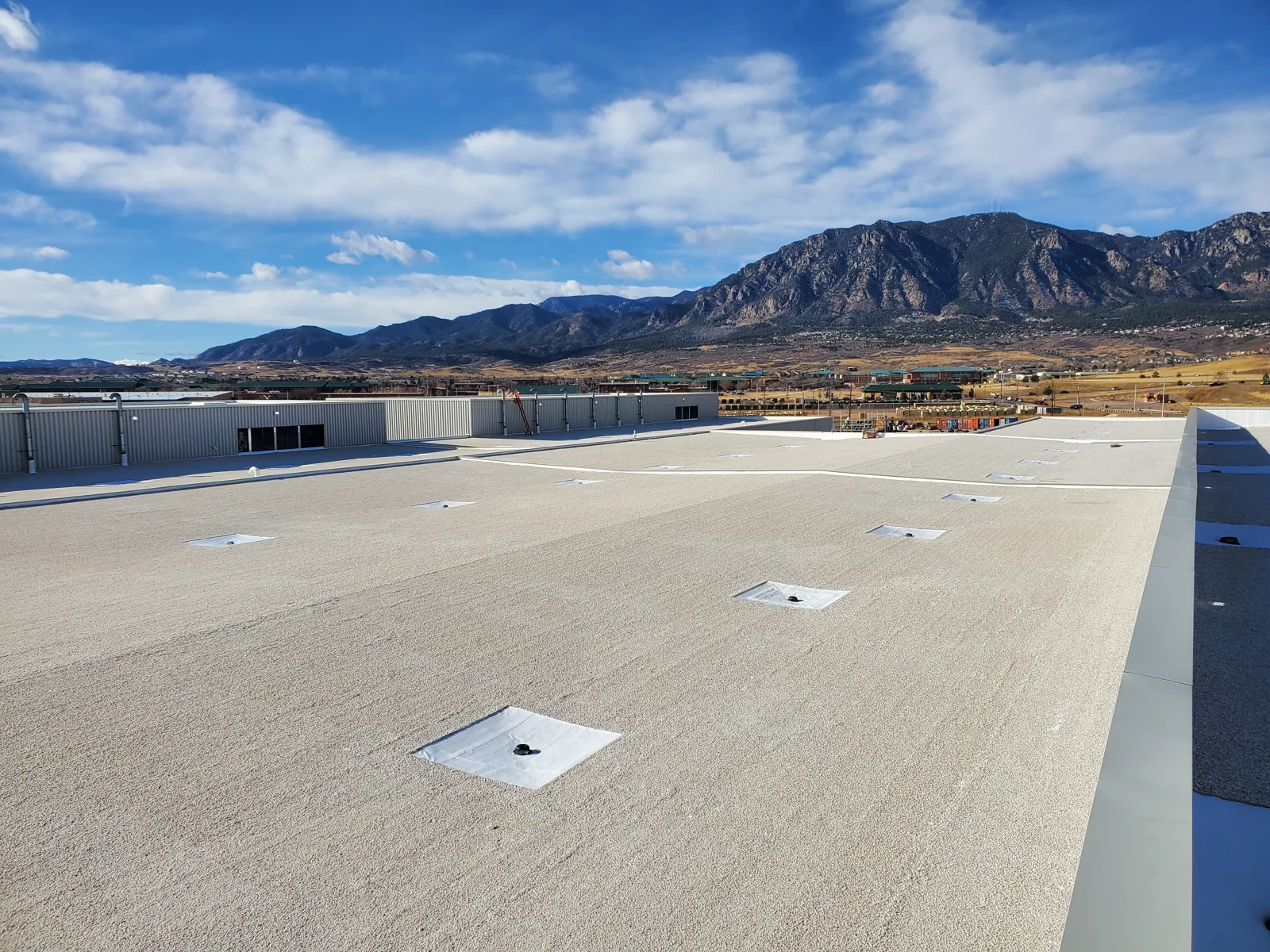
Built-up roofing in Chandler, AZ: repairing and replacing tar-and-gravel and cap sheet roofs, finding wet plies, and flashing walls, curbs and drains properly.
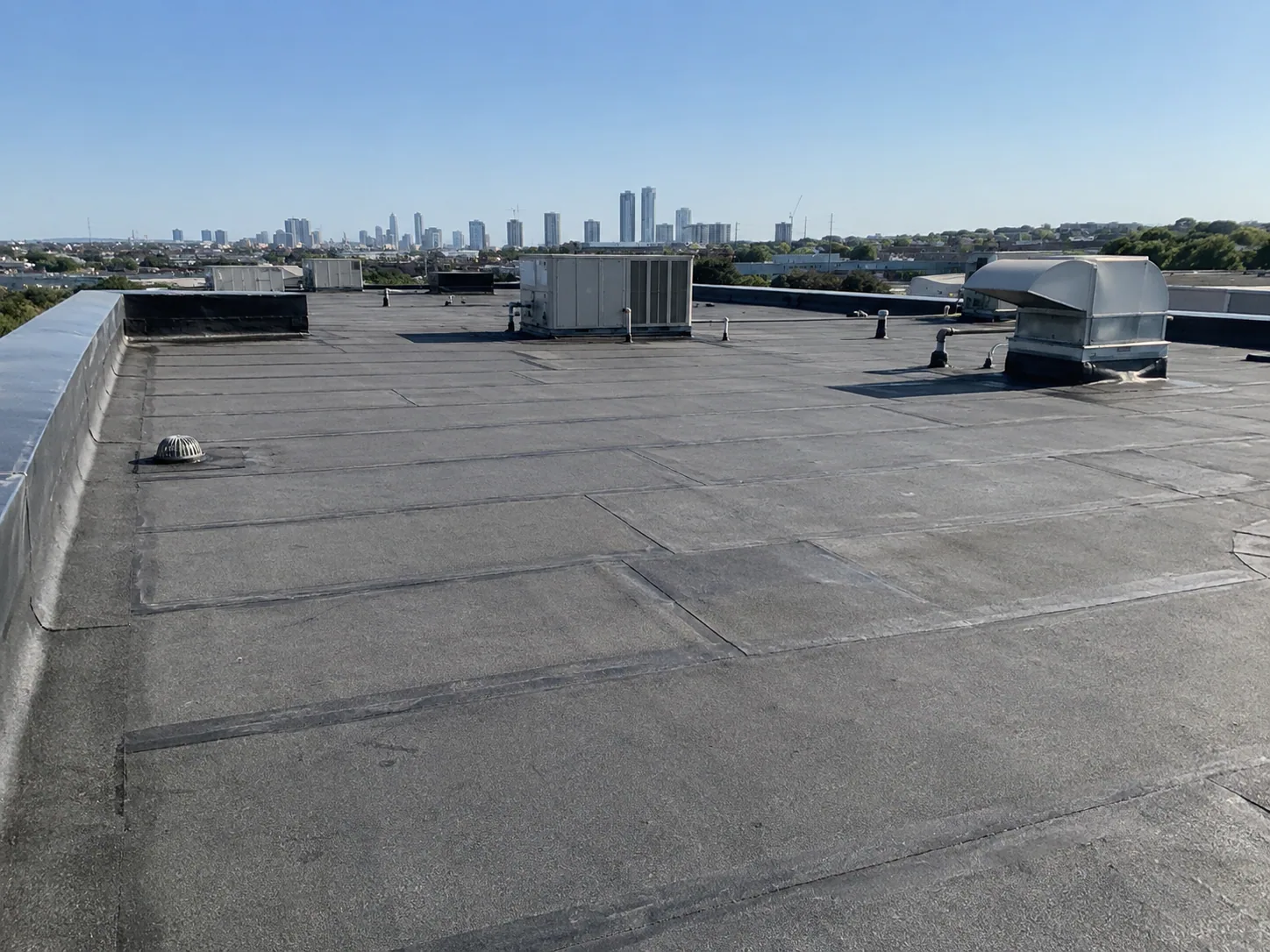
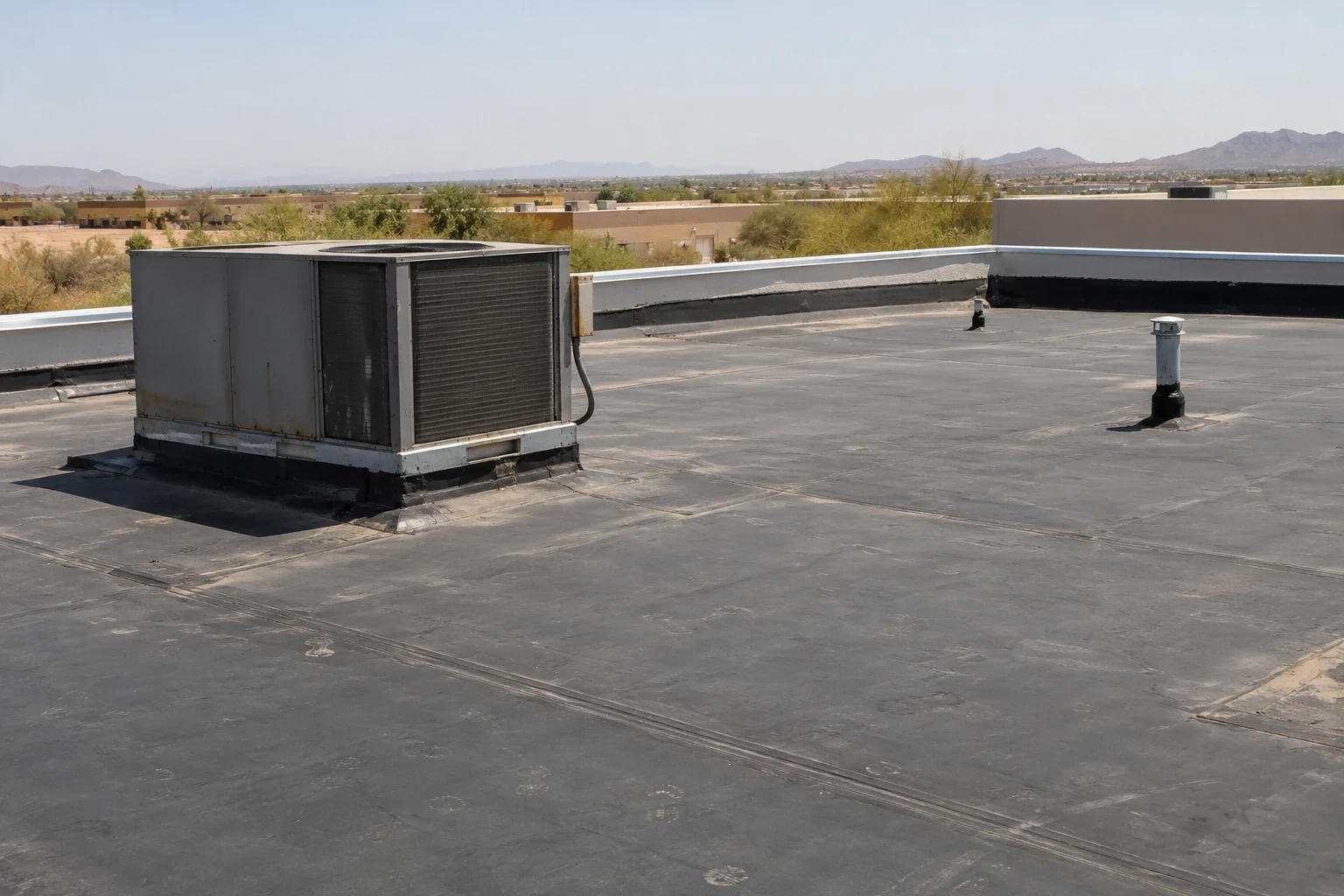
Built-up roofs, often called tar-and-gravel roofs, are made of several layers of felt and asphalt with a gravel or cap sheet surface on top. Many older offices, schools and warehouses in Chandler, including buildings in the Price Corridor, still have them. They can last a long time, but when they leak, the problem is often hidden between layers. Before we patch the surface, we figure out what the roof is made of and how deep the damage goes. Walls, curbs and drains get checked at the same time. Then we explain your choices: repair, a recover over the existing roof, or full replacement, and exactly what stays and what goes in each.
Plies and surfacing
GAF describes built-up roofing as alternating layers of felt reinforcement and asphalt, finished with either a mineral-surfaced cap sheet or a flood coat of asphalt with aggregate. Your roof may be one of these or a mix, especially if it has been repaired over the years. We check what is actually on the roof and review any records before choosing repair materials.
For new work, the GAF built-up roofing product line and its installation instructions guide the system. On existing roofs, older patches are often made from different materials than the original roof. We find those areas rather than assuming the whole roof is the same.
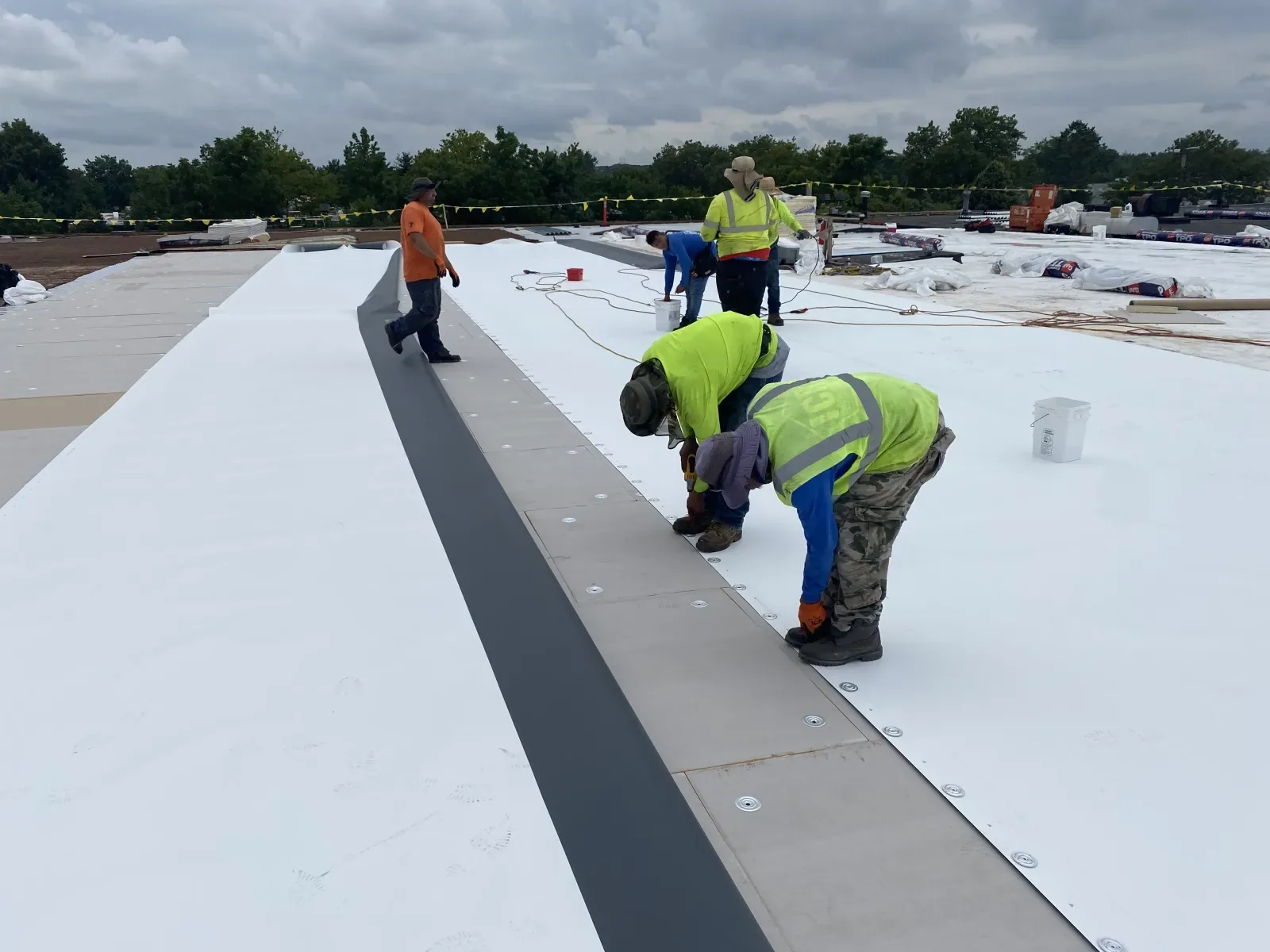
Some owners ask about switching to modified bitumen roofing, which uses factory-made sheets instead of hot-mopped plies. That can be a good choice, but the estimate still has to show what old layers are removed or kept and what goes back on. A different top sheet alone does not describe the work.
What you cannot see from the surface
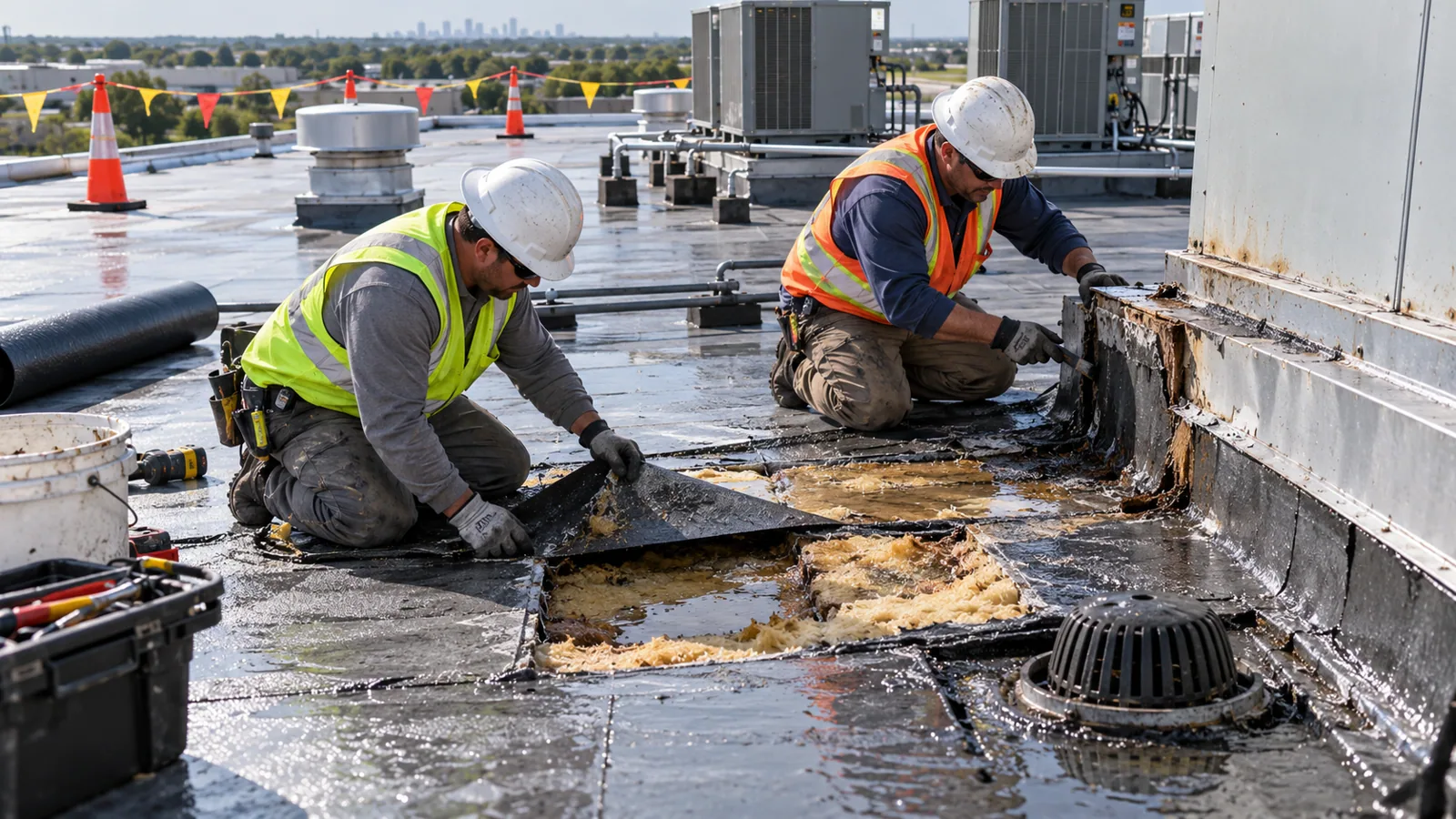
A built-up roof can look fine on top and still be wet underneath. Water that gets between plies or into the insulation spreads sideways and can cause blisters, soft spots and deck damage. We note blisters, splits, bare spots in the gravel and interior stains, but we treat them as clues, not answers. Test cuts show what is really going on, and we are clear about which areas are confirmed wet and which are only suspected.
An infrared moisture survey can help map wet areas on a large built-up roof, because wet insulation holds heat differently. Gravel, weather and roof conditions can affect readings, so suspect areas are confirmed with core cuts before the removal area is set. The survey guides testing; it does not set the tear-off quantity on its own.
Public and civic buildings often have older built-up roofs with long repair histories. On any of them, we confirm the exact roof area, review records, and document what we find at each test cut. The estimate separates confirmed repairs from areas that still need investigation.
Where the repair ends
On a built-up roof, a repair has to go down through the damaged layers to sound material. We mark where removal stops and the good roof begins. Wet insulation or damaged deck in that area gets replaced. New plies are built back up and tied into the surrounding roof. Putting a patch on top of wet, failed layers just hides the problem.
A commercial roof replacement may make more sense when wet areas are widespread. The estimate shows the removal area and what goes back. If we find more damage during tear-off, we photograph it before covering anything and explain the added work and cost.
Some owners compare a new built-up roof with EPDM roofing or another single-ply system. We price each with the same deck repairs, insulation and flashing details, so the comparison is fair and you are not choosing based on membrane name alone.
Walls, curbs and drains
Every repair area eventually meets a wall, a curb or a drain. Those are where built-up roofs fail most often. We check the base flashing, the counterflashing above it and the condition of the wall or curb behind it. If the backing is rotted or loose, it gets repaired before new flashing goes on, or the new flashing will not stay attached.
When both a drain and the roof around it need work, they are handled as separate tasks. A plumber may need to repair or reset the drain body, and we flash it once the drain is in its final position. If another contractor moves a curb or drain, we adjust our detail to match what is actually installed.
Older component patches are often made from different materials than the main roof. We check what was used before choosing new flashing products, and list any wall or curb repairs in the estimate. A well-described field repair is not enough if the edges of it are left vague.
Surfacing, phasing and records
The surfacing, whether gravel in asphalt or a cap sheet, protects the plies from sun, which is especially important in Chandler. We match the new surfacing to the repair and tie it into the existing surface around it. Photos of the finished surface are not enough on their own, so we also photograph the layers before they are covered.
For built-up roof work in Downtown Chandler and elsewhere, we arrange roof access, kettle or material placement and deliveries with the property manager. Hot asphalt work comes with odor and safety considerations, so timing and air intakes get planned ahead. The work goes in phases, and you know how each finished area fits the overall job.
At the end of the job, you get photos of removal and new layers, the materials used, any approved changes, and the locations of finished repairs and flashing details. Recommendations for future work are listed separately so they are not confused with what was completed.
That record connects the original problem, what we found and what we fixed. It also shows which parts of the existing roof were kept, which helps anyone working on that roof later.
Commercial Roofing Questions
What should a built-up roof repair estimate describe?
The existing layers and surfacing, how deep the repair goes, what is removed and kept, and how the new plies, surfacing and flashing tie into the existing roof.
Can you tell if a built-up roof is wet just by looking at it?
Not reliably. Blisters and soft spots are clues, but test cuts or a moisture survey confirmed by cores are needed to know how much is wet before setting the removal area.
How should a built-up repair tie into the existing roof?
Removal goes down to sound material, then new plies are built back up and overlapped onto the good roof around it. A surface patch over wet layers will not last.
Why coordinate drain repairs with roof repairs?
The roof flashing has to match the drain's final position and height. If the drain is repaired or reset, we flash it after that work is done.
What records should we get after built-up roof work?
Photos of the layers before they were covered, materials used, approved changes, locations of repairs and flashing details, and a separate list of recommended future work.
Get your built-up roof inspected
We will check the layers, surfacing and flashing, find out how deep any damage goes and explain your repair, recover and replacement options.
Request a Roof AssessmentAll Roof Systems