Home / Service Areas / Mesa
Commercial Roof Repair for Mesa Building Assignments
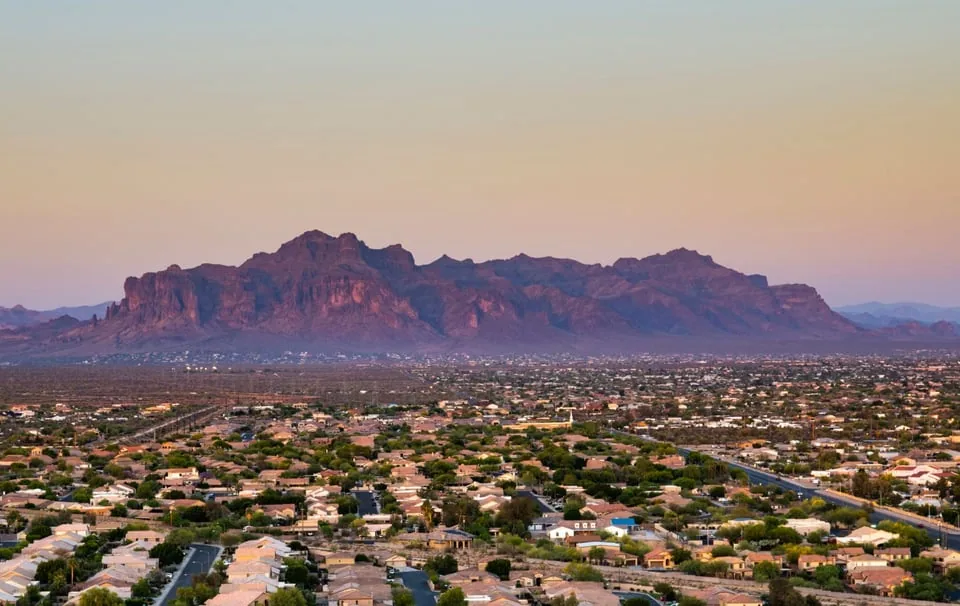
Commercial roof repair in Mesa, AZ: office building leak tracing, wall flashing repair, roof capital planning and work scheduled around occupied offices.
A ceiling stain in an office is a symptom, not a diagnosis. The first step is separating the two: we ask the property manager or tenant to show us exactly where water is coming in, then inspect the roof above and upslope before anyone talks about materials. If the problem turns out to be a rooftop unit rather than the roof, we say so. If we find a failed seam or flashing, we show you the photo and explain the fix. When the first look doesn't settle it, we tell you what we'll check next. A clear finding is what gives a repair proposal its purpose.
Mesa is Arizona's third-largest city and sits directly north and east of Chandler. Send us the building address and what's happening, and we'll inspect the roof. We also work across Gilbert and around the Williams Campus. A small repair and a full replacement need very different information, and we'll explain which one you're looking at.
Symptom position and repair evidence
Office leaks often show up in odd places: above a conference table, along a window wall or in a hallway ceiling far from any obvious roof feature. We mark the interior location with the property manager, then check the seams, flashings, drains, curbs and penetrations above and upslope. Water often travels along the deck or under the membrane before it drips through.
For leak repair in Mesa, we separate roof problems from everything else. Rooftop AC units can leak from condensate lines or cracked pans. Window frames and wall systems on upper floors can let water in during wind-driven rain. If the roof isn't the source, we tell you who should look at it.
Every defect gets a photo and a marked location on a roof sketch. If we can't confirm the source on the first visit, we explain what we ruled out and recommend the next step, such as a controlled water test. That's better than paying for patches in the wrong places.
Sheet repair and wall connection
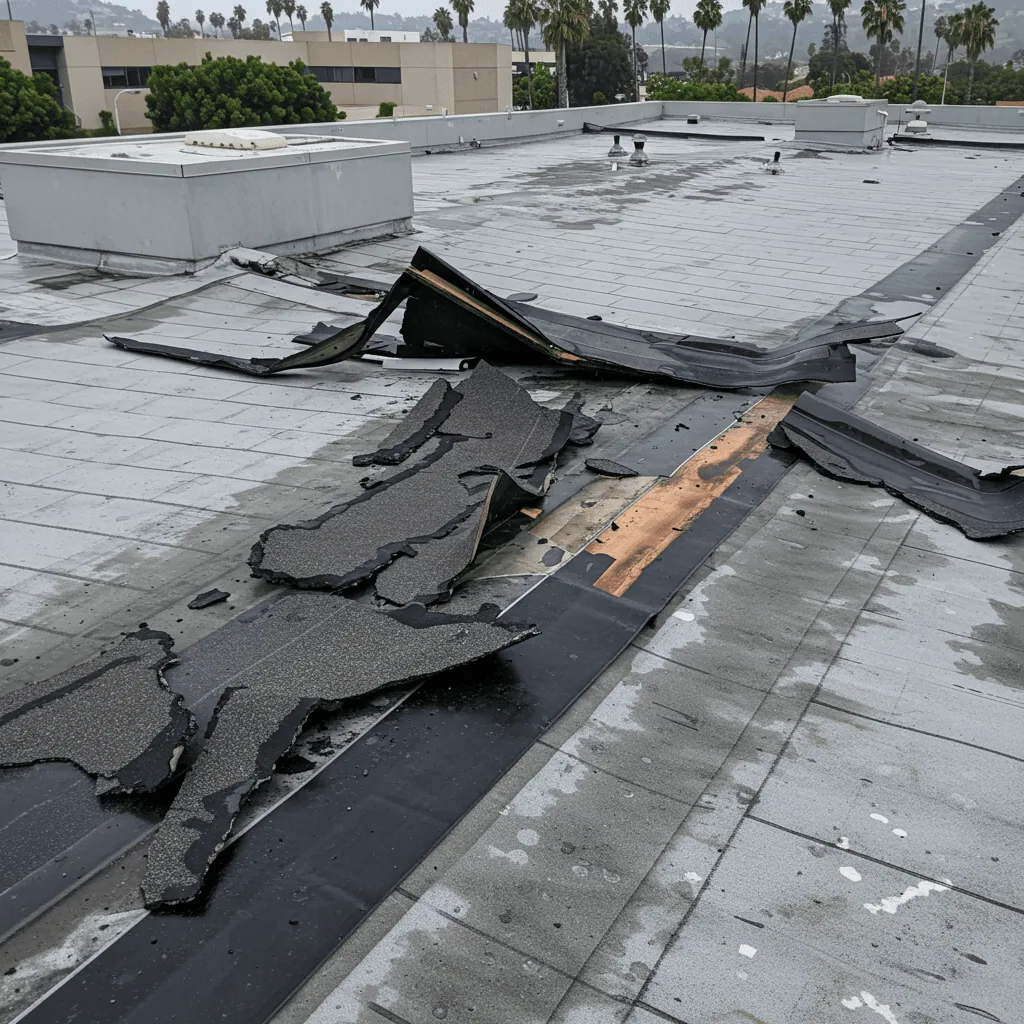
Where the roof meets a parapet wall or a taller section of the building, the flashing takes a beating. Sun and heat dry out sealant, the membrane shrinks and pulls away from the wall, and metal counterflashing loosens. Cracked stucco above the flashing can also let water run down behind it.
For flashing failure repair, we remove the failed flashing and check what's behind it. Rotted wood nailers, cracked block or soft stucco have to be repaired before new flashing goes on. Then new base flashing and counterflashing are installed and sealed. If the wall above the roof needs stucco or masonry repair, that's usually a separate trade, and we explain who does what and in what order.
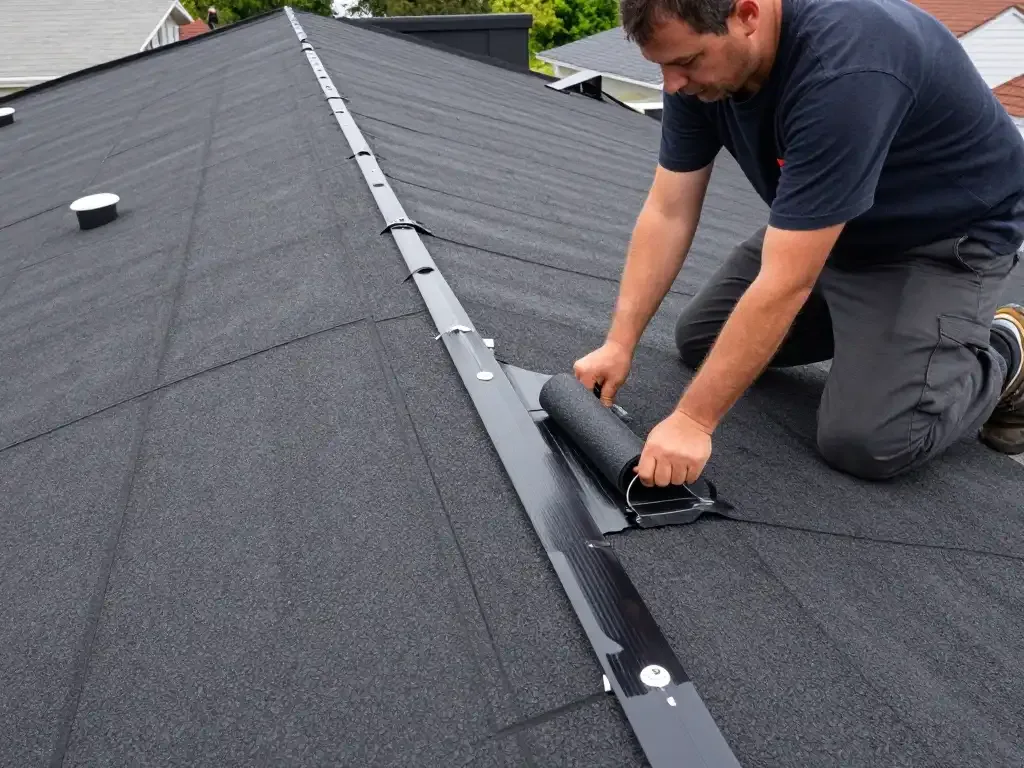
Membrane repairs in the field follow the same rule. We confirm the roof type, remove failed patches, clean and prepare the surface and install compatible material. Each step is photographed so the building file shows what's under the finished repair.
Supporting layers and broader decision
A repair is only as good as what it sits on. If the insulation is wet or the deck is damaged, a patch won't last. When we suspect moisture, we use a meter or take a small test cut. If we open the roof and find more damage than expected, we stop, show you photos and get approval before expanding the repair.
Roof capital planning helps owners decide when to stop patching. We assess the roof's condition, estimate its remaining life in general terms and lay out options: targeted repairs now, a recover in a few years, or replacement on a planned schedule. For owners with several buildings, that makes budgeting much more predictable.
Before recommending a recover or replacement, we check moisture across the roof, confirm how many layers already exist and look at how the roof is attached. We then compare the options side by side, including cost, timing and how much disruption each would cause for the tenants below.
Office access and occupied protection
Offices are occupied during roof work, so we plan around the people inside. We ask the property manager where tenants and visitors park and enter, where we can put a lift or dumpster, and when deliveries come in. Entrances under the work area may need overhead protection or a temporary detour.
For office building roofing, noise and odors are the most common complaints. Tear-off is loud, and some roofing adhesives and primers have a strong smell that rooftop units can pull into the building. We ask whether certain hours are better, whether air intakes can be shut down briefly during those steps and who will notify tenants. Some owners prefer early-morning or weekend work for the loudest phases.
If water is actively coming through, we recommend protecting what's below: moving furniture and computers or covering them until the permanent repair is done. Small repairs barely affect the building. Larger projects need a staging plan that we review with the property manager before scheduling.
Visit closure and construction account
If a job takes more than one visit, any open area is sealed with temporary protection before the crew leaves. The property manager knows what's finished, what's temporary, what comes next and who to call if water appears. If we're waiting on an HVAC contractor or a stucco crew, we explain how that affects our return date.
Every change in scope is documented. If hidden damage turns up, like wet insulation, rotted wood or a corroded deck, we photograph it, explain the fix and get approval before going further. The approval and the photos stay in the job file.
At closeout, the property manager receives before and after photos, documentation of any hidden repairs, approved changes and a list of anything we noticed but didn't fix. That record helps with tenant questions, insurance claims and budgeting. It also gives the next inspector a clear starting point if a leak is reported somewhere else, and it stays useful when ownership or management changes.
Commercial Roofing Questions
What should a Mesa roof leak report include?
The building address, exactly where water appears inside, when it happens and any records of earlier repairs. Photos of the interior damage help too.
What does a wall flashing repair involve?
Removing the failed flashing, repairing any rotted wood or damaged wall behind it, then installing new base flashing and counterflashing sealed to the wall.
Why can what's under the roof change the repair?
Wet insulation or a damaged deck won't support a new repair. It has to be replaced first, and we get your approval before expanding the work.
What do you need to know before working on an occupied office?
Tenant entrances and parking, where equipment can go, delivery times, preferred work hours, air intake locations and who will notify tenants.
What makes the final report useful later?
Photos of the work and any hidden damage, approved changes and a list of open issues. The next inspector or manager can see exactly what was done.
Schedule a Mesa roof inspection
Send us the building address and where water is showing up. We'll inspect the roof, explain what's causing the leak and plan the repair around your tenants.
Request a Roof AssessmentAll Service Areas