Home / Commercial Roofing Services / Occupied-Building Reroofing
Occupied-Building Reroofing in Chandler, AZ
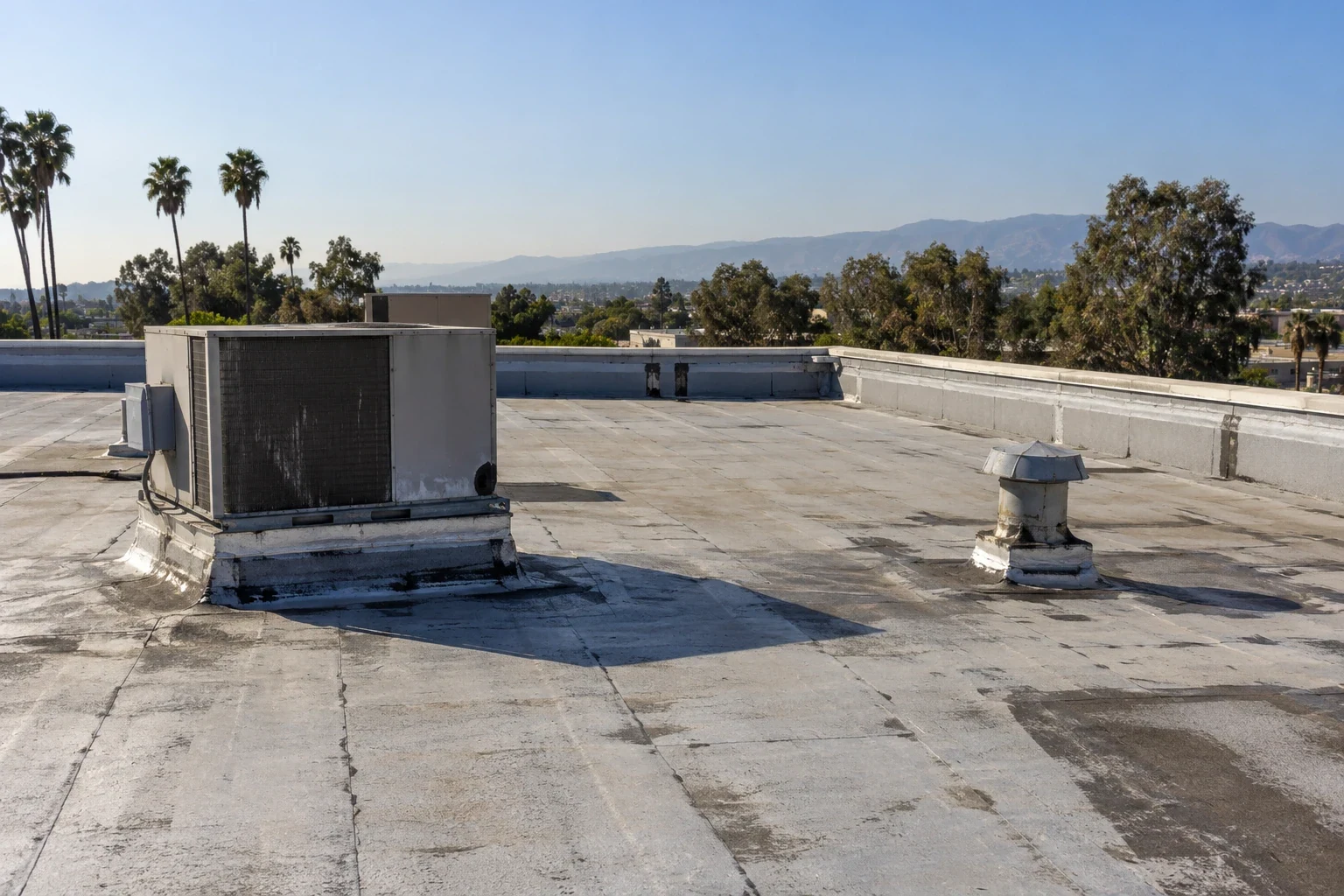
Reroofing occupied commercial buildings in Chandler, AZ: staged tear-off, daily dry-in, planned deliveries and clear communication so tenants, patients and staff keep working.
Replacing a roof over a working hospital, school or office takes more planning than replacing one over an empty warehouse. The people below still need quiet, clean air and dry ceilings. We break the roof into sections, decide the order with the facility manager, and make sure every section we open is watertight before the crew leaves for the day. You see that plan before any tear-off starts, not just a square-foot price.
Building rules and sensitive areas
We start by walking the building with the facility manager and marking the rooms below each roof area. Which spaces can't take noise in the morning? Where are the air intakes? Which areas need ceiling protection or extra dust control? Those answers vary from building to building, so we get them for your property instead of copying another job's rules. Then we tie each one to the roof section it affects.
On a hospital roof, for example, infection control and patient areas often decide the work hours and the order of sections. Interior protection, such as plastic at ceiling tiles or a closed corridor, is usually handled by the facility's own staff or another contractor. We agree on who does what before we start. A building type doesn't come with a standard schedule. A medical office and an emergency department can have completely different rules, so we plan each section around the actual rooms and people beneath it.
Tear-off limits
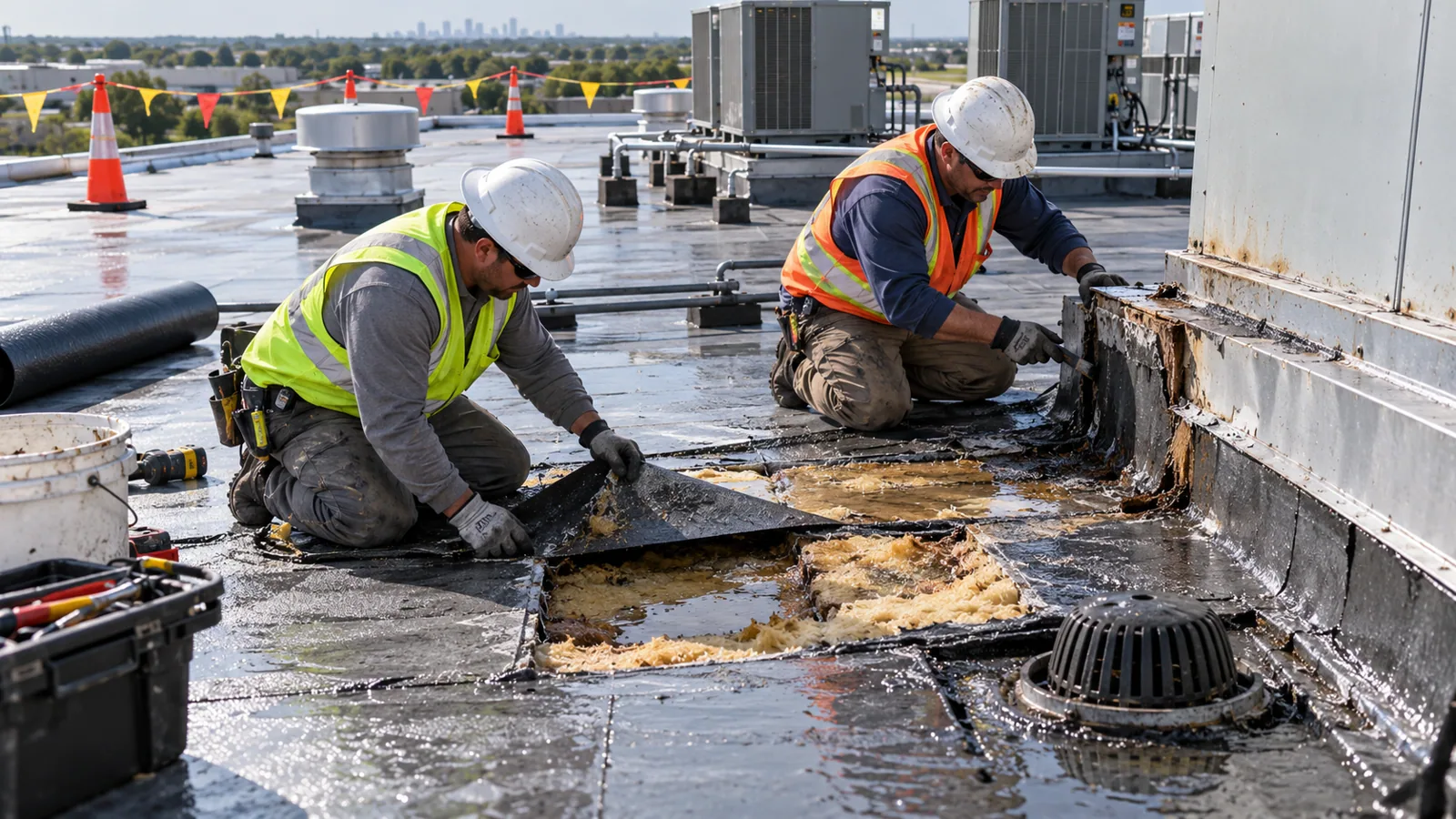
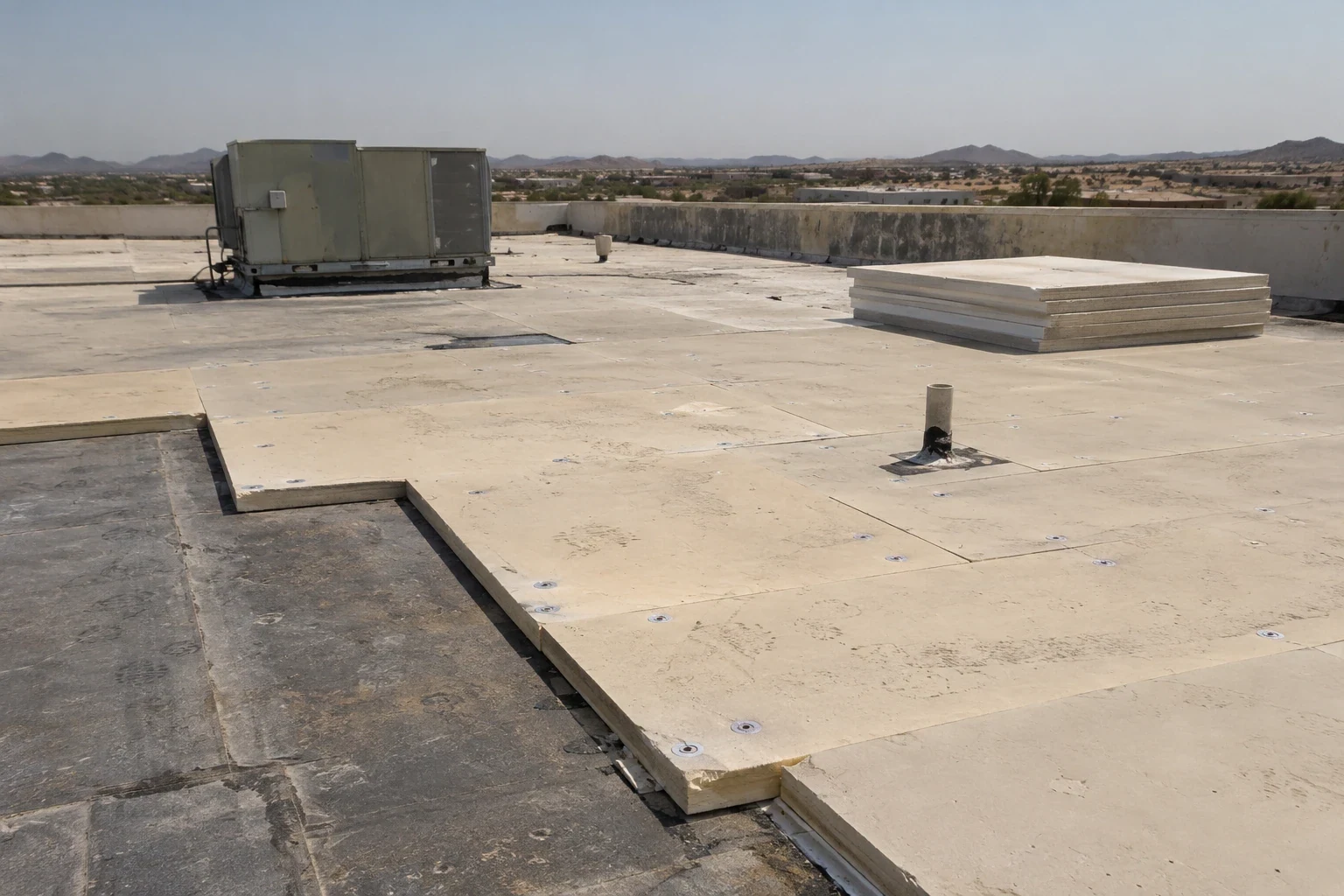
For each section, we spell out what comes off and what stays. That might be the membrane only, or the membrane and wet insulation down to the deck. We confirm the existing layers with test cuts before finalizing quantities. On an occupied building, the crew should never open more roof than it can close the same day. Knowing the depth of the tear-off ahead of time is what makes that possible.
Our roof replacement proposals show the tear-off depth and the new layers for each section, so you can see why a section is sized the way it is. If we find something unexpected under the old roof, like a second roof or damaged deck, we stop, show you, and price the fix before we continue that section. The schedule for that area gets updated at the same time. That way a surprise in one corner doesn't quietly turn into a bigger job, or a section left open overnight, while the rest of the plan still assumes the original scope.
Deliveries, staging and debris
Material deliveries and debris removal are often the most disruptive part of reroofing an occupied building. We agree on the crane or hoist location, the delivery times, and where dumpsters will sit. We keep those away from entrances, fire lanes and patient or student drop-off areas. Those arrangements are confirmed with the building contact before the first truck shows up, not worked out by the driver in the parking lot.
We also make sure the insulation and cover board for a section is on site before that section is opened. Running short halfway through a tear-off is how roofs get left exposed. Debris goes off the roof in chutes or bins on a set schedule, not piled where people walk. Civic buildings in downtown Chandler, schools and medical offices each have their own traffic patterns, so we plan staging around how your site actually runs. The goal is simple: the people inside barely notice the trucks.
Opening and closing each section
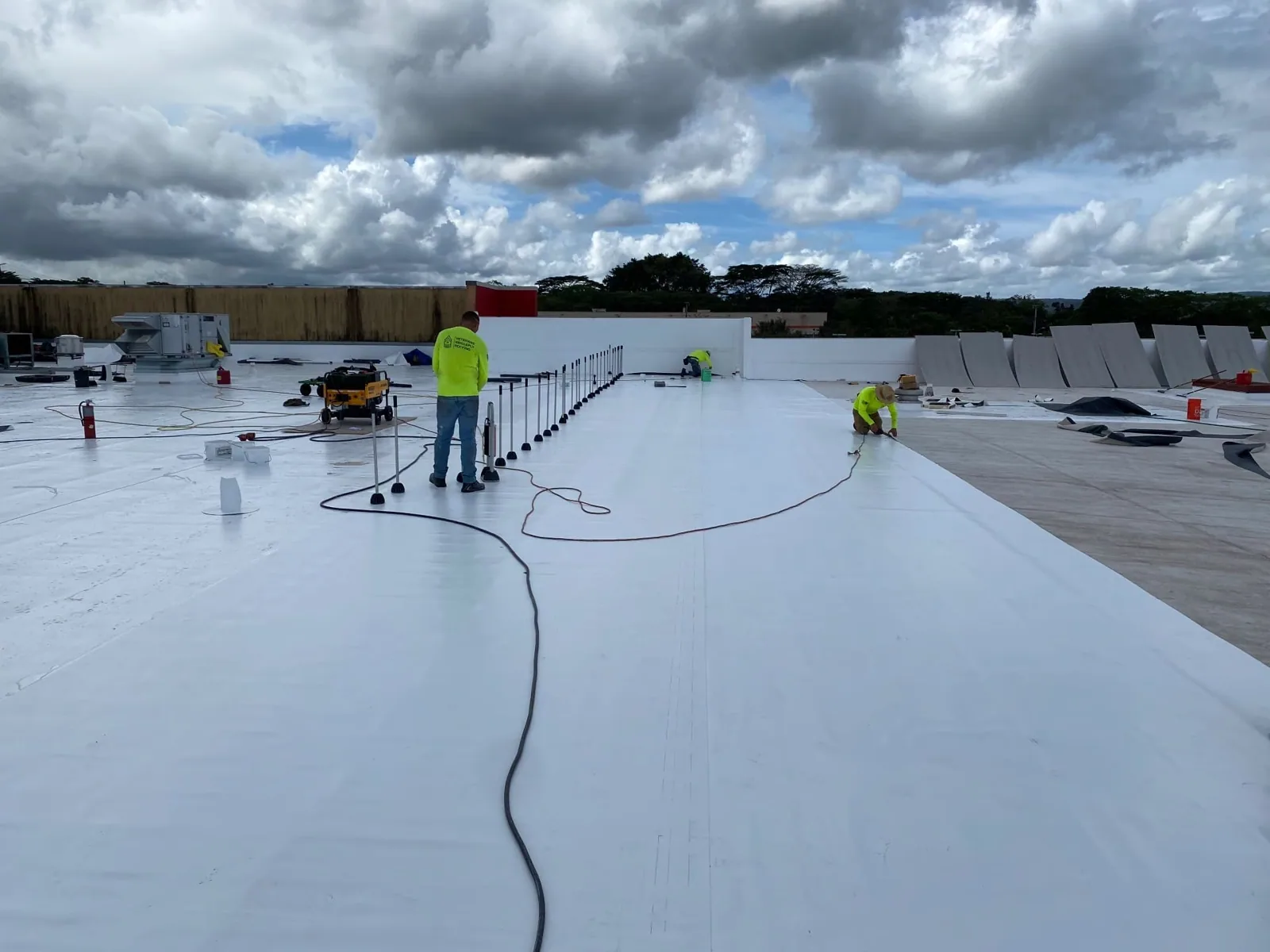
A section isn't ready to open just because the tear-off crew is there. The new insulation, membrane and flashing for that area all need to be on hand, and any curbs or equipment work under it must be finished first. We check the weather forecast before opening, too. Each evening, the section is either finished or tied in with a temporary seal that keeps water out overnight.
With a TPO roof system, for example, the crew can usually lay insulation, adhere or fasten the membrane and weld the seams in the same day on a manageable section. Perimeter edges and penetrations are flashed before the crew moves on. You'll get a short status on each section: open, closed temporarily, or finished. If a section can't be completed because another trade's work isn't ready, we tell you which item is holding it up. We don't open it and hope.
Other trades and changes
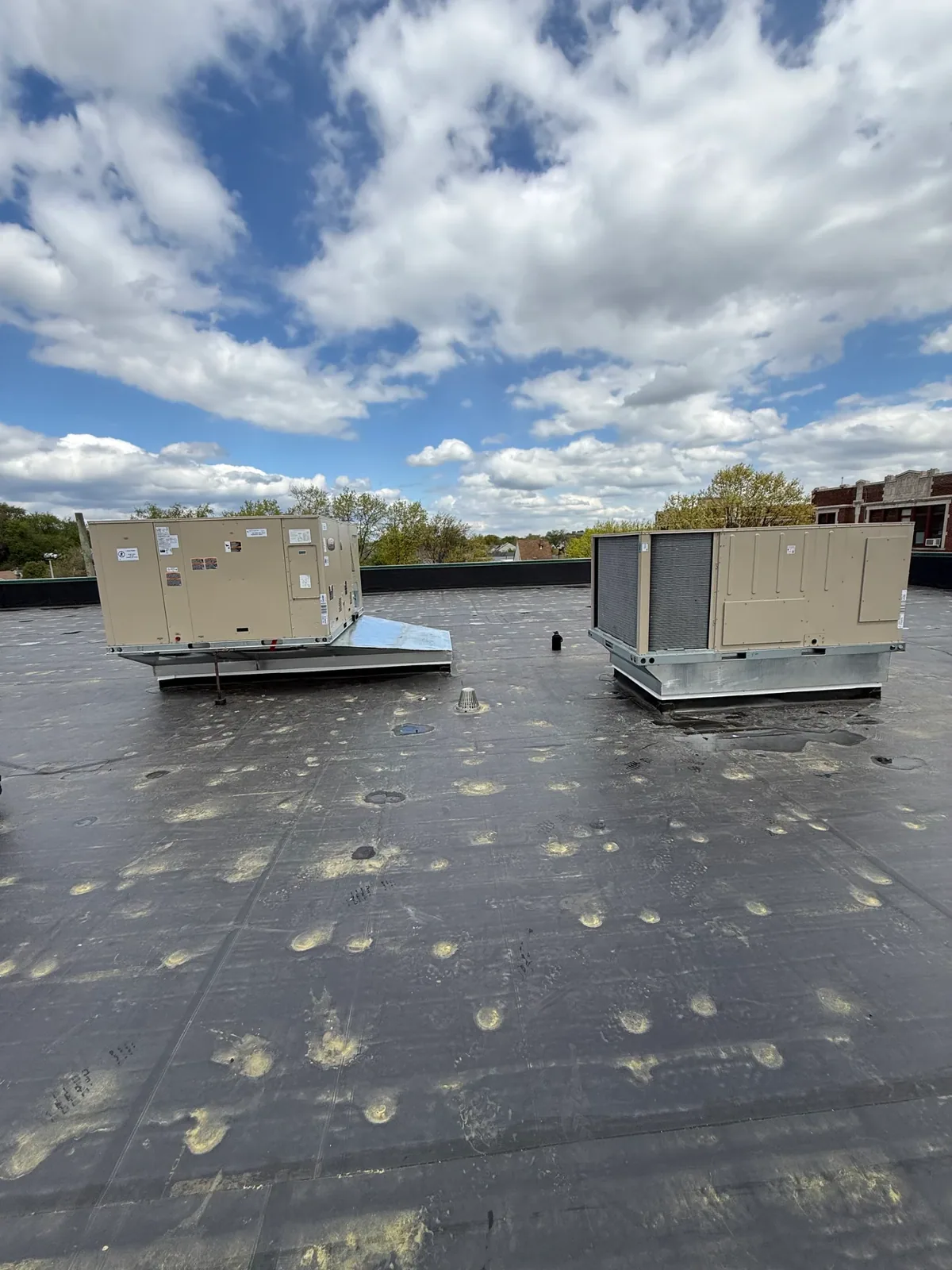
Most reroofs involve other trades. HVAC units may need to be disconnected and lifted, electrical conduit may need to be raised, and plumbing vents may need extending. We list those items for each section, along with who is responsible. The roofing schedule only works if that equipment work happens on time, so we confirm it with the trades before the roof in that area is opened.
For rooftop equipment curbs and supports, we coordinate the order: the unit is disconnected, we rebuild or raise the curb and flash it, then the unit is set back. If we find a rotten curb or a hidden problem, we explain the extra work, the cost and how it affects that section's timing. We share that with the building contact and the affected trades together. Nobody should learn about a change after the fact, and a hidden repair should never quietly expand the job without your approval.
Daily updates and closeout
Each day, we report which sections were opened, which were finished and what's planned next, using the same section names on the roof plan. If something changed, the update says what and why. When a superintendent or crew rotates, the next person gets the same information. The facility manager should always be able to answer a simple question: what's open on the roof right now, and what's still left?
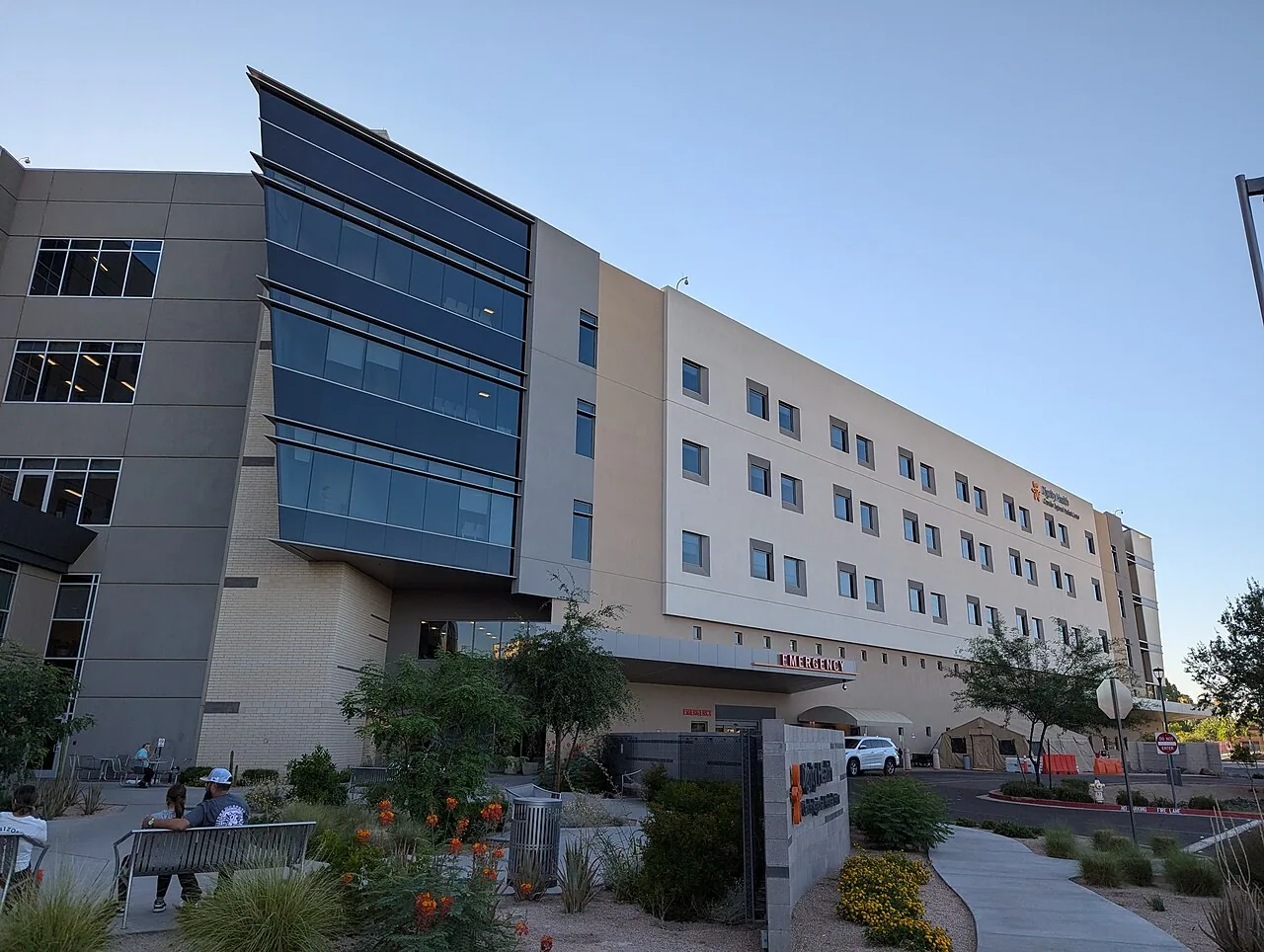
For buildings like those around Banner Ocotillo Medical Center, near Alma School Road and the Loop 202, the closeout package lists the installed materials for each section. It includes photos of the deck and insulation before they were covered and notes any existing roof that was left in place. Those records help with warranty questions, future leaks and the next roof project. Anyone working on the roof later can see what was installed where, without guessing from a photo of the finished membrane.
Commercial Roofing Questions
How do you start planning a reroof on an occupied building in Chandler?
We walk the building with the facility manager, mark the sensitive rooms under each roof area, and divide the roof into sections that can be torn off and closed in one day.
Does every hospital or school follow the same work schedule?
No. We get the work hours, noise limits and protection needs for your building specifically and tie them to the roof sections they affect.
What has to be ready before a section of roof is opened?
The insulation, membrane and flashing for that section must be on site, any equipment work underneath must be done, and the forecast has to allow us to close it the same day.
How do you coordinate HVAC and other trades?
We list each unit or penetration that needs another trade, confirm their timing before that section opens, and sequence it so the unit is lifted, the curb is flashed, then the unit is reset.
What happens if you find a problem under the old roof?
We stop on that section, show you what we found, and price the fix. The schedule for that area is updated and shared with you and the affected trades before work continues.
Plan a reroof around your occupants
Bring your facility manager and the trades that handle your rooftop equipment. We'll map out the roof sections, delivery plan and daily dry-in schedule around the way your building actually operates.
Request a Roof AssessmentAll Commercial Roofing Services