Home / Roof Damage Repair / Flashing Failure Repair
Flashing Failure Repair in Chandler, AZ
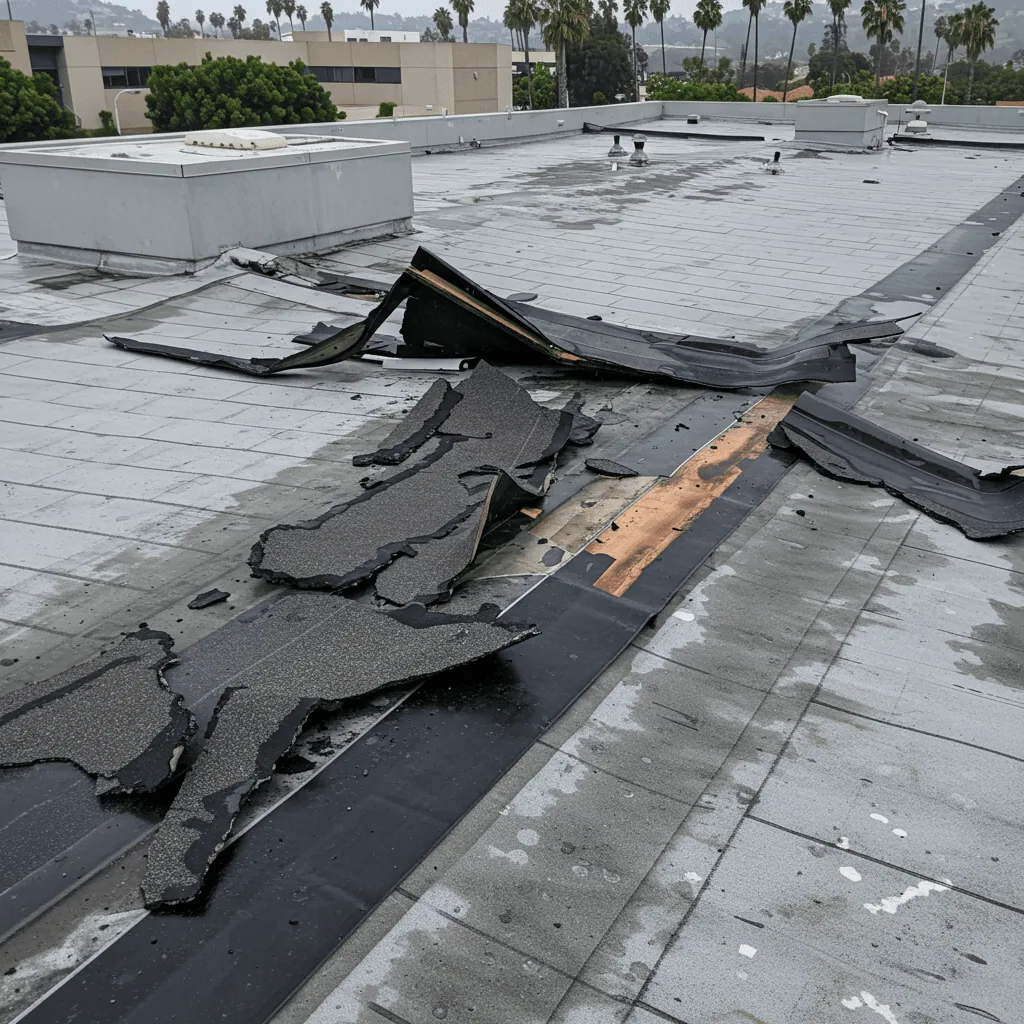
Flashing failure repair in Chandler, AZ: we find the failed wall, curb or edge detail, fix the backing behind it and install new flashing that ties properly into your roof.
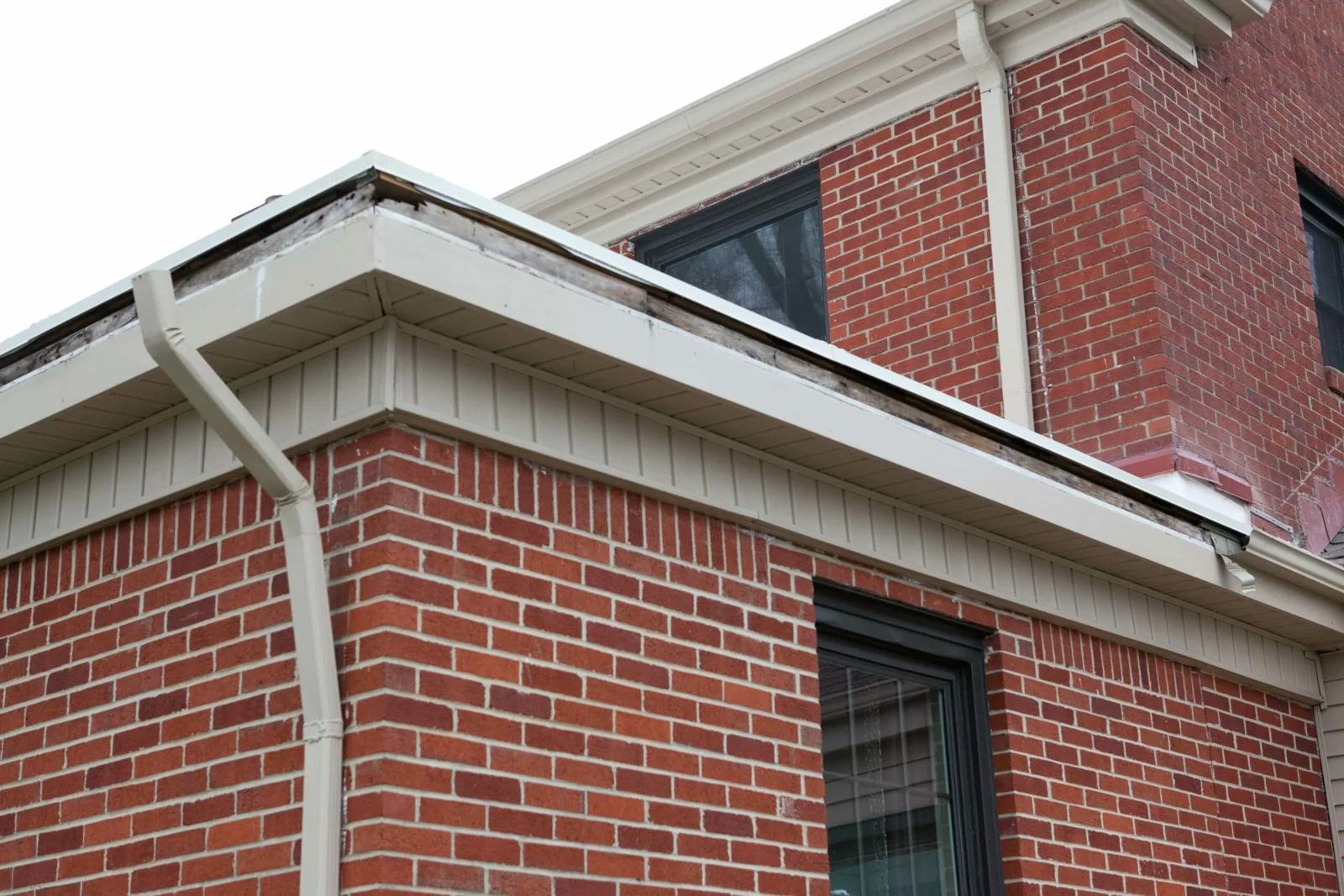
Most commercial roof leaks start at the flashing, not in the middle of the roof. Where the membrane turns up a parapet wall, wraps a rooftop unit curb or meets the edge metal, the material is stretched, fastened and sealed in ways that the Chandler sun and monsoon winds work on every year. On a school, that usually shows up as a stained ceiling tile in a classroom along an exterior wall. Flashing failure repair means finding the exact spot that failed, checking what the flashing is fastened to, and rebuilding that detail so it holds.
A loose or split flashing is easy to see. What is behind it is not. Wood nailers and wall backing can rot when water has been getting in for a while, and new flashing fastened to soft backing will pull loose again. Our seam failure repair work often turns up nearby flashing problems, and vice versa. At each failed wall or curb, we check the membrane, the backing and the termination at the top. If tear-off exposes rotted wood, we replace it before the new flashing goes on, and the price covers all of it.
Finding the failure
First, we pin down where the problem is: a parapet wall, an equipment curb, a pipe penetration or the roof edge. We mark it on a roof plan and photograph the whole detail, not just the visible split. At a wall, that means the top termination bar or counterflashing as well as the base where it meets the roof. At a curb, it means the damaged side and the unit sitting on it.
Our roof inspection compares what we see on the roof with where the water showed up inside. A ceiling stain is a clue, not proof of the entry point, since water can travel along the deck before it drips. Sometimes the culprit is a cracked stucco wall, a window above the roof line or a condensate line, and we tell you when another trade needs to look at it.
If the backing is hidden and its condition matters, we may suggest opening a small section first. We explain what that will tell us and how it will be patched, so you can approve the test before committing to a full repair.
Matching the materials
We identify the roof membrane and the flashing material in place, whether that is TPO, PVC, EPDM, modified bitumen or a coated foam roof. Products that look alike can need very different adhesives, primers or welding methods, so we confirm the system before choosing a repair. If the membrane right next to the flashing is brittle or wet, the repair area has to grow, and we say so up front.
A membrane puncture repair may be part of the same job if the field membrane near the wall is damaged too. We show which material needs to come out before new flashing can be tied in. A bead of sealant over a failed flashing might buy a few months, but it does not fix wet insulation or rotted backing behind it.
The new flashing follows the manufacturer's installation requirements for your roof system. What worked on another building down the street does not guarantee it will work on yours.
Fixing the backing
Flashing is only as good as what it is fastened to. Once the old flashing comes off, we check the wood nailers, sheathing or wall substrate behind it. Rotted or crumbling material has to be replaced before new flashing goes on. A quote that only covers new flashing material may leave this out, and it is often where the real problem is.
Our edge metal, coping and gutter work covers the metal cap on top of parapet walls and the perimeter edge, both of which play a big part in keeping water out of the wall. We spell out which metal work is in our scope and which belongs to another trade. If the wall itself needs structural repair, an engineer or masonry contractor makes that call.
For buildings in Sun Lakes, send the address and any records you have. If we find more rot than expected, we photograph it and explain the added work before changing the price, and you get photos of the new backing before it is covered.
Curbs and rooftop equipment
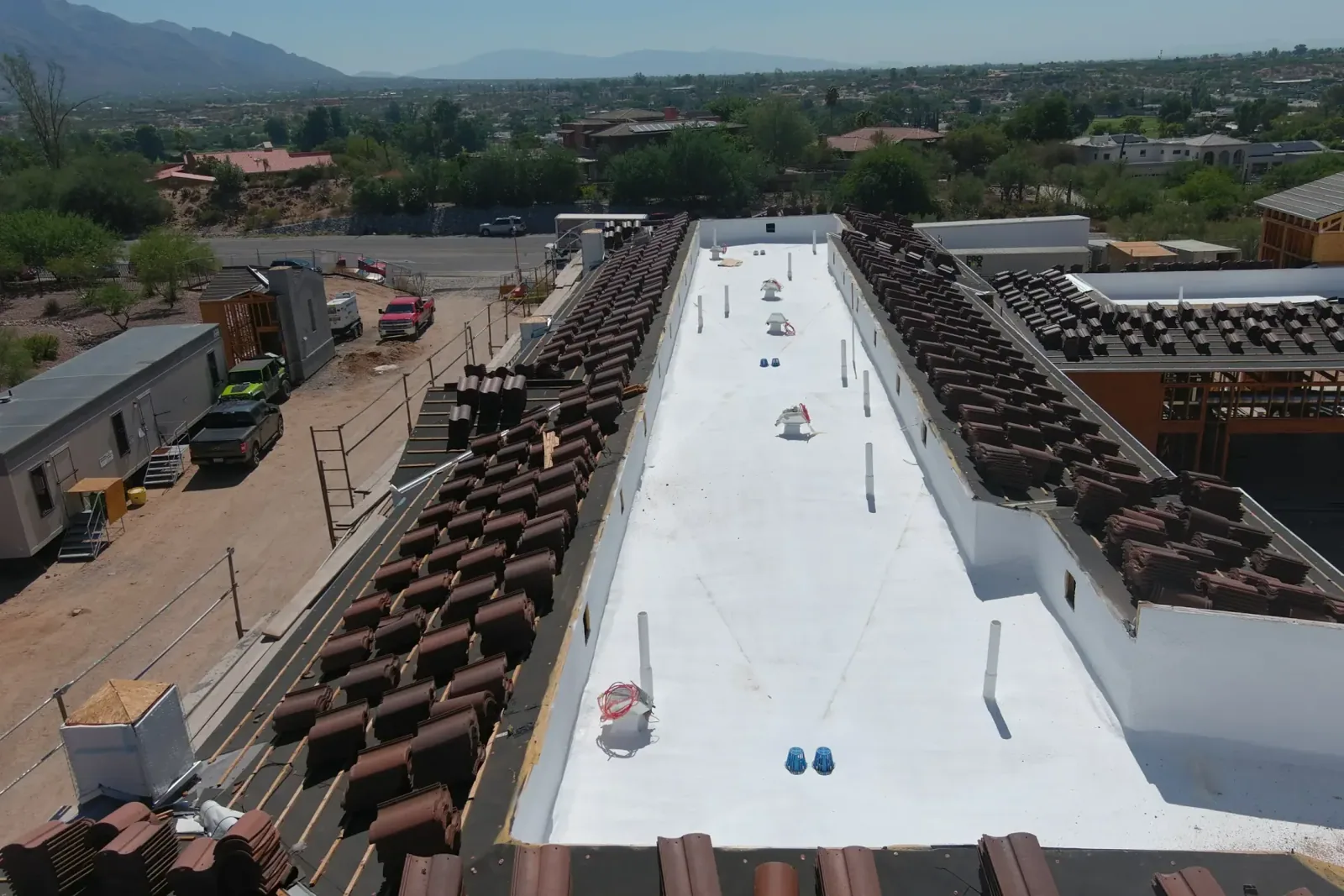
At an equipment curb or pipe penetration, the curb itself sometimes needs work before we can flash it. A rusted curb may need replacing, or a new HVAC unit may need a different curb size. We confirm who is handling that work and who will tell us it is ready. If the job takes more than one visit, the open area gets temporary protection, and we schedule our return once the curb is ready.
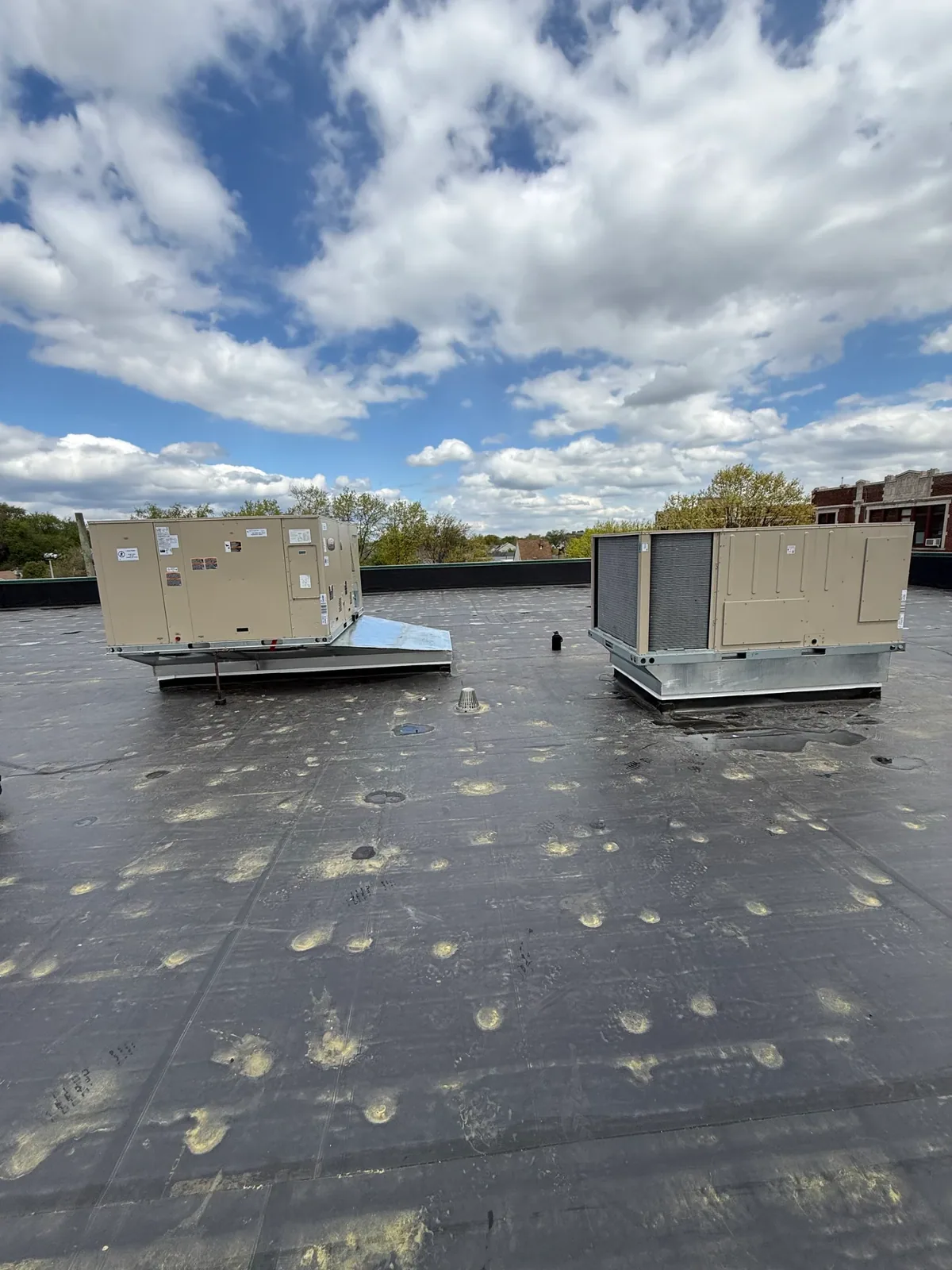
Our rooftop curb and equipment review shows the damaged flashing, the material that can stay and the curb condition we need for a permanent seal. The HVAC visit and the flashing repair are separate steps, and we track them separately, so you know whether the curb is waiting on the mechanical contractor or already finished.
If flashing is failing at many spots across the roof, we compare spot repairs with a broader flashing replacement. A single bad corner is a straightforward fix. A roof where every curb is leaking points to a bigger issue, and we price each option with its tear-off, backing repair and new flashing listed.
Working around the school day
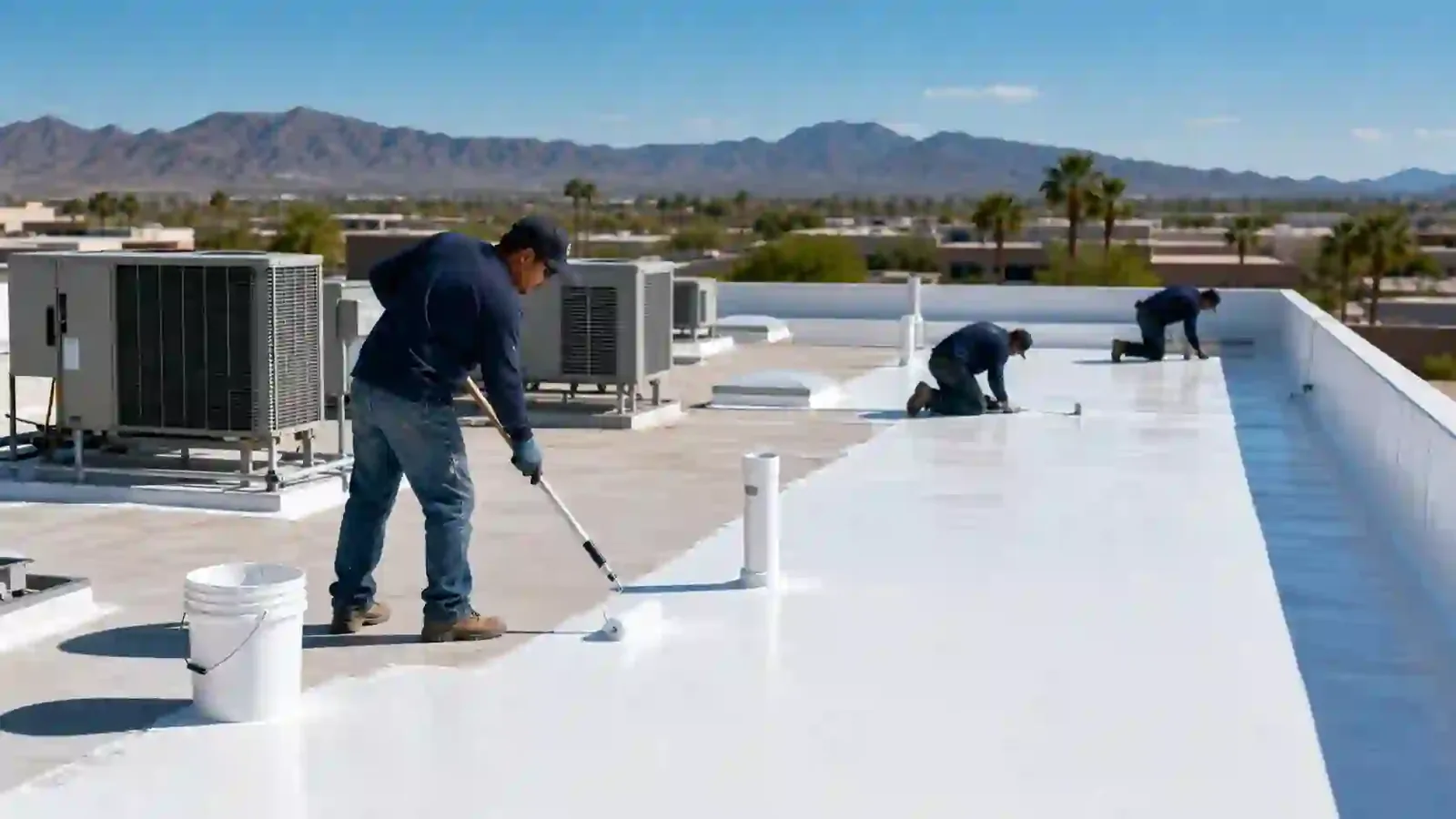
On a school, we plan roof work with the district facilities team and the site administrator. Noise, fumes from adhesives, material drops and crane setups all have to fit around classes, testing and events. Other departments, such as maintenance or IT, make their own calls about their equipment. We plan each day so any flashing we open is sealed watertight before we leave.
Emergency roof repair can stop an active leak quickly, including nights and holiday weekends. We note what the temporary patch covers and what still needs a permanent fix, so a patch is never mistaken for a finished repair.
If opening up the flashing shows more damage than expected, we explain the extra work, keep the area protected, and wait for your approval before changing the scope. The permanent repair follows what you approve.
After the repair
We photograph the new backing before the flashing covers it, then document the finished detail with enough of the surrounding roof to show where it is. Any approved changes are noted with the reason. If a curb or wall is still waiting on another trade, it stays on your open list. A good repair at one wall does not mean every other wall on the roof is fine.
The next inspection looks at that detail as it stands then. Our records show what was done and where, which makes the next leak call or warranty question much easier for your facilities team.
Commercial Roofing Questions
How do you identify which flashing is failing?
We mark the detail on a roof plan and photograph it close up and from a distance. We compare it with where water showed up inside, while remembering that leaks often travel before they drip.
Why check the backing before installing new flashing?
New flashing needs solid wood or substrate to fasten to. If the backing is rotted, the flashing will pull loose again. We replace bad backing before closing up the detail.
Can sealant fix a failed flashing?
Sealant can slow a leak for a short time, but it does not fix wet insulation, rotted backing or a flashing that has pulled away. A lasting repair replaces the failed material properly.
Who handles the curb or HVAC unit before you flash it?
The mechanical contractor handles the unit and any curb replacement. We tell them what condition the curb needs to be in, then flash it once it is ready.
What do I get when the flashing repair is done?
Photos of the new backing and finished flashing, notes on any approved changes, and a list of any related work still open with other trades.
Schedule a flashing repair
Call us about the leak or failed detail you are seeing. We will inspect the wall, curb or edge on your Chandler building, check the backing and give you a repair plan that addresses the real cause.
Request a Roof AssessmentAll Roof Damage Repair