Home / Commercial Roofing Services / Solar-Ready Commercial Roofing
Solar-Ready Commercial Roofing in Chandler, AZ
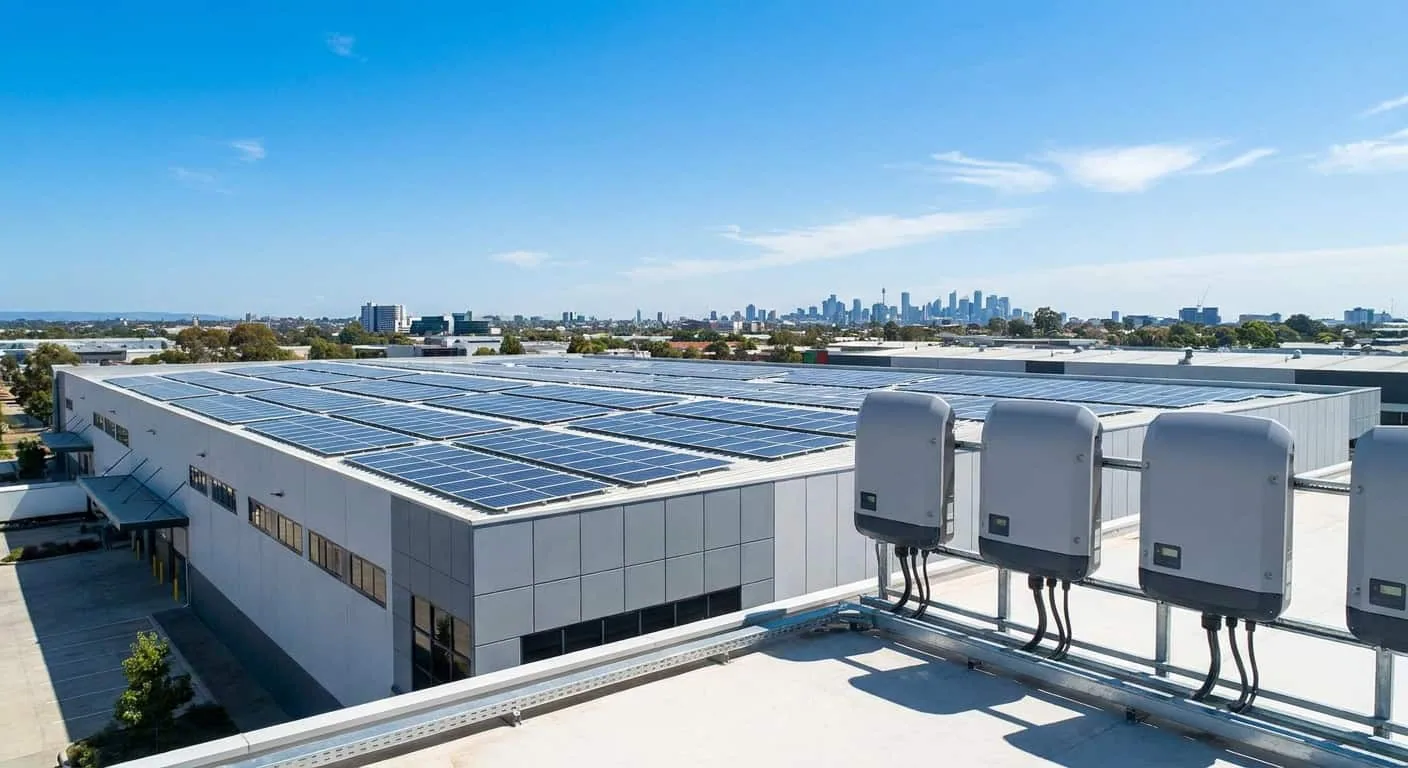
Solar-ready commercial roofing in Chandler, AZ: getting the roof in shape before panels go up, coordinating with your solar designer, and flashing every array attachment properly.
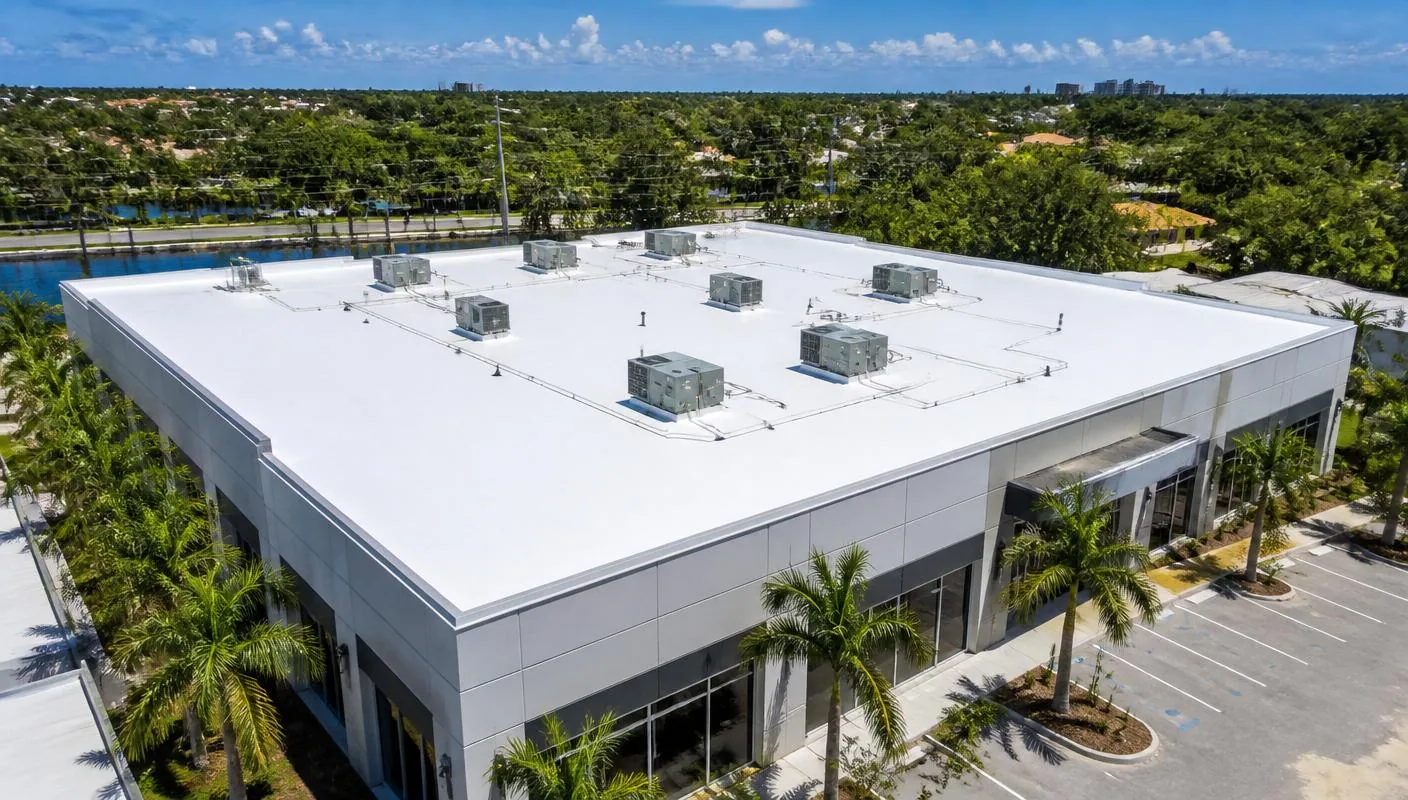
A solar array is meant to stay on a commercial roof for decades. Removing panels to replace a worn-out roof partway through that life is expensive, so the roof has to be ready first. When a Chandler warehouse owner is planning solar, we look at the existing roof, decide whether it needs repairs or replacement, and work with the solar team on where the array will attach. Structural and electrical design stay with the solar designer and engineer. We handle the roof.
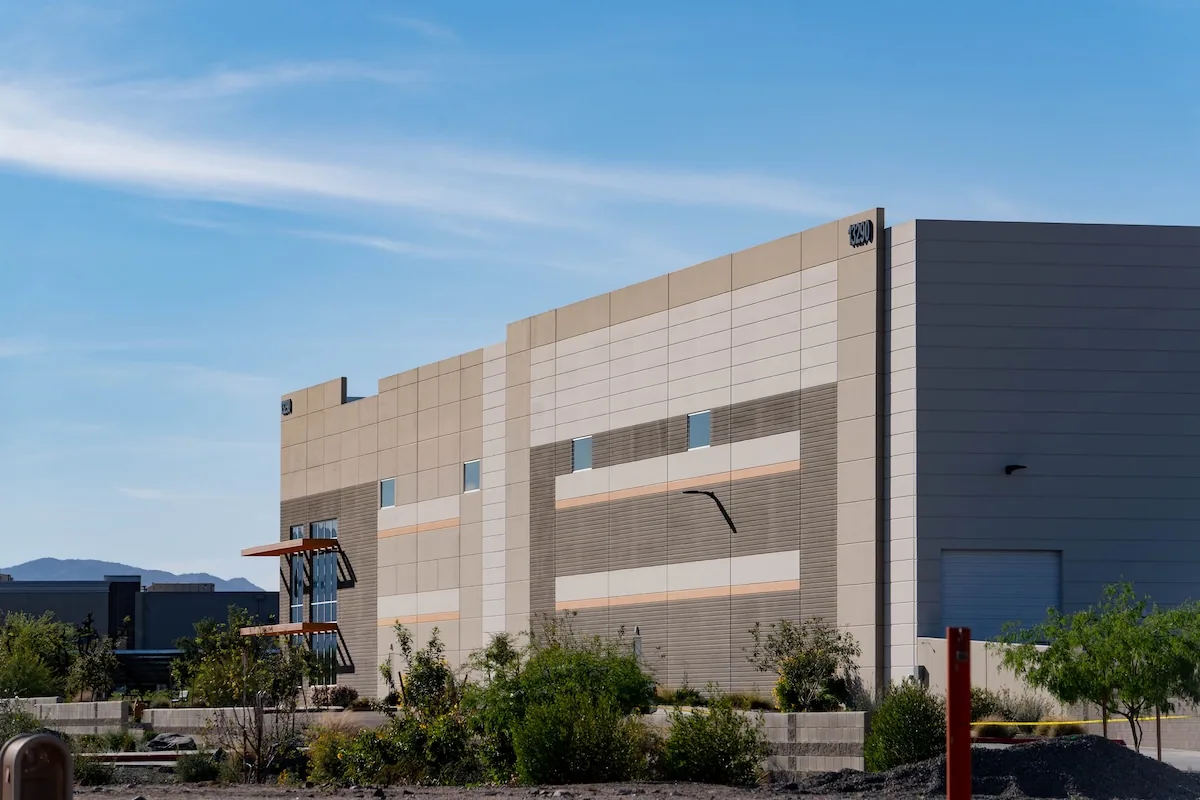
Large industrial roofs around the Intel Ocotillo campus and the Price Corridor are natural candidates for solar, but each roof still needs its own check. We start with the roof records and the proposed array layout from the solar company. Then we inspect the roof and tell you what work it needs before panels go up. The proposal separates roofing work we've confirmed from design decisions that are still open, so "solar-ready" means something specific instead of a hopeful label.
Checking the roof first
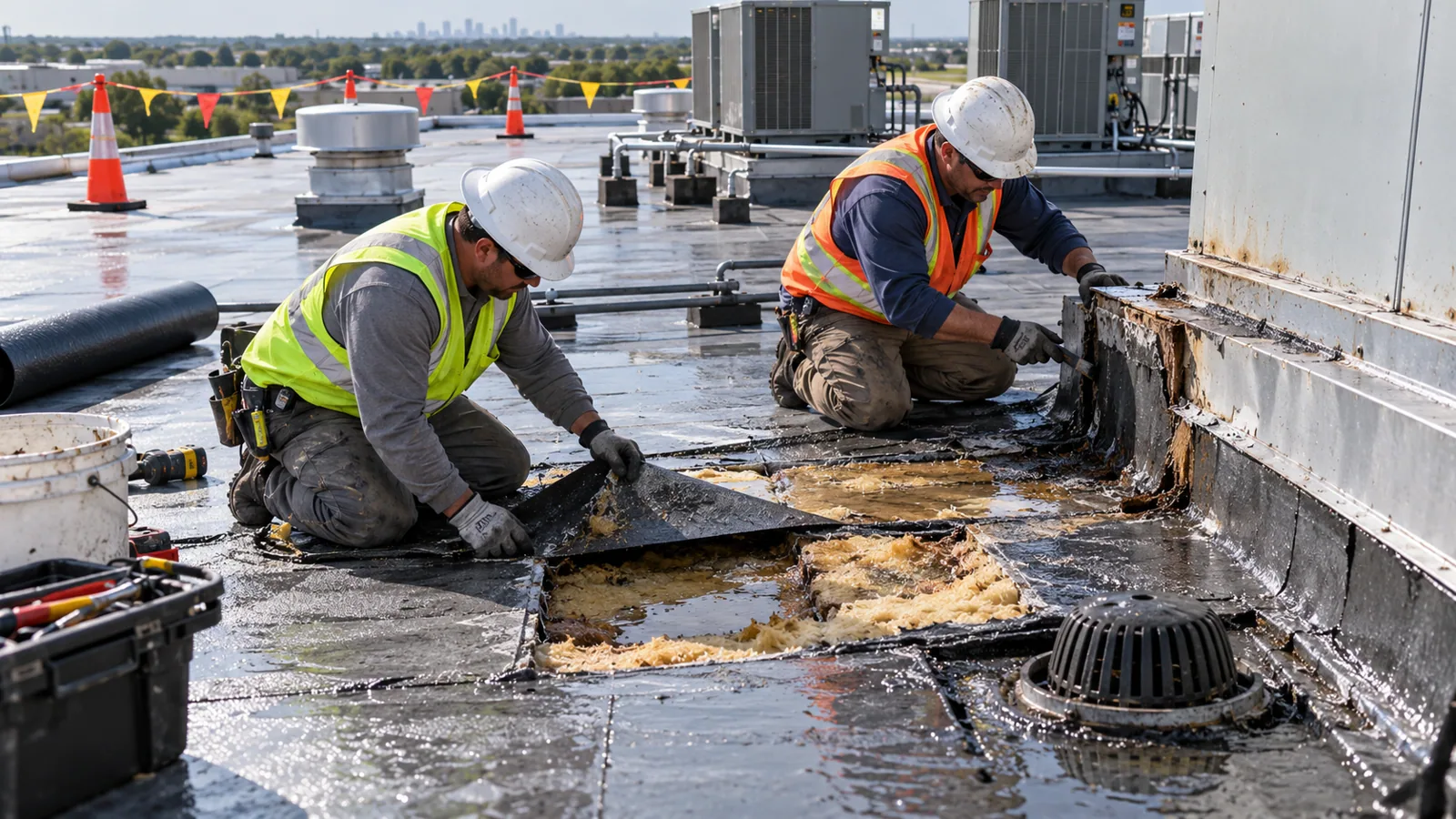
We inspect the membrane, seams, flashing and any old patches in the array area. Where the roof's condition is uncertain, we take cores to check the insulation and deck. The U.S. Department of Energy lists roof compatibility, structural strength, roof age and wind exposure as factors in whether a roof suits solar. Every roof has to be checked on its own terms, because two buildings with the same membrane can be in very different shape.
Our roof inspection gives you a clear picture of the roof's condition in and around the planned array. If a section needs repair or replacement, we say so and price it. A roof that looks intact from above isn't automatically ready to carry an array. The structural review belongs to the engineer, not the roofer. We keep our roofing findings separate from that review so both get done before installation starts.
Who designs what
The solar designer lays out the array and chooses the racking. A structural engineer confirms the roof can carry the load. The electrical contractor handles wiring and conduit. Our part is the roof: getting it in good shape and flashing every attachment so it stays watertight. We need the racking type and attachment locations from the solar team before we can plan our details.
On a warehouse roof, that coordination matters because arrays can cover a large share of the roof. Ballasted systems, attached systems and mixed layouts each need different roof work. We don't pick an attachment method based on the building type. We wait for the solar team's design, then plan the flashing for each attachment and conduit penetration. If something is still undecided, we list it so it gets resolved before the installers reach that part of the roof.
Repair or replace before solar
If the roof is near the end of its life, it usually makes sense to replace it before the array goes up. If it's in good shape, targeted repairs to seams, flashing and wet areas may be enough. We lay out both options with what each involves, so you can compare the cost now against the cost of removing panels later. Either way, the roof work needs to be done before the racking goes on.
A full roof replacement before solar gives the array a new roof underneath it from day one. A repair option shows the specific fixes and what stays in place. City buildings, including those along South Arizona Avenue, schools and offices each get a plan based on their own roof. Planning solar shouldn't quietly turn into a bigger roofing job than it needs to be, so we explain what the roof actually needs and why.
Flashing the attachments
Every attached racking point and conduit penetration is a potential leak. We check each attachment type the solar team plans to use, then choose flashing that is compatible with the roof membrane and follows the manufacturer's details. Ballasted systems may still need protection pads under the racking. Conduit runs need proper supports and flashed penetrations.
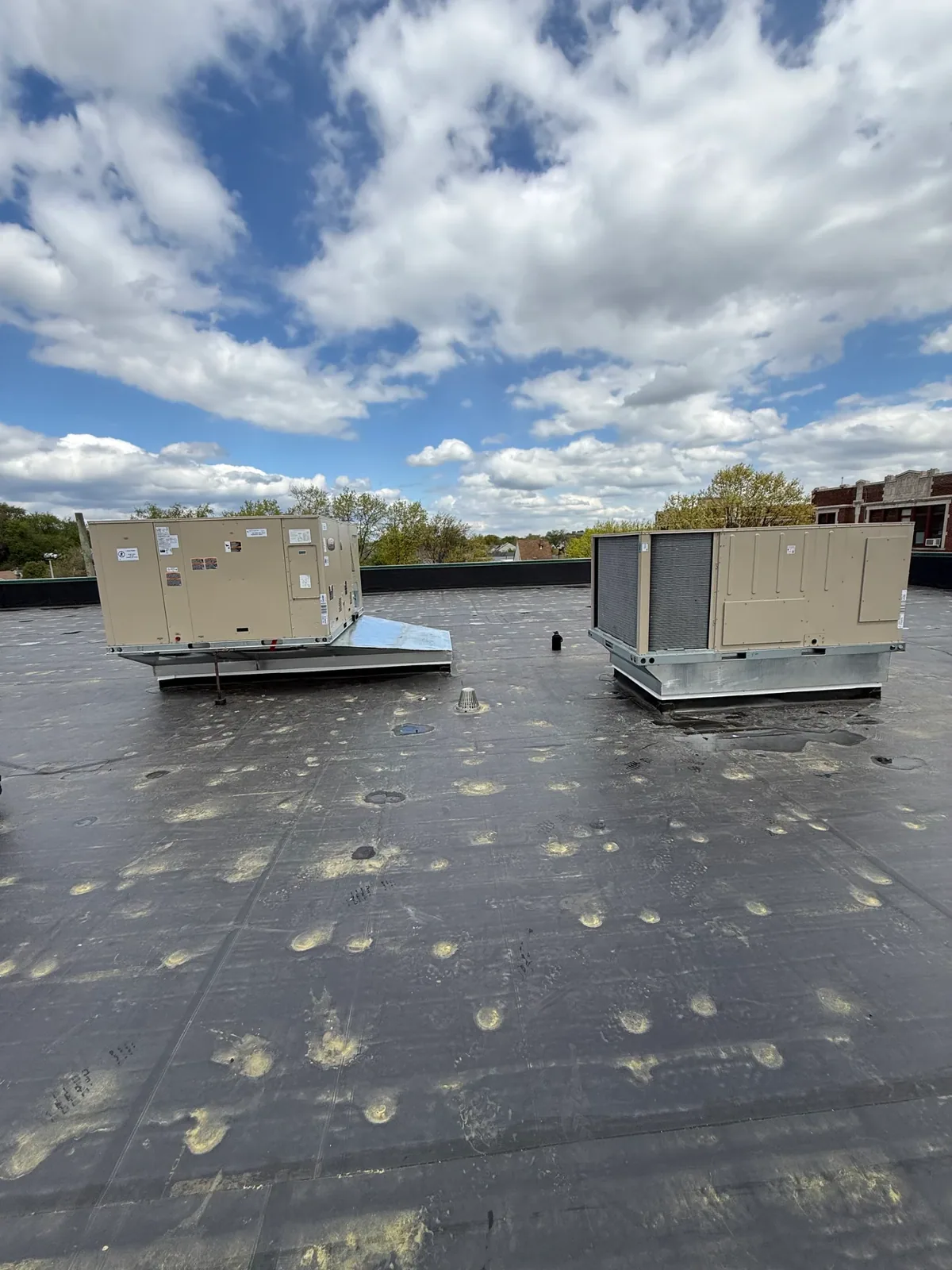
Attachment points work a lot like rooftop equipment supports: the support goes in first, then we flash it. On a PVC roof, we can heat-weld compatible flashing around each attachment for a durable seal. The proposal names the products for each detail. If the array layout or racking changes, we update the flashing plan. Attachment counts and flashing quantities shouldn't stay the same after the design moves.
Scheduling and future access
We schedule the roof work with the building contact and the solar team so it's finished before racking installation begins. Delivery routes, staging areas and roof access are confirmed for both crews. We also plan for the future. Once the array is up, parts of the roof will be harder to reach. Walkways and clear paths to drains and equipment should be part of the layout from the beginning.
Before the array goes up on a roof near the Intel Ocotillo campus or anywhere else in Chandler, we record the roof work we did. That includes materials installed, repaired areas, and the location and flashing of each attachment. Photos are taken before racking covers the roof. Anything unfinished is flagged on its own. That record helps the next roofer plan repairs around the array, and it shows the solar company exactly what's under their system.
We also share our roof plan with the solar team: which areas were repaired, what the roof is made of and where the attachments go. If the array layout changes after our work is done, we review the new attachment locations and update the flashing plan. You'll know who is responsible for the new design and who is doing the roof work. A shared drawing only helps if it matches what's actually on the roof, so we keep it current through the project.
Commercial Roofing Questions
Where does solar-ready roof planning start in Chandler?
With an inspection of the existing roof and the solar company's proposed array layout. We tell you what the roof needs before panels go up and coordinate with the solar designer and engineer.
If the roof looks fine, is it ready for solar?
Not necessarily. We check the membrane, insulation and flashing, and a structural engineer confirms the roof can carry the array. Both reviews should happen before installation.
Why fix the roof before the solar panels go on?
Because removing and reinstalling an array to repair or replace the roof later is expensive. Doing the roof work first gives the system a sound roof for its whole life.
What happens if the array layout or racking changes?
We review the new attachment locations and update the flashing plan and quantities. We don't assume the original plan still fits the new design.
What records does the solar team get from us?
The roof materials installed, repaired areas, the location and flashing of each attachment, photos taken before the racking covered the roof, and any open items.
Get your roof ready for solar
Bring your solar company's proposed layout and we'll inspect the roof under it. You'll get a clear plan for repairs or replacement and the flashing work each attachment needs.
Request a Roof AssessmentAll Commercial Roofing Services