Home / Property Types We Roof / Military Hangar and Maintenance Facility Roofing
Military Hangar and Maintenance Facility Roofing in Chandler, AZ
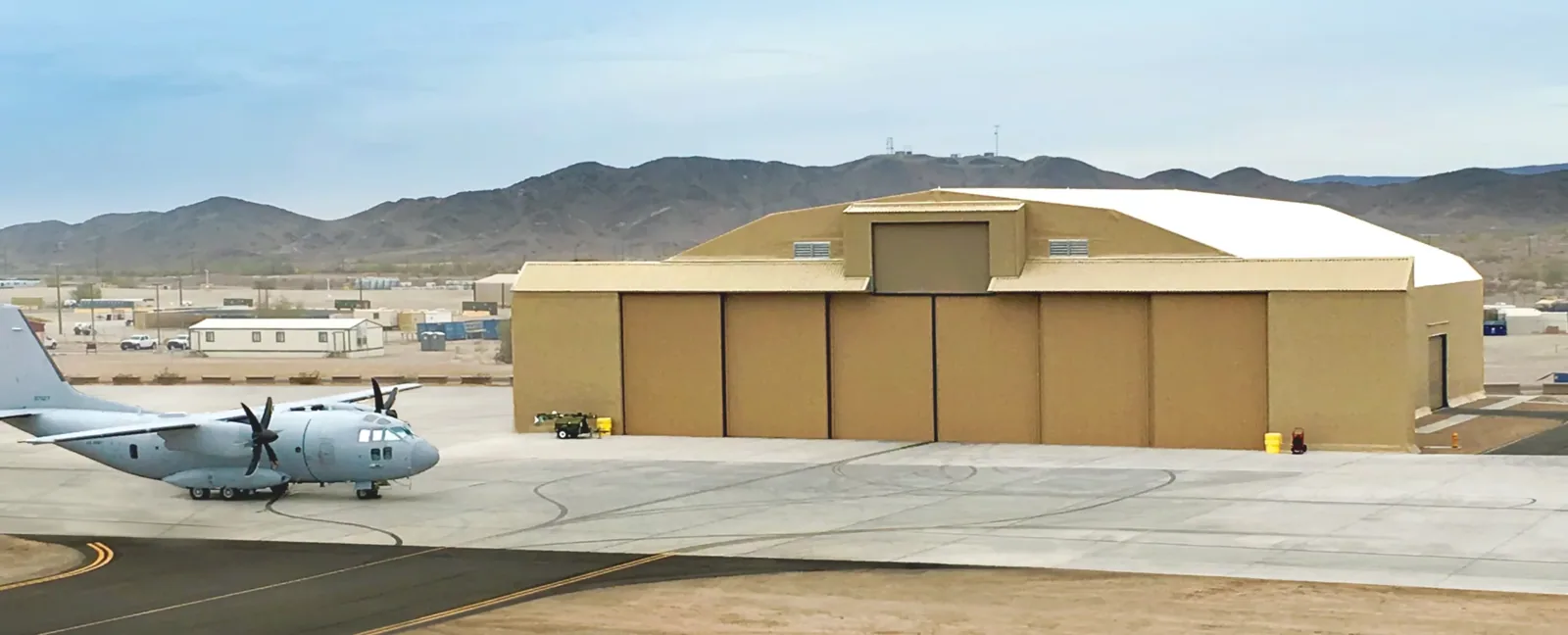
Military hangar and maintenance facility roofing near Chandler, AZ: metal and membrane roof repairs, leak tracing, drainage and phased replacement planned around flight-line operations.
Hangars and maintenance shops have big open spans, tall doors, overhead cranes and aircraft or vehicles worth far more than the roof. A leak onto a work bay or a piece of debris falling from a roof opening is a serious problem. For military hangar and maintenance facility roofing around Chandler, AZ, we start by working out with the facility team how roof work will be kept separate from the activity below. Then we inspect the roof and recommend a repair or larger project based on what we find.
Chandler Municipal Airport anchors aviation work locally, and Goldwater Air National Guard Base in Phoenix is the region's main air installation. Military work on any base follows that facility's own access and security rules. For a maintenance facility roof problem near the Chandler Airpark, send us the building address, where the leak or damage is and any roof plans. We inspect, explain what we find, and recommend the next step for that specific building.
Metal roofs and movement
Many hangars have metal roofs, and metal moves. Panels expand in Arizona's summer heat and shrink at night, which loosens fasteners, wears out sealant at laps and stresses trim. Membrane roofs over shops and offices have their own weak points at seams, curbs and walls. The repair has to match the system: you cannot fix a metal roof the way you fix a membrane. We inspect the actual roof before choosing materials.
On a standing seam metal roof, we check the clips, seams, ridge and eave trim, and flashing around penetrations and skylights. Where panels meet walls or another roof level, the transition is often the problem. If panels or clips need to be replaced, or if the roof needs structural changes, an engineer may need to review it. The estimate lists exactly what is being replaced and how it ties into the existing roof.
Keeping crews and aircraft clear
The facility team decides how roof work is separated from aircraft, vehicles and people below. We review which bays are under the work area, whether aircraft need to be moved or covered, how debris will be kept from falling through openings, and where cranes or lifts can go without blocking taxiways, aprons or hangar doors. Fuel areas and hot-work rules may limit what methods we can use. Badging, escort and work-hour rules come from the base.
For reroofing while the hangar stays in use, we work in sections and seal each one before leaving. Equipment contractors handle any disconnects first. If a section needs to grow because of hidden damage, we stop and review it with the facility team. Each phase has its own plan for separating work above from activity below, and that plan is agreed before the crew starts.
Leaks and drainage
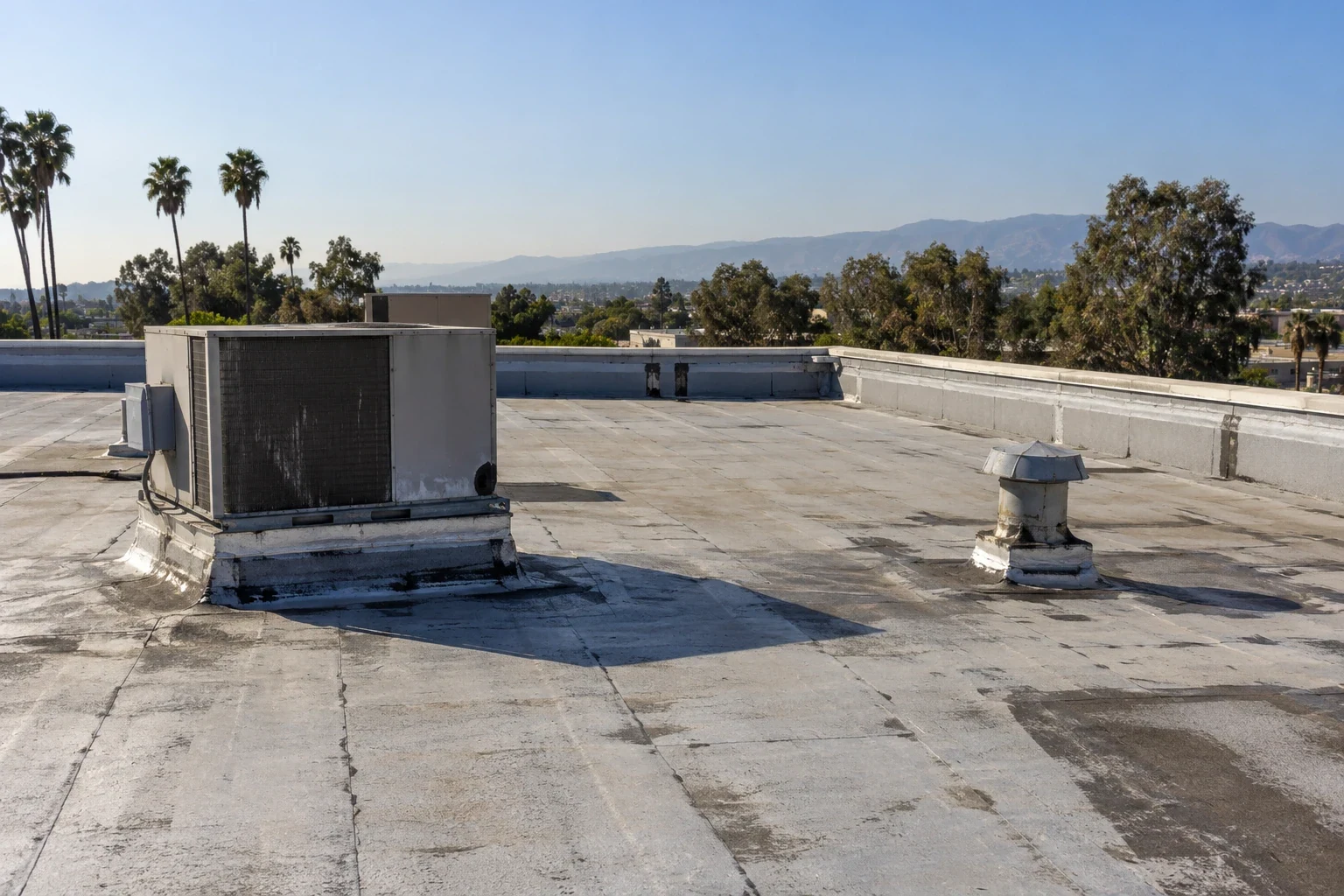
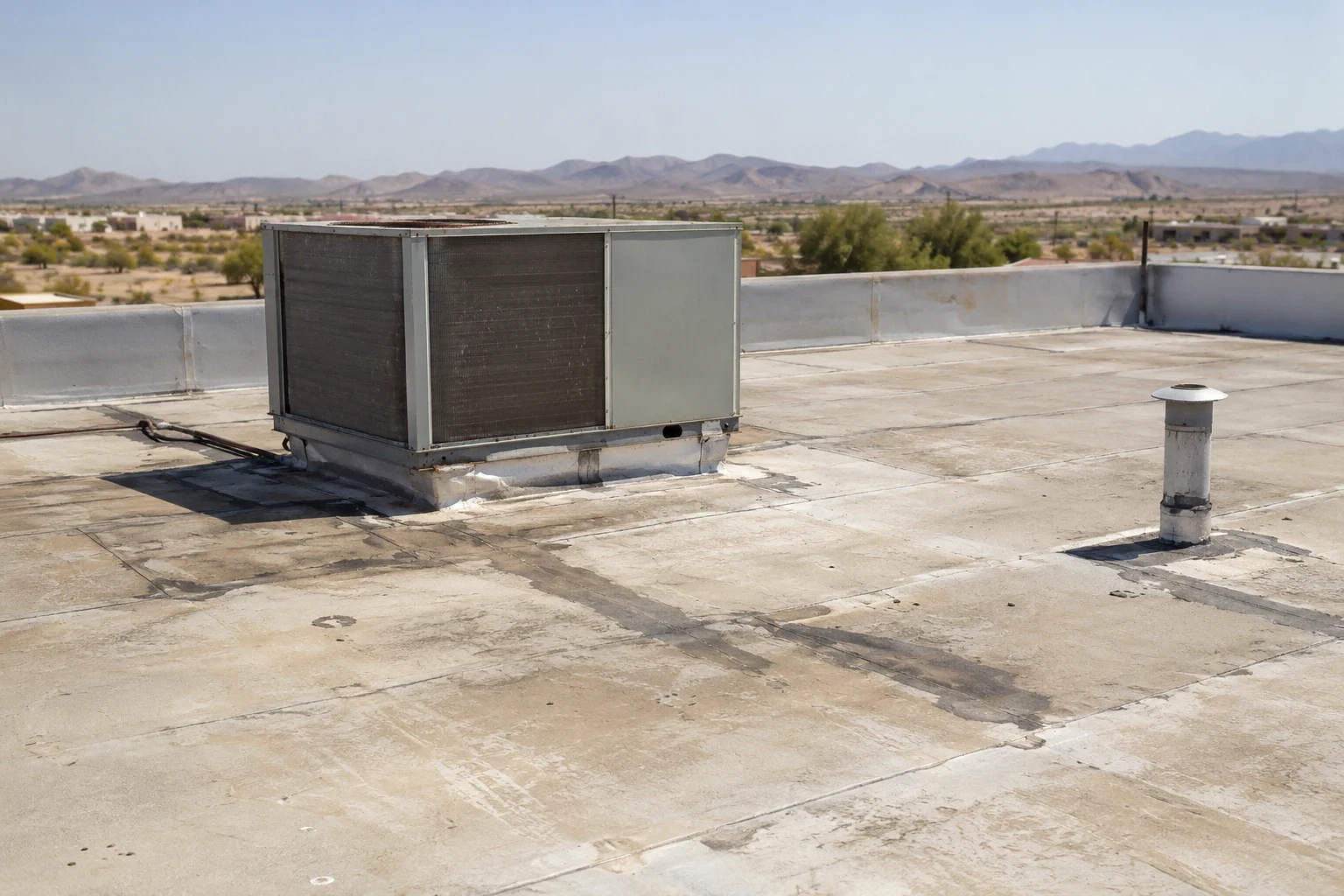
Hangar leaks often come from fasteners, panel laps, skylight curbs and wall transitions on metal roofs, or seams and curbs on membrane roofs. A commercial roof inspection starts above the wet area and works outward, checking gutters and downspouts along the way, since big hangar roofs shed a lot of water during monsoon storms. If an equipment line or a vent is the source, we tell facilities. Each finding gets a photo and a location on a roof plan.
On membrane areas, an infrared moisture survey can point to wet insulation, but conditions can skew readings, so we confirm with small core cuts and patch each one the same day. On metal roofs, we look for rust, failing sealant and loose fasteners instead. The results show whether the problem is local or widespread, which drives the repair-versus-replace decision.
Repair or replace
A commercial roof repair fits when the problem is local and the surrounding roof is sound. On a metal roof, that might mean replacing fasteners, resealing laps or replacing a few damaged panels. On a membrane roof, it might mean a patch and new flashing. If rust is widespread, panels are failing or insulation is wet over large areas, repairs only buy time. A coating can extend the life of a sound metal or membrane roof once defects are fixed.
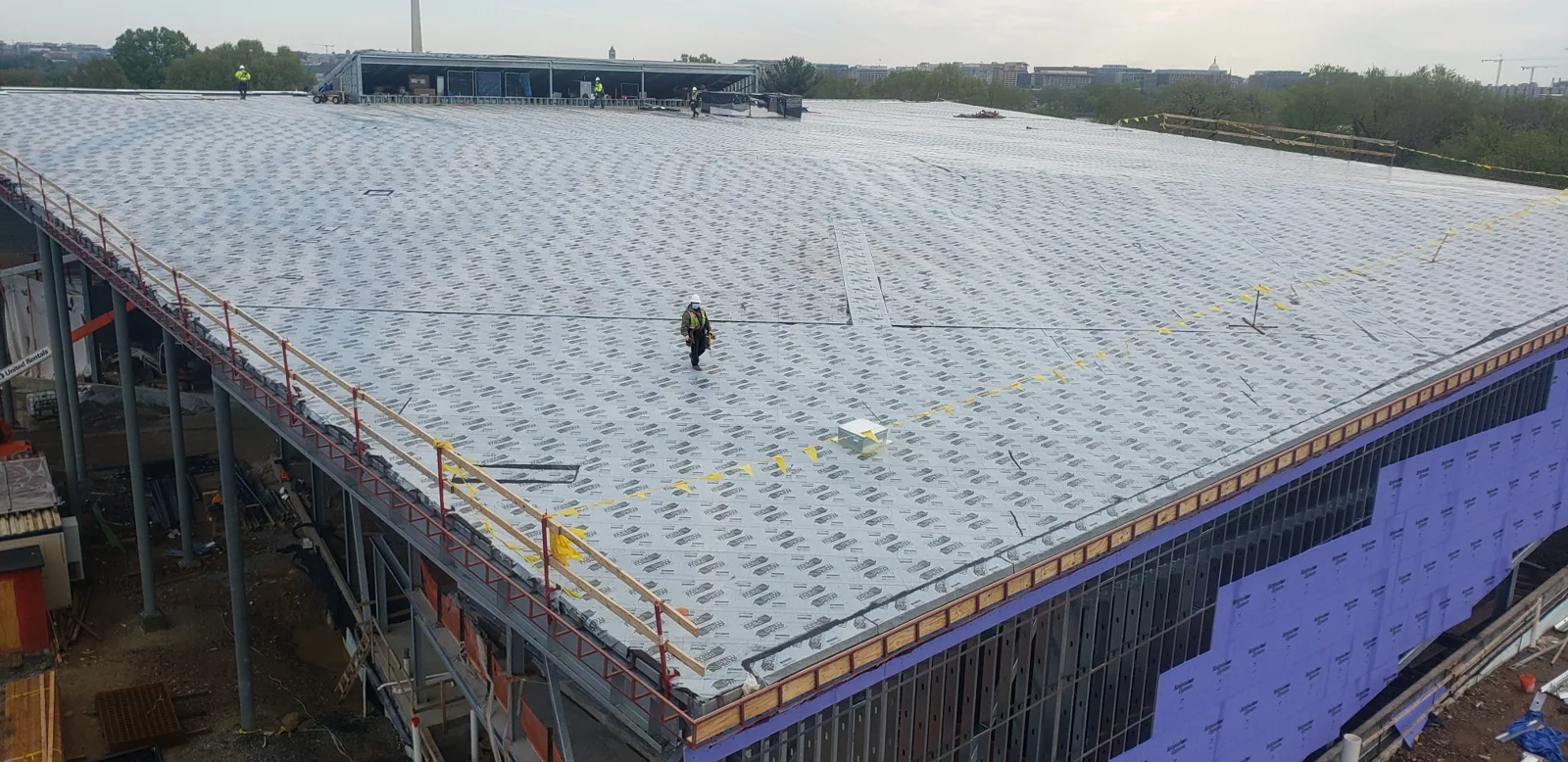
A commercial roof replacement estimate lists what comes off, the insulation going back, how the new roof is attached, and how edges, walls, skylights and penetrations are finished. Cranes, access and disposal on an airfield can drive cost. Phasing around flight-line operations may add cost but keeps the facility working. We lay out those trade-offs so the facility team can decide.
Approvals and closeout
An aircraft hangar roof at a civilian airport and an Army installation roof share many of the same concerns, but military maintenance facilities add base approvals and security. We get each phase approved before starting it, and daily notes show what is finished, what is temporary and what is still open. Each section is sealed before the crew leaves.
At closeout, the facility team gets photos of finished details and patched test cuts, material and warranty information, final quantities and a list of open items for other trades. Regular maintenance visits check gutters, drains, seams, fasteners and flashing, and report what we found and fixed. Those records make future inspections and budget requests easier. If a leak threatens aircraft or equipment, call any time, including nights, weekends and holidays. Once the facility arranges access, we stop the water and explain the permanent repair.
Commercial Roofing Questions
How is repairing a metal hangar roof different from a membrane roof?
Metal roofs leak at fasteners, laps, trim and transitions, and repairs involve fasteners, sealant and panels. Membrane roofs leak at seams and flashing and are repaired with compatible membrane. We match the repair to the system you have.
Who decides how work is kept separate from aircraft below?
The facility team. We review which bays are under the work, whether aircraft need to be moved or covered, debris control, crane locations and any hot-work or fuel-area restrictions.
What findings push a repair toward replacement?
Widespread rust or failing panels on a metal roof, or wet insulation and failing seams across a large membrane area. We show you the evidence and compare both options.
What records do we get at the end?
Phase approvals, daily notes, photos of finished work and patched test cuts, material and warranty information, final quantities and a list of open items for other trades.
Request a hangar roof inspection
Have your facility team contact us with the building and the problem. We will coordinate access, inspect the roof and lay out repair or replacement options.
Request a Roof AssessmentAll Property Types We Roof