Home / Service Areas / Casa Grande
Casa Grande Commercial Roof Repair Scope Review
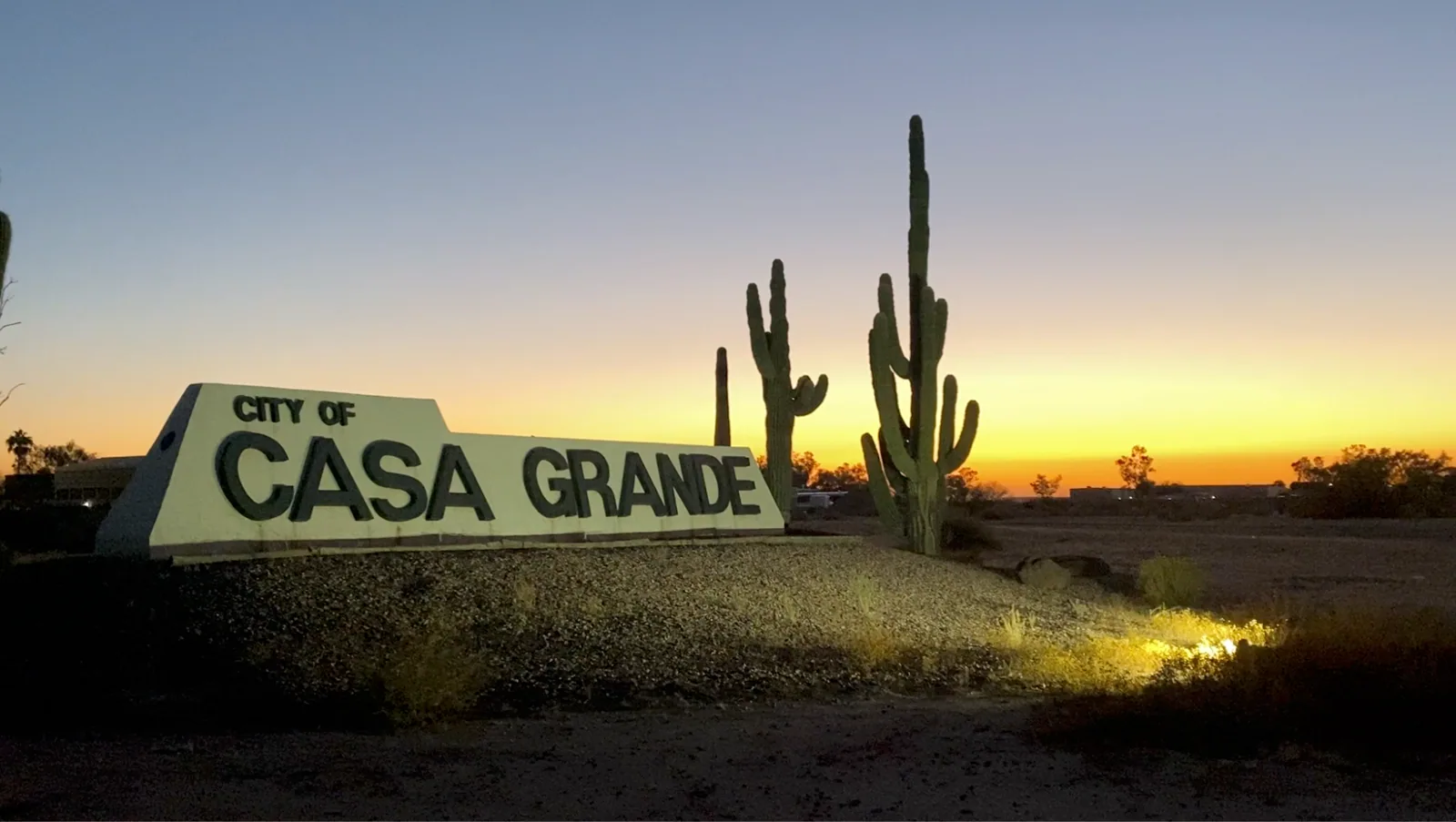
Commercial roof repair in Casa Grande, AZ: clear repair scopes tied to what failed, leak tracing, recover and replacement options, and work planned around occupied offices.
If you're holding two roofing proposals for an office building and the prices don't line up, the first question is what each one is actually fixing. A seam patch and a rebuilt wall flashing are very different jobs, and either can grow once the roof is opened and the insulation underneath turns out to be wet. We start by finding the damage, then explain each line of work, what it fixes and how we'll get onto the roof to do it.
Casa Grande sits in Pinal County roughly halfway between Phoenix and Tucson, where Interstate 10 and Interstate 8 meet. Send us the building address, any leak history and records of earlier repairs, and we'll inspect the roof itself. We also work in Coolidge and Maricopa, with each building inspected on its own. You'll get either a recommended repair or a clear explanation of what testing is needed before a larger decision.
Observed failure and proposed detail
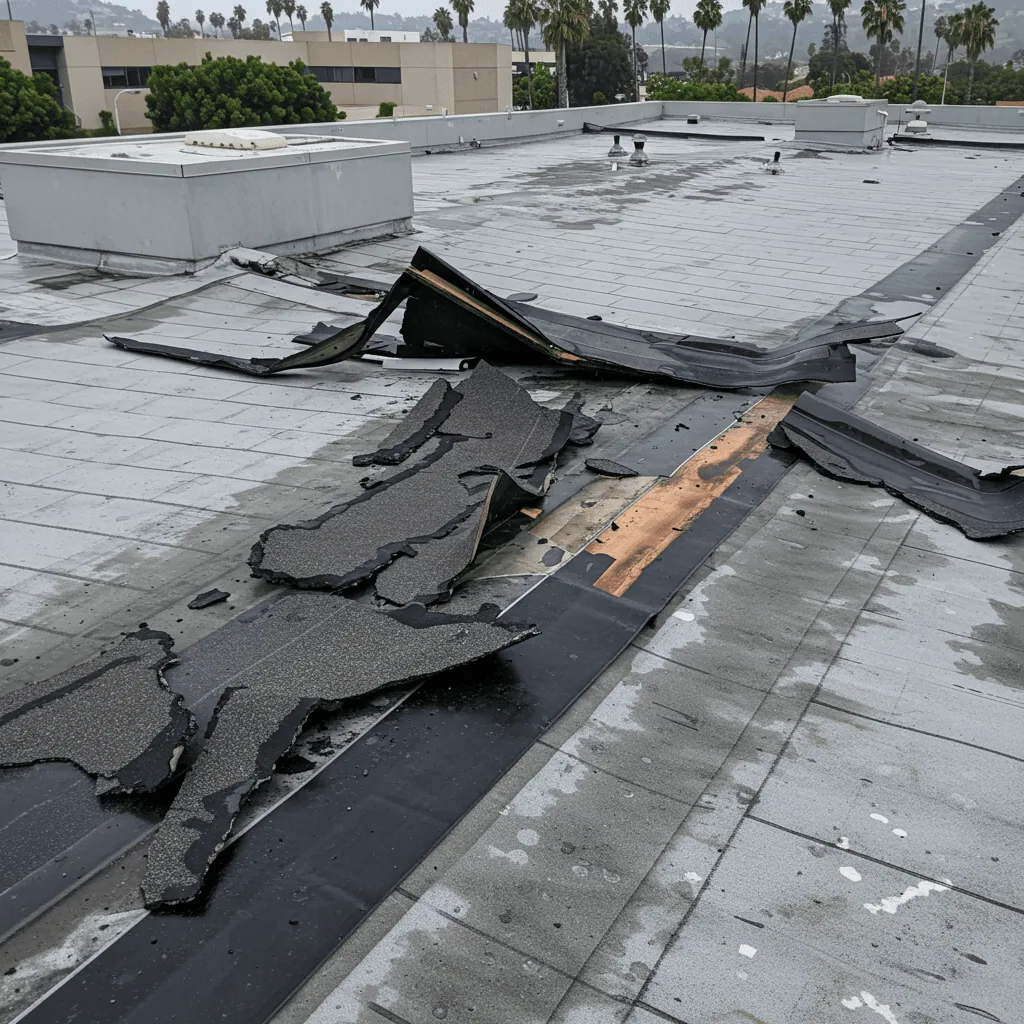
Every repair we propose starts with something we saw on the roof. If a seam has opened, we note where it is, how long it is and what the membrane around it looks like. If a wall flashing has pulled away, we check whether the wall behind it is solid or needs repair before new flashing goes on. A patch over a bad substrate doesn't last.
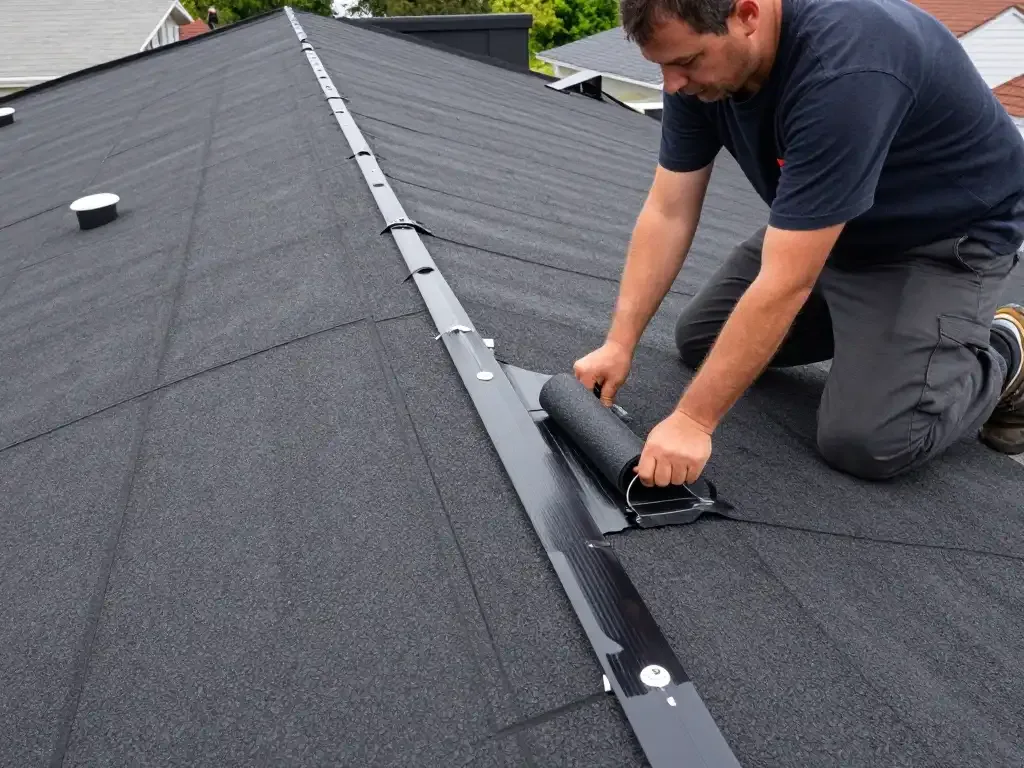
Our flashing repair proposals show where old flashing comes off, what gets rebuilt behind it and what new material goes on. If a rooftop unit, sign bracket or other item is part of the problem and belongs to someone else, we say so and explain what has to happen first. That way the property manager isn't left wondering why the roofer and the HVAC contractor are pointing at each other.
Office roofs in the desert take a beating from heat and UV. Sealants dry out, coatings chalk and membranes shrink at the edges. We point out which aging is cosmetic and which is likely to leak soon, so the money goes where it matters. Photos of each defect go with the proposal so you can see what you're paying to fix.
Water report and investigation limit
A commercial roof leak is easier to fix when we know exactly where water shows up inside and when. After a monsoon downpour only? During HVAC startup? Only when wind comes from one direction? We line that up with the roof above, checking seams, penetrations, wall flashings and drains in the area.
Sometimes the source is obvious, like a split seam directly over the stain. Other times water runs along the deck and drips several feet from where it gets in, or the leak is actually condensate from a rooftop unit. If we can't confirm the source on the first visit, we won't pretend we have. We tell you what we ruled out and what the next step is, whether that's a water test, opening a small section or bringing in the HVAC contractor.
That honesty saves money. Paying for three patches in the wrong places costs more than one well-placed repair after a proper investigation. The report shows the areas we checked, what we found and anything still unresolved, so the next visit picks up where this one left off.
Layers and larger repair choices
Whether a roof should be repaired, recovered or replaced depends on what's under the surface. We check how many roof layers are already on the building, whether the insulation is dry, how the roof is attached and whether the deck is sound. Wet insulation is common under older roofs that have leaked for a while, and it changes the answer.
Roof recover means installing a new roof over the existing one. It avoids a full tear-off, but only works if the old roof is dry, well attached and there's only one existing layer. Building code generally limits how many roofs can be stacked. If wet areas are scattered across the roof, those sections have to be cut out and replaced first, and that cost belongs in the comparison.
If replacement makes more sense, we explain why and show what comes off, what goes on and how long it takes. You'll see repair, recover and replacement side by side, based on what we actually found rather than a sales pitch.
Office access and occupied protection
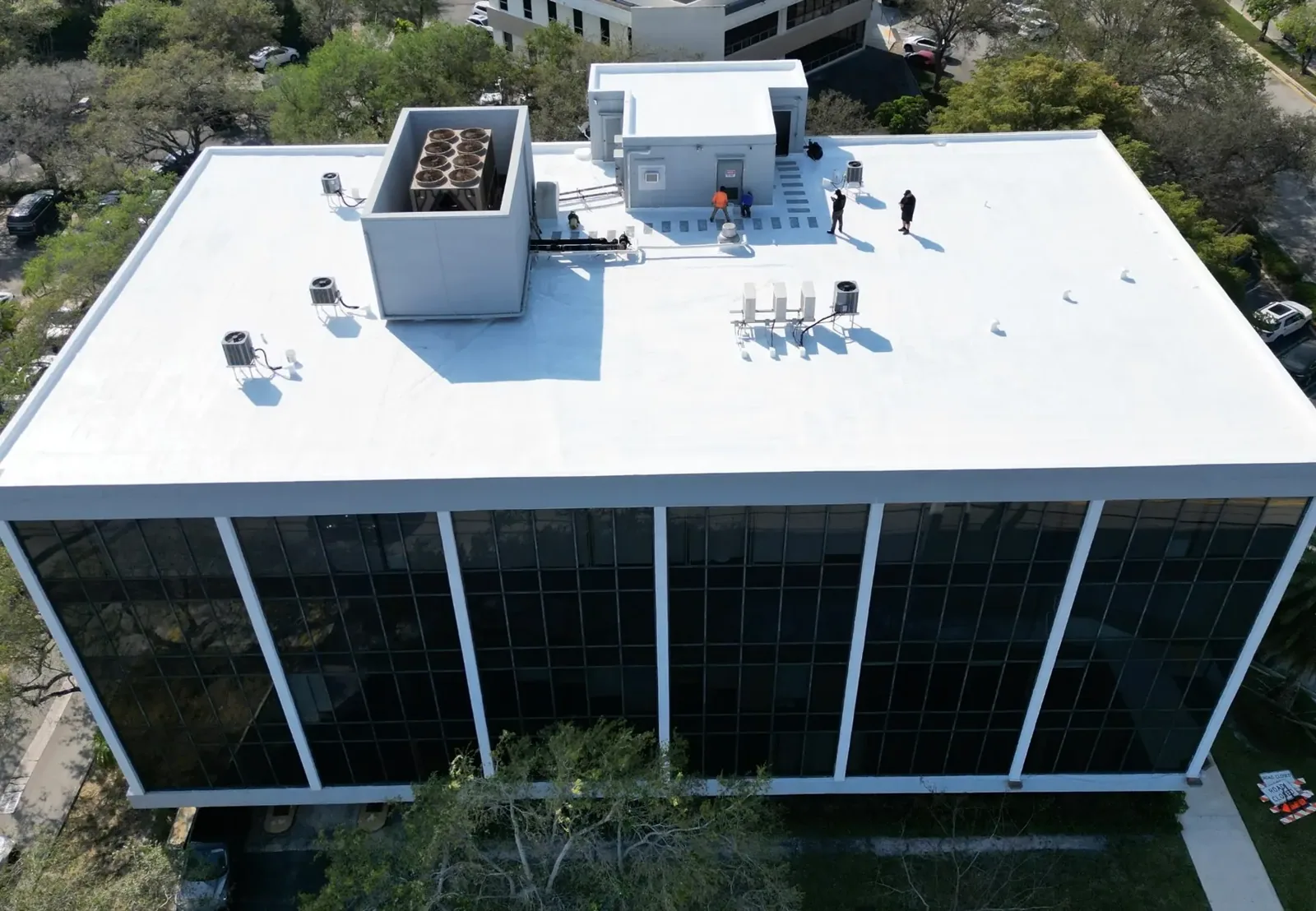
Office buildings are usually occupied during roof work, so we plan for the people inside. We ask where tenants and visitors park and enter, where deliveries can go, and whether the lot has room for a dumpster and lift without blocking drive lanes. Entrances under the work area may need overhead protection or a temporary detour.
For office building roofing, noise and odor are the usual complaints. Tear-off is loud, and some adhesives and primers have a strong smell that can get pulled into rooftop air intakes. We ask whether certain hours are better, whether intakes can be shut down briefly, and who should notify tenants. Some owners prefer early starts or weekend work for the loudest phases.
We only open as much roof as we can close the same day. If something unexpected keeps a section open overnight, it's sealed with temporary protection and the property manager knows who to call. Any change to the plan is discussed before the crew moves on.
Amount comparison and useful completion record
When comparing proposals, check that each one covers the same things: the same repair areas, the same treatment of wet insulation, the same flashing details and the same cleanup. One may look cheaper simply because it leaves out work the other includes. We list membrane repairs, flashing rebuilds, insulation replacement, access and protection as separate lines so you can compare them fairly.
Price is driven by how much damage there is, how much of the existing roof can stay, how hard the roof is to reach and how many visits the job takes. Hidden damage found once the roof is open, such as rotted wood nailers or a corroded deck, adds cost. When that happens, we stop, photograph it and get approval before continuing.
At the end, you get before and after photos, pictures of any hidden damage we repaired and a short summary of what was done. Anything we noticed but didn't fix is listed separately. That record is useful the next time someone calls about a leak, when a new property manager takes over or when you start budgeting for the next roof.
Commercial Roofing Questions
How can I compare two roof repair proposals?
Check that both cover the same repair areas, flashing work, wet-insulation replacement, access and cleanup. A lower price often means something has been left out.
What helps track down a leak you can't find on the first visit?
Tell us when it leaks: after rain, during HVAC operation or only with wind from one direction. Records of past repairs and photos of the interior damage also help narrow it down.
Why might a proposal change once the roof is opened?
Wet insulation, rotted wood or a corroded deck often hide under the surface. We photograph what we find and get approval before replacing it.
What should we discuss before work on an occupied office?
Entrances, parking, deliveries, dumpster placement, noise and odor, rooftop air intakes, preferred work hours and who will notify tenants.
What will I get at the end of the job?
Before and after photos, pictures of any hidden damage we repaired, a summary of the work and a list of anything we noticed but didn't fix.
Schedule a Casa Grande roof review
Send us the building address and any proposals or repair history you have. We'll inspect the roof, explain what each repair actually fixes and plan the work around your tenants.
Request a Roof AssessmentAll Service Areas