Home / Service Areas / Maricopa
Maricopa Commercial Roof Repair and Construction Review

Commercial roof repair in Maricopa, AZ: hotel and commercial roof leaks, flashing repair, recover assessments and work scheduled around guests and occupied rooms.
A hotel roof leak usually shows up as a guest complaint: a stain in a room, a drip in a corridor, water near the lobby ceiling. We start by asking which rooms or areas are affected, then find the roof detail above before planning any deliveries. Guests are in the building the whole time, so the hotel's rules about noise, quiet hours and access come into the plan from the start. A seam repair over one wing and a full tear-off are very different jobs, and we'll explain the work and the logistics together so the manager can schedule it sensibly.
Maricopa is in Pinal County, about 14 miles south of Interstate 10 along State Route 347. Send us the property address and a contact, and we'll inspect the roof. We also serve Queen Creek and properties in the Gila River Indian Community. Each building gets its own inspection, and the repair is based on what we actually find.
Reported area and relevant roof details
We match the affected rooms to the roof above and inspect the seams, flashings, drains and penetrations in that area. Hotels have a lot of rooftop equipment: packaged AC units for each wing, exhaust fans for bathrooms and kitchens and vent stacks for plumbing. Each of those is a potential leak point.
For leak investigation, we separate roof leaks from everything else. A rooftop unit with a clogged condensate line can drip into a guest room and look exactly like a roof leak. So can a leaking plumbing vent or a failed window seal on an upper floor. If the source isn't the roof, we tell you who should look at it.
Water also travels. It can enter at a curb, run along the deck and appear two rooms away. If we can't pin down the source on the first visit, we explain what we ruled out and recommend the next step, like a controlled water test. Every finding is photographed and marked on a roof plan.
Permanent detail and compatible preparation
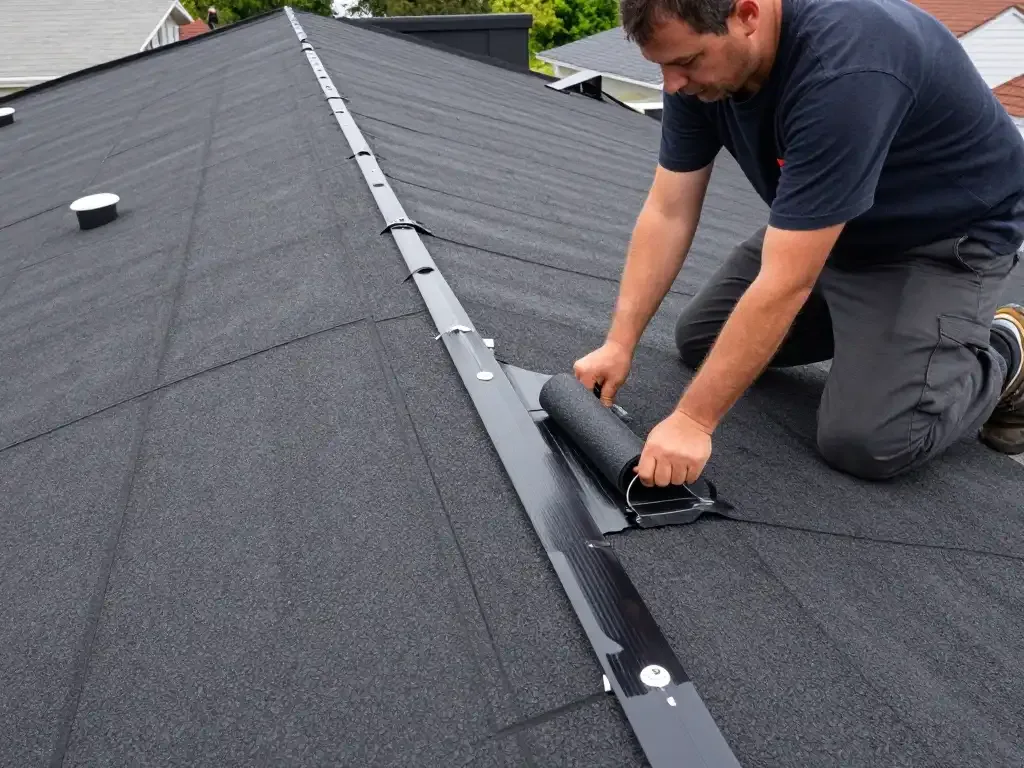
Once we know the source, the repair depends on the roof. We confirm whether it's TPO, PVC, built-up, modified bitumen or spray foam, then use matching materials. Old patches made of mastic, tape or the wrong product usually have to come off first, because new material won't bond to them. The area is cleaned and prepared so the repair holds.
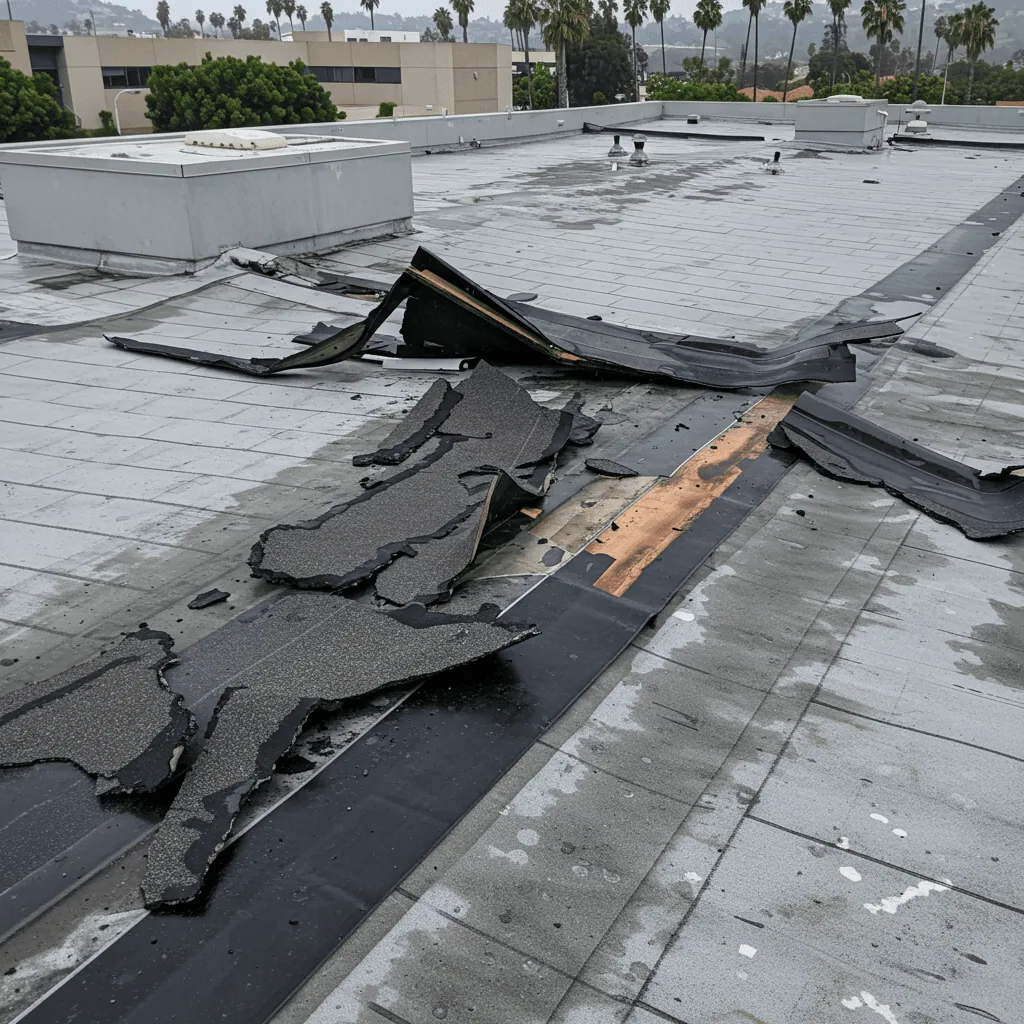
Flashings at parapet walls, equipment curbs and roof edges are the most common failures. For flashing repair, we remove the failed flashing and check what's behind it. Rotted wood, cracked stucco or loose block has to be fixed before new flashing goes on. If the wall above needs stucco work, that's often a different trade, and we coordinate the order.
We photograph each step, including what we found underneath. The hotel's maintenance file then shows exactly what was done, which helps when the next guest complaint comes in and someone needs to know whether that area has already been repaired.
Hotel access and occupied coordination
Hotels stay open during roof work, so we plan around guests. We ask the general manager or chief engineer which rooms are below the work area, when quiet hours start and end, and whether certain rooms should be blocked or moved during noisy work. Tear-off and some fastening work are loud, and roofing adhesives can have a smell that air units pull inside.
For hotel roofing, we also plan the ground. Where can our truck park without taking guest spaces or blocking the porte-cochère? Where can a lift or dumpster go? Which entrances need to stay clear, and do any need overhead protection while we work above them? We follow the hotel's contractor rules for check-in and staff areas.
Small repairs can often be done mid-morning with little disruption. Larger projects may need to be phased wing by wing, with rooms blocked in advance. We review that plan with the hotel before scheduling and update it if the scope changes once the roof is opened.
Supporting layers and larger choice
If a hotel has repeat leaks across several areas, it may be time to look beyond patches. Before recommending a roof recover, which installs a new roof over the existing one, we check insulation moisture, confirm how many layers are already on the roof and look at how it's attached. A recover over wet insulation traps the moisture and leads to bigger problems later.
Wet sections have to be cut out and replaced. If moisture is widespread, a full replacement may be the better investment. We test enough areas to make a recommendation for the whole roof, because one test cut only tells you about one spot.
Edges, walls and equipment curbs usually need new flashing as part of a recover. We explain which details would be rebuilt and compare a recover with targeted repairs and full replacement, including cost, timing and how many rooms would be affected during each phase. That gives ownership something real to weigh.
Returned condition and useful record
If a job takes more than one visit, any open area is sealed with temporary protection before the crew leaves. The hotel's contact knows what's finished, what's temporary, what's left to do and who to call if water appears. With guests in the rooms below, nobody should be guessing what state the roof is in overnight.
When hidden damage turns up, such as wet insulation, rotted wood or a corroded deck, we stop, photograph it and explain the fix before expanding the work. Every approved change is recorded with the reason it was needed and the photos behind it.
At closeout, the hotel receives before and after photos, documentation of any hidden repairs, approved changes and a list of anything we noticed but didn't fix. That record helps with guest-complaint follow-up, brand inspections, insurance questions and capital budgeting. It also means a new chief engineer can see exactly what's been done to the roof and what still needs attention.
Commercial Roofing Questions
What helps you find the leak on the first visit?
The room numbers or areas where water appeared, when it happened, any photos and records of earlier repairs. We match those to the roof above before inspecting.
How do you choose the right repair method?
We confirm the roof type, whether TPO, PVC, built-up, modified bitumen or foam, remove failed patches and use compatible materials so the repair bonds properly.
What hotel rules should be part of the plan?
Quiet hours, which rooms are below the work, whether rooms should be blocked, guest parking and entrances, contractor check-in and any odor concerns at air intakes.
Why might a recover need more testing?
It covers the whole roof, so we check moisture, existing layers and attachment in several areas. A recover over wet insulation traps moisture and causes bigger problems.
What should the hotel know if work stops partway?
Which areas are temporarily sealed, what's left to do, who is doing it, when we'll return and who to call if water appears.
Schedule a Maricopa roof inspection
Tell us the property address and which rooms or areas are affected. We'll trace the leak, explain the repair and schedule the work around your guests.
Request a Roof AssessmentAll Service Areas