Home / Service Areas / Florence
Florence Commercial Roof Repair and Condition Review
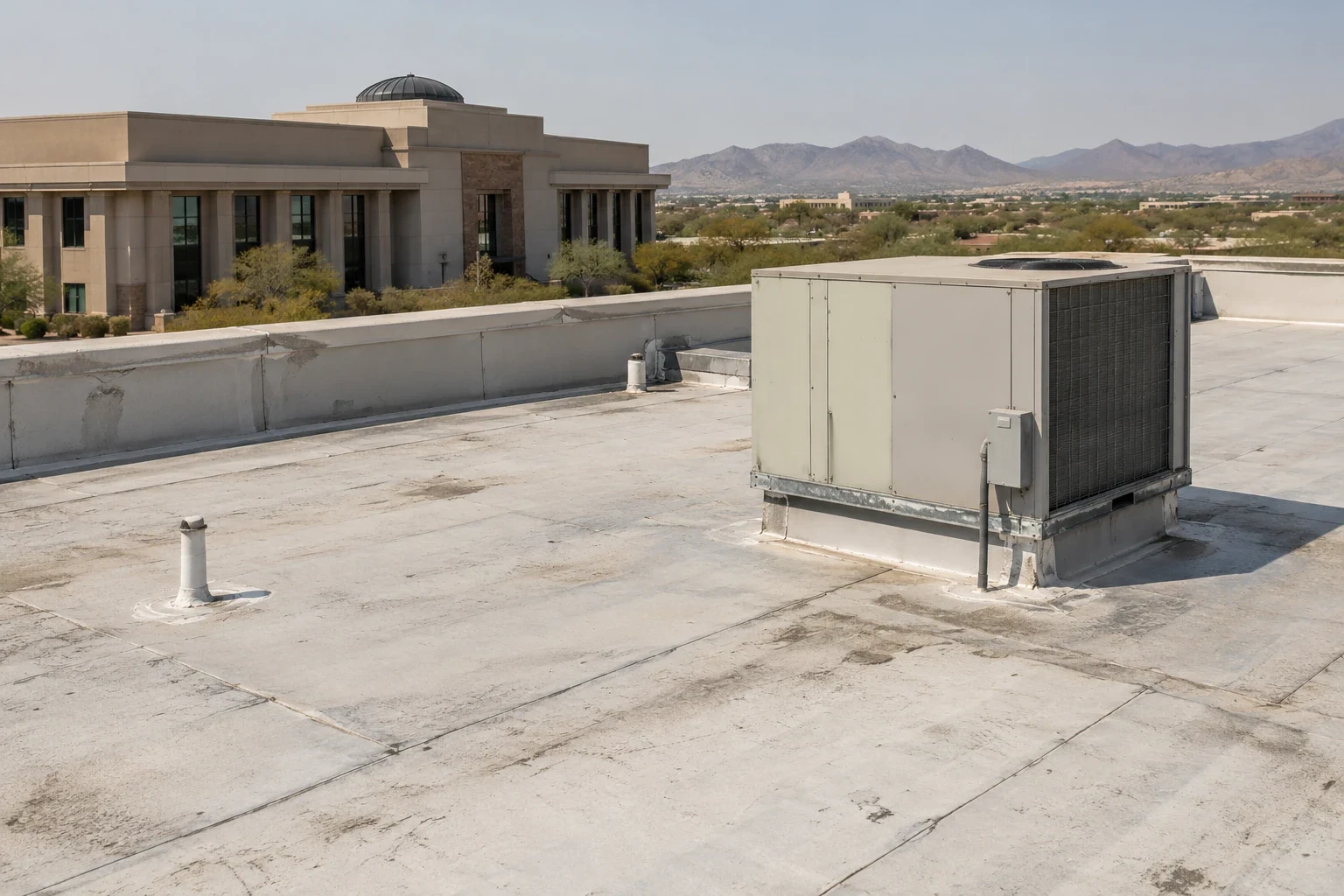
Commercial roof repair in Florence, AZ: repeat leak investigation, flashing repair, condition inspections and roof planning for government and commercial buildings.
When a government or commercial building in Florence keeps leaking in the same area, the first thing we want to see is the repair history. Where was it patched before? What was done, and when? Photos or invoices from earlier work help us tell whether the new leak is the old one coming back or something different nearby. Then we inspect the roof itself before proposing anything. The building manager should understand exactly what the next repair will fix and why it should hold this time.
Florence is the Pinal County seat, with a mix of county, state and commercial buildings. Tell us which property and who can authorize roof access, along with any repair records you have. We also serve Coolidge and San Tan Valley, with each building inspected separately. Sometimes a small repair is enough; sometimes the roof needs a wider look before anyone commits to a larger project.
Earlier repair and renewed water report
A leak that returns after a repair usually means one of three things: the first repair failed, it fixed one problem while a second one went unnoticed, or the water was never coming from where it was patched. We line up the interior leak location with the repair history and then inspect the roof above, checking the old patch and everything near it.
For leak investigation, we look at seams, wall flashings, drains, pipe boots and equipment curbs in the area. Water can travel under the membrane or along the deck before it drips, so the stain isn't always directly below the source. Rooftop HVAC units can also leak from condensate lines and look like a roof leak from inside.
We photograph every defect and mark it on a roof plan. If we can't pinpoint the source on the first visit, we say so and recommend the next step, such as a controlled water test. That's better than another patch in the wrong spot.
Permanent detail and uncertain old material
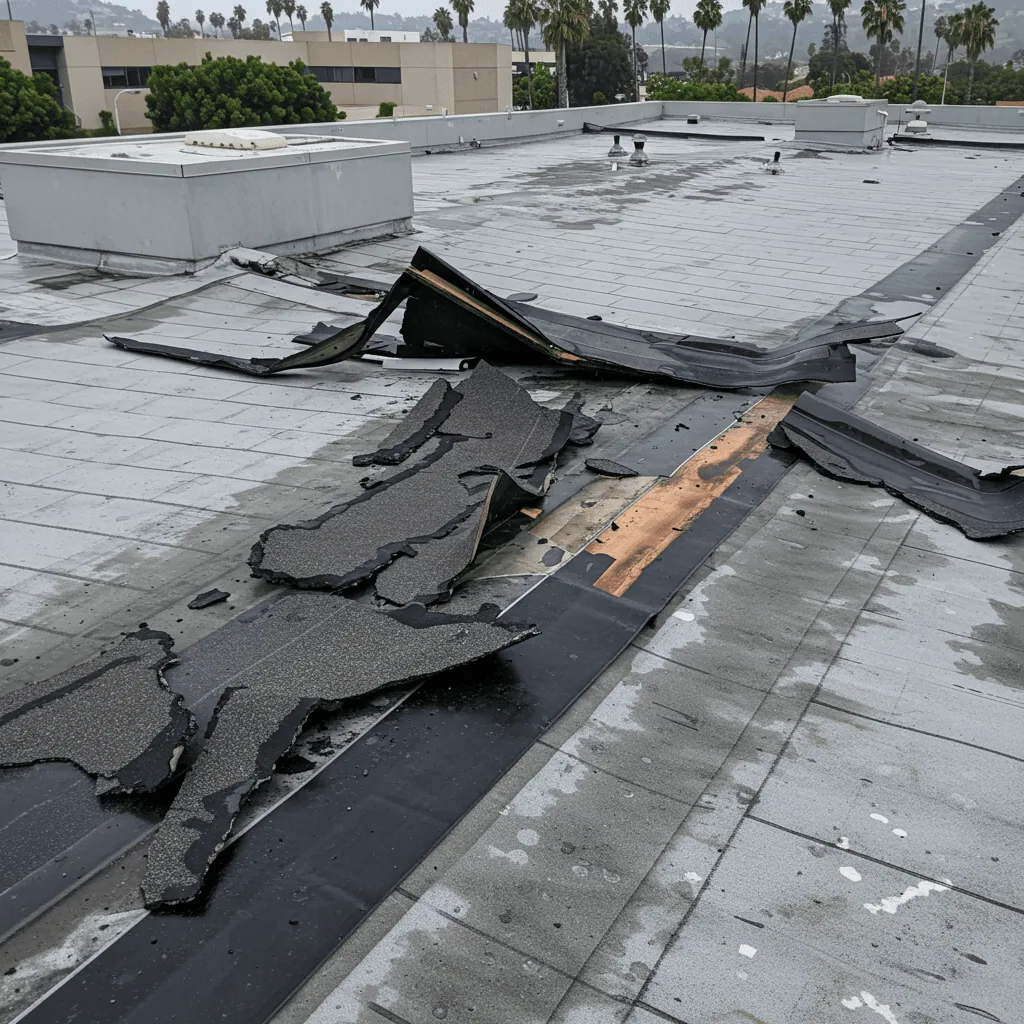
Old patches are often part of the problem. Over the years, a roof can collect layers of mastic, tape, caulk and mismatched membrane, each one applied on top of the last. New material won't bond reliably to that kind of buildup. Before a permanent repair, the old patches usually have to come off so we can reach sound roofing underneath.
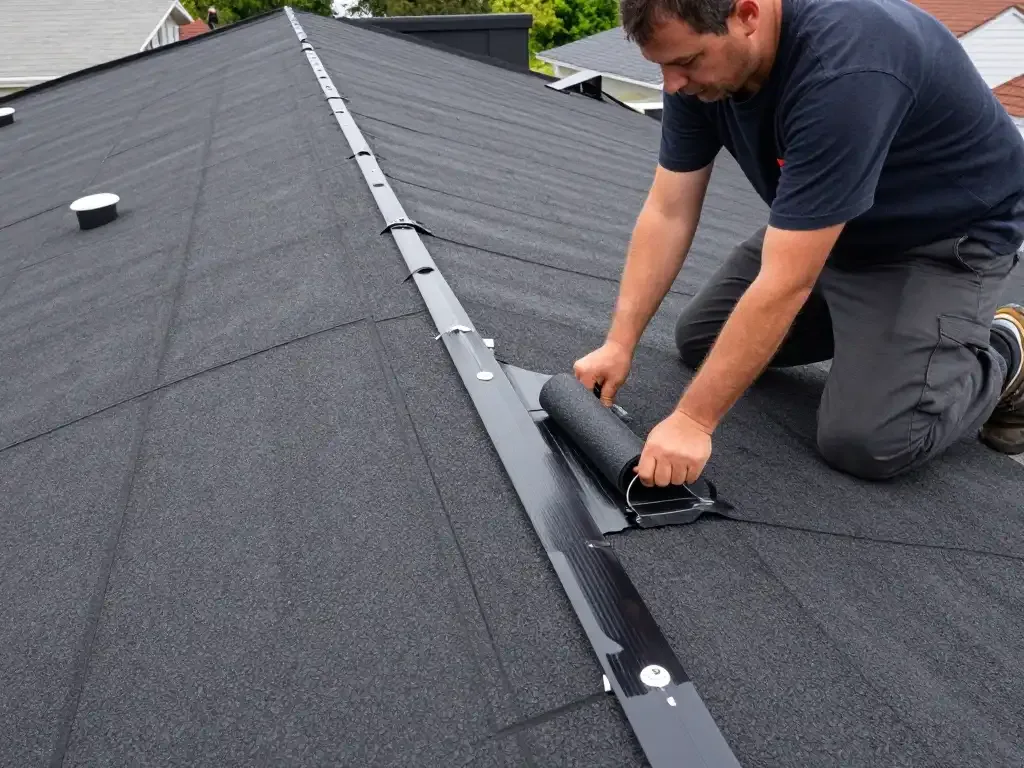
Wall and curb flashings are the most common failure point. For flashing repair, we remove the failed flashing and check what's behind it. Rotted wood nailers, crumbling masonry or loose stucco have to be fixed before new flashing goes on. If the wall above the roof needs masonry or stucco work, that may be a different trade, and we explain the sequence.
Once the substrate is sound, new flashing goes on with materials compatible with the existing roof. We photograph each step, including what was underneath, so the building file shows what was actually done instead of just "flashing repaired."
Current condition and broader choice
If the building has had several leaks or the roof is getting old, a full commercial roof inspection gives you a clearer picture than chasing leaks one at a time. We walk the whole roof, check seams, flashings, drains and equipment, look for ponding and test for moisture where needed. Each problem is photographed and located on a roof plan.
An inspection tells you what needs fixing now, what can wait and whether the roof is nearing the end of its life. If wet insulation is widespread, repairs become a short-term fix. If the roof is mostly dry and the problems are concentrated at the edges and penetrations, targeted repairs can buy years of service.
Before recommending a recover or replacement, we confirm how many roof layers are in place, how the roof is attached and the condition of the deck. One test cut tells you about one spot, so we check enough areas to support a recommendation for the whole roof.
Assigned approvals and building access
Government buildings usually have a defined process for contractors: who approves the work, check-in procedures, work hours, background checks for certain facilities and rules about public areas. We ask for those requirements up front and build them into the schedule.
For government building roofing, we also plan access with the building contact. Where can trucks park? Where can materials be staged and debris removed? Which public entrances must stay open, and do any need overhead protection or a temporary detour? If the building is occupied during the work, we ask what's directly below the repair area and whether noise or odors will be a problem.
Approvals can take time on public buildings. If a decision is pending and part of the roof is open, it's sealed with temporary protection and the building contact knows who to call. Any change in scope is reviewed and approved before we proceed.
Cost drivers and future follow-up
Cost depends on how much damage there is, how much old material has to come off and what's underneath. Removing layers of old patches, replacing wet insulation or rebuilding rotted wood adds labor and materials. Difficult access, split schedules and extra protection around occupied public spaces can also add time. We explain those factors with the proposal so the price makes sense.
If hidden damage turns up once the roof is opened, we stop, photograph it and get approval before expanding the work. Approved changes are recorded with the reason and the photos behind them.
At the end of the job, the building receives before and after photos, pictures of any hidden damage we repaired, the approved changes and a list of anything we noticed but didn't fix. On public buildings where staff and managers change over time, that record is especially valuable. The next person to deal with a leak will know exactly where work was done, what was found and what was still open.
Commercial Roofing Questions
What helps you diagnose a new leak near an old patch?
Records of the earlier repair: where it was, what was done and when. We compare that with the current leak location and inspect the patch and everything around it.
Why do old patches sometimes have to be removed?
Layers of mastic, tape and mismatched membrane won't hold a new repair reliably. We remove them to reach sound roofing before installing a permanent fix.
How do you decide between more repairs and a bigger project?
A full inspection with moisture testing shows whether problems are isolated or widespread. That tells us whether targeted repairs are worth it or the roof is near the end of its life.
Who should handle approvals for work on a public building?
Whoever your building or agency designates to approve contractor work. We follow your check-in, scheduling and public-area rules.
What makes the final report useful later?
Photos of the work and any hidden damage, a list of approved changes and a record of open issues. The next manager can see exactly what was done and where.
Schedule a Florence roof inspection
Tell us the building address, who can authorize access and any repair history you have. We'll inspect the roof, explain what's causing the problem and recommend the right fix.
Request a Roof AssessmentAll Service Areas