Home / Service Areas / San Tan Valley
San Tan Valley Commercial Roof Repair and Surface Assessment

Commercial roof repair and coating assessments in San Tan Valley, AZ: fixing damaged details before coating, ponding water repair, recover options and retail-friendly scheduling.
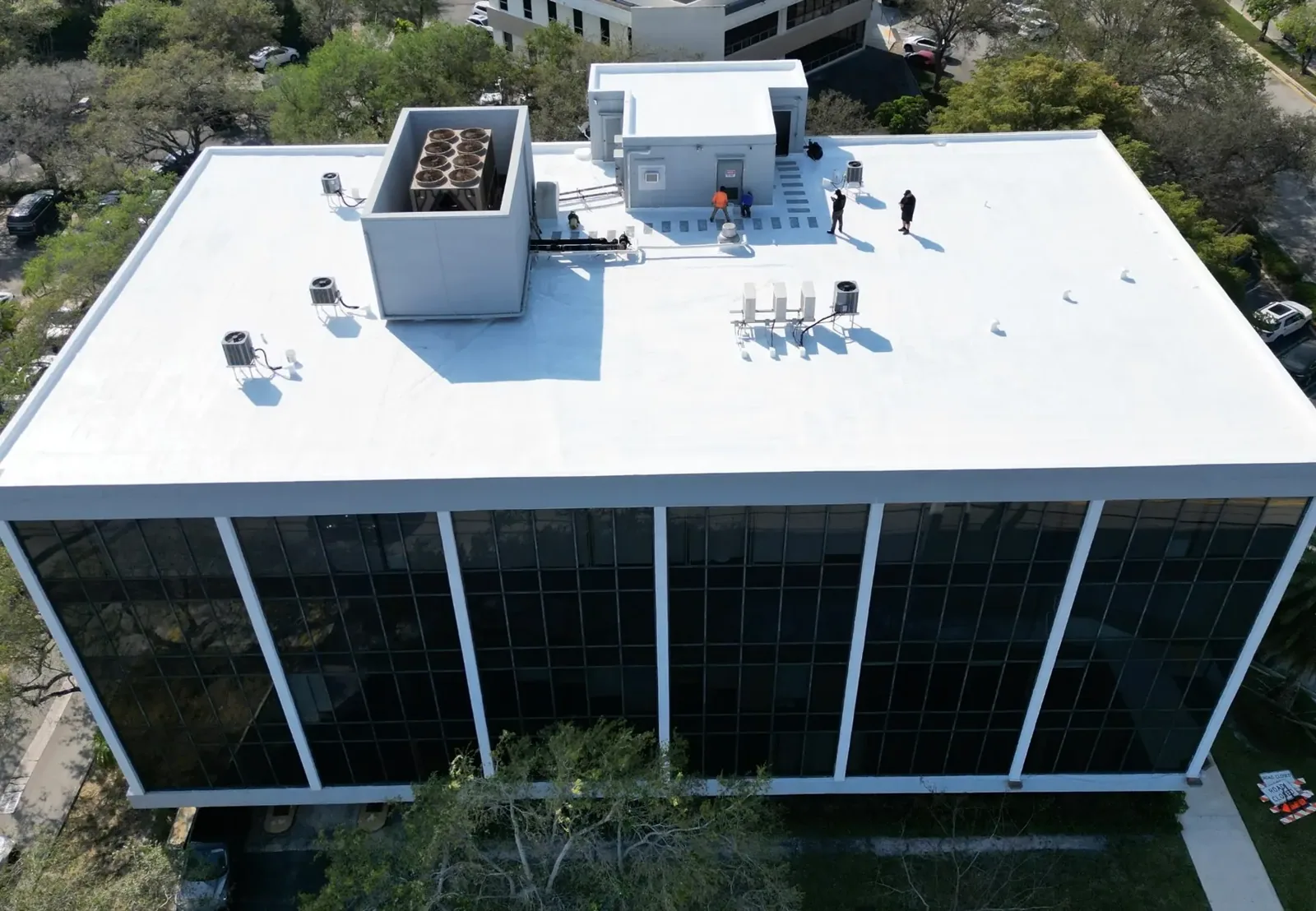
A coating proposal for a retail roof is only as good as the repairs that come before it. Before we talk about a new surface, we confirm what roof is up there and inspect the seams, flashings and drains across the area to be coated. We ask where earlier patches were placed and what they were covering. A coating can't fix a wet deck, a split seam or a failed flashing underneath it. Those get repaired first. The property owner should see the full sequence, repairs then prep then coating, alongside the price.
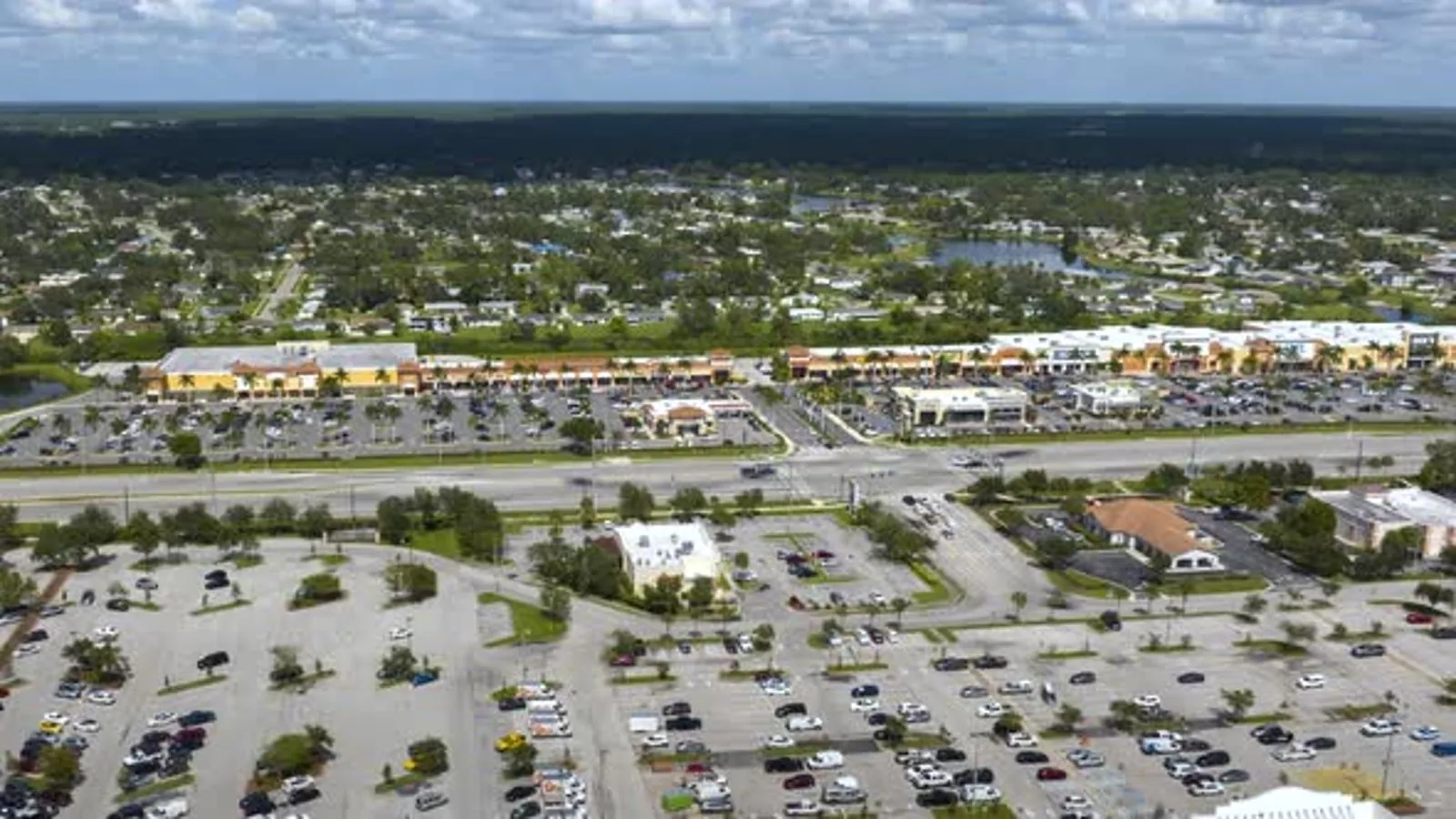
San Tan Valley's retail and service buildings sit in a hot Sonoran Desert setting where roofs take a beating from sun and heat. Send us the building address and a contact, and we'll inspect the roof. We also work in Queen Creek and Florence, and each property gets its own inspection. If the building is occupied, we plan around tenants and customers from the start.
Repair before new surface preparation
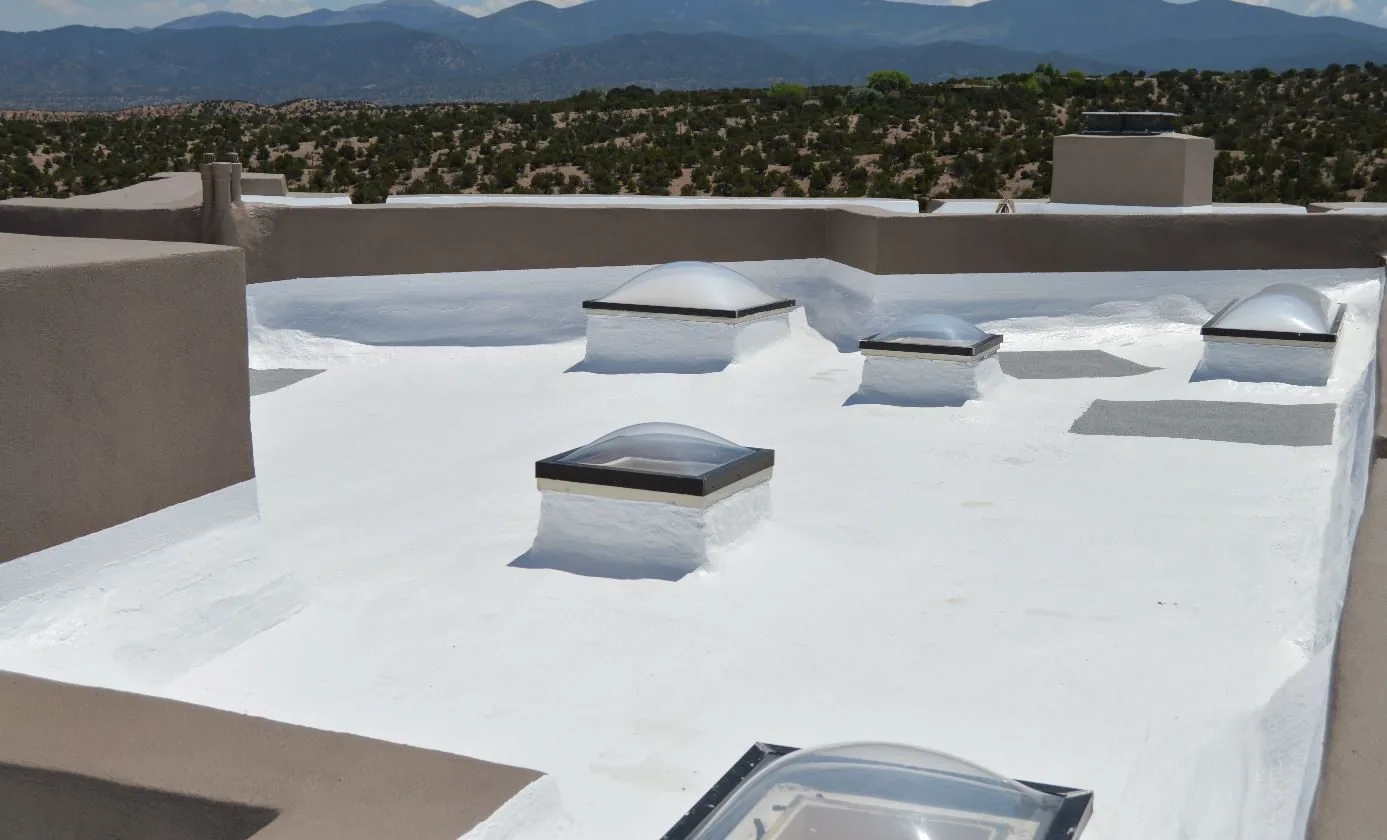
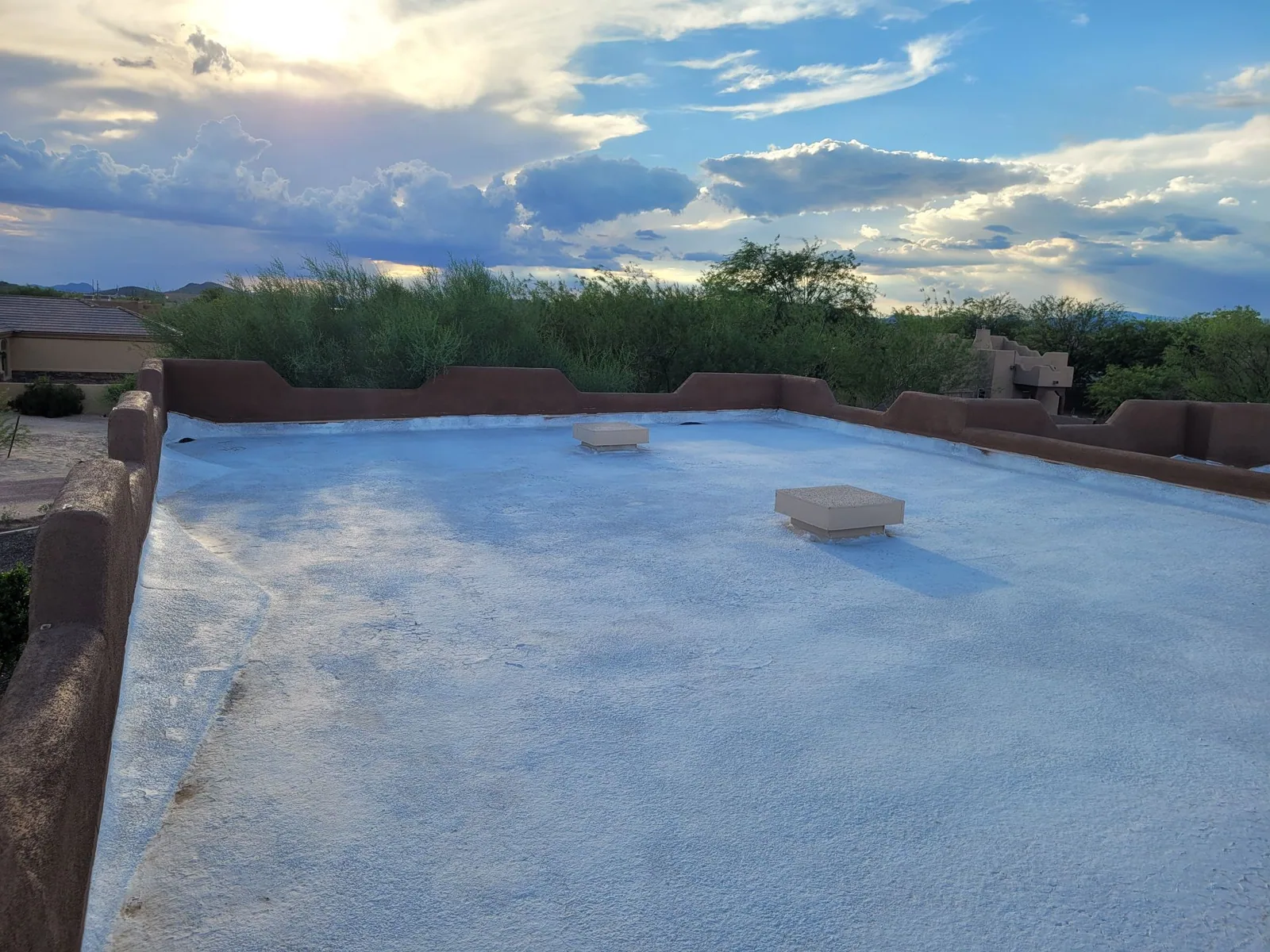
Coating restoration can extend the life of a roof that's still basically sound. It isn't a cure for a roof that's wet or failing. Before recommending a coating, we test for moisture, inspect seams and flashings and look at drains and ponding areas. Wet insulation has to be cut out and replaced. Open seams get reinforced, blisters get repaired and failed flashings get rebuilt.
We also confirm the existing surface, whether TPO, built-up, modified bitumen, spray foam or metal, and make sure the coating we recommend is compatible with it. The wrong coating on the wrong roof can peel within a season or two, and that's money wasted.
Preparation is most of the job. The roof is cleaned to remove dirt, chalking and loose granules. Old patches that won't hold a coating come off. If the roof qualifies, we explain what the prep covers and what maintenance the coating will need over its life. If it doesn't, we'll tell you why.
Reported water and drainage details
Water that sits on a flat roof for days after a storm speeds up wear, collects debris and puts extra stress on seams. Some coatings don't tolerate standing water at all. We start by clearing drains and scuppers, then check whether the water drains once they're open.
For ponding water repair, the fix depends on why water is collecting. A clogged drain is maintenance. A drain set too high or a damaged flashing around it is a roofing repair. A sagging deck or poor slope across a large area is a bigger issue that may need tapered insulation, added drains or deck work. If a downspout or drain pipe is broken below the roof, that may need a plumber.
If interior leaks are tied to ponding areas, we trace them carefully. A small opening in a seam or flashing under standing water can leak steadily. We photograph each finding and mark it on a roof sketch so the proposal is clear about what's being fixed.
Supporting assembly and removal choice
Whether to coat, recover or replace depends on what's under the surface. We check insulation moisture across the roof, confirm how many layers are already in place and look at how the roof is attached. One test cut tells you about one spot, so we check enough areas to stand behind the recommendation for the whole roof.
A roof recover installs a new roof over the existing one. It avoids a full tear-off but only works over a dry roof with no more than one existing layer, since building codes generally limit how many roofs can be stacked. Wet sections have to be removed and replaced first.
If moisture is widespread, full replacement may cost about the same as a recover with heavy repairs, and it gives a better result. We lay out coating, recover and replacement side by side, with what each one includes and how long it should last, so the owner can compare real options.
Retail routes and work footprint
Retail sites in San Tan Valley depend on easy parking and visible storefronts, so we plan the work to keep both clear. We ask the property manager which entrances must stay open, when tenants receive deliveries and where we can place a lift or dumpster without blocking parking or drive lanes. Overhead work near storefronts gets barriers and may be scheduled before stores open.
For shopping center roofing, tenant mix matters. Restaurants have kitchen exhaust on the roof and early deliveries. Medical or dental suites may be sensitive to noise and odor. Coating products and primers can have a strong smell, so we ask whether rooftop air intakes can be shut down briefly during application.
Small repairs barely affect the center. A full coating or recover means several days of crew time and deliveries, and we review that plan with the property manager before scheduling. If the scope changes after we open the roof, we revisit the plan before continuing.
Authorization and returned roof record
Every change to the scope is approved before we do it. If we find wet insulation, a rotted curb or a damaged deck once the roof is open, we stop, photograph it and explain the fix and the added cost. The owner or property manager approves it, and the approval goes into the job file with the photos.
If a job spans more than one visit, open areas are sealed with temporary protection before the crew leaves. The property manager knows what's finished, what's temporary and who to call if water appears.
When a coating is finished, the owner receives before and after photos, documentation of all repairs done before coating, the coating product used and the recommended maintenance schedule. Anything we noticed but didn't fix is listed separately. That record matters if a warranty question ever comes up, and it gives the next inspector a clear picture of what was done.
Commercial Roofing Questions
Why do damaged areas need repair before coating?
A coating can't fix wet insulation, open seams or failed flashings. If they aren't repaired first, the coating fails along with them.
What does clearing a clogged drain tell you?
Whether the ponding is just a blockage. If water still sits after the drain is clear, the cause may be a damaged drain, poor slope or a sagging deck.
Can one test cut decide whether to coat, recover or replace?
No. One cut tells you about one spot. We check moisture and layers across enough of the roof to support a recommendation for the whole thing.
Who sets the rules for working at a retail center?
The property manager. We ask about entrances, deliveries, parking, tenant hours, air intakes and who notifies tenants, then plan around those.
What should the owner get after a coating job?
Before and after photos, documentation of the repairs done first, the coating product used, a maintenance schedule and a list of anything we didn't fix.
Schedule a San Tan Valley roof assessment
Send us the building address and what you're considering. We'll inspect the roof, tell you whether it's a good coating candidate and explain the repairs it needs first.
Request a Roof AssessmentAll Service Areas