Home / Service Areas / Gila River Indian Community
Commercial Roof Repair for Gila River Community Assignments
Commercial roof repair for buildings in and around the Gila River Indian Community: inspections, flashing repair, recover assessments and work coordinated with the right building contacts.
Every roof job starts with knowing who we're working for. For community, enterprise and commercial buildings in this area, we ask up front who manages the property, who can approve roof access and who should receive our findings. Then we look at the problem itself: a leak, damaged flashing, an aging roof. If part of the issue belongs to another trade, like a leaking rooftop unit or a cracked wall, we say so and explain who should handle it and in what order. The building manager ends up with a clear sequence instead of a pile of separate opinions.
The Gila River Indian Community lies just south of Chandler and Phoenix and is crossed by Interstate 10 and Loop 202. Give us the building address and the contact, and we'll inspect the roof directly. We also serve Maricopa and Queen Creek. What we find on the roof drives the recommendation, whether that's a targeted repair, a wider assessment or a plan for replacement down the road.
Assigned representative and roof access
We start by confirming the approval process for contractors. Community-owned and public buildings often have their own requirements: check-in procedures, permits, insurance documentation, work hours and areas that need to stay accessible. We ask for those requirements early so they don't hold up the job later.
For government and public building roofing, we also confirm the practical details. Where can our trucks park? How do we get on the roof: an interior hatch, an exterior ladder or a lift? Where can materials be staged and debris removed? Which entrances must stay open for staff and visitors, and do any need overhead protection while we work?
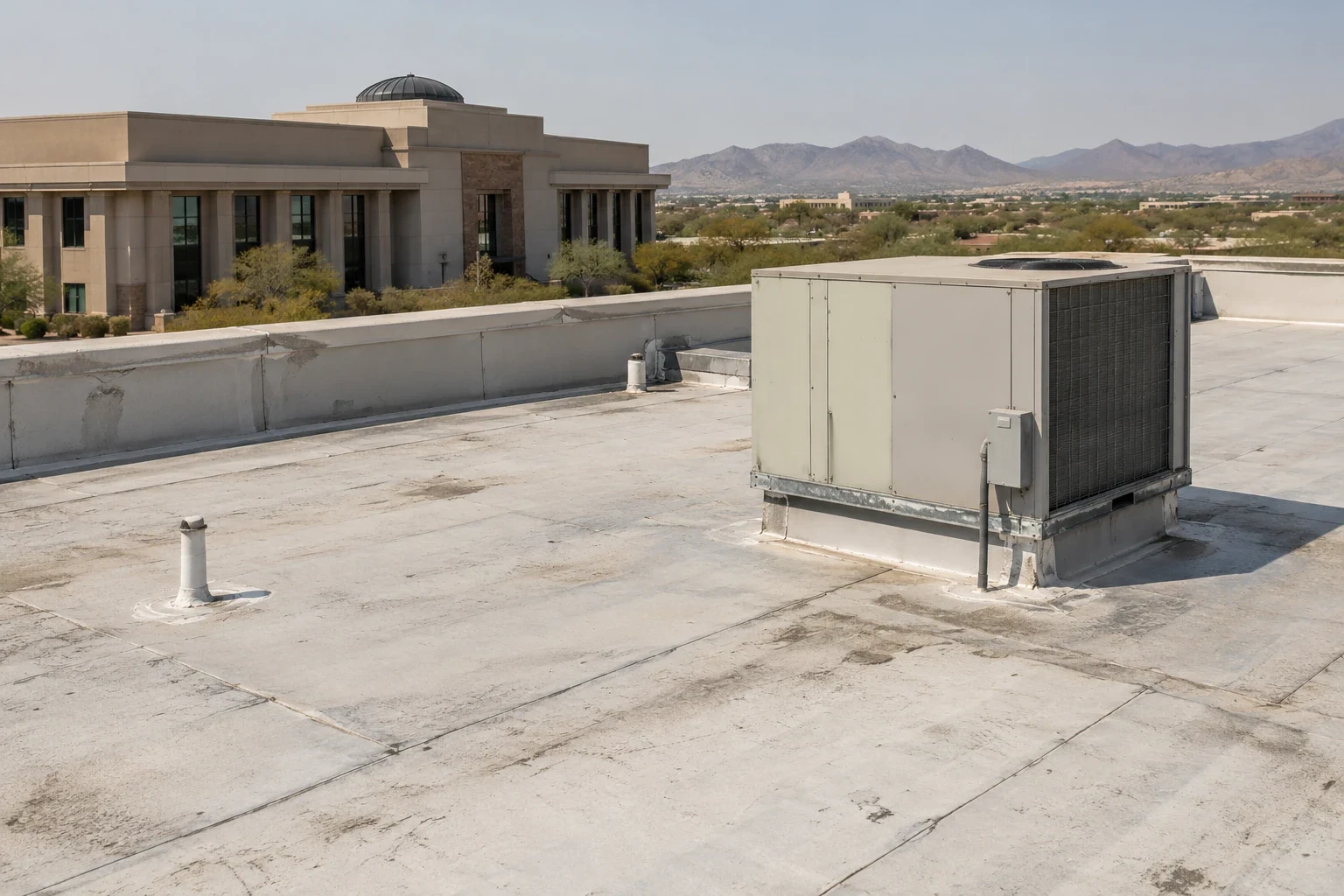
If rooftop equipment, signage or wall systems are involved, we ask who maintains them. A leak at an HVAC curb may need both a mechanical contractor and a roofer, and the work has to happen in the right order. Knowing who to call before the job starts saves days of back and forth once it's underway.
Water report and examined defects
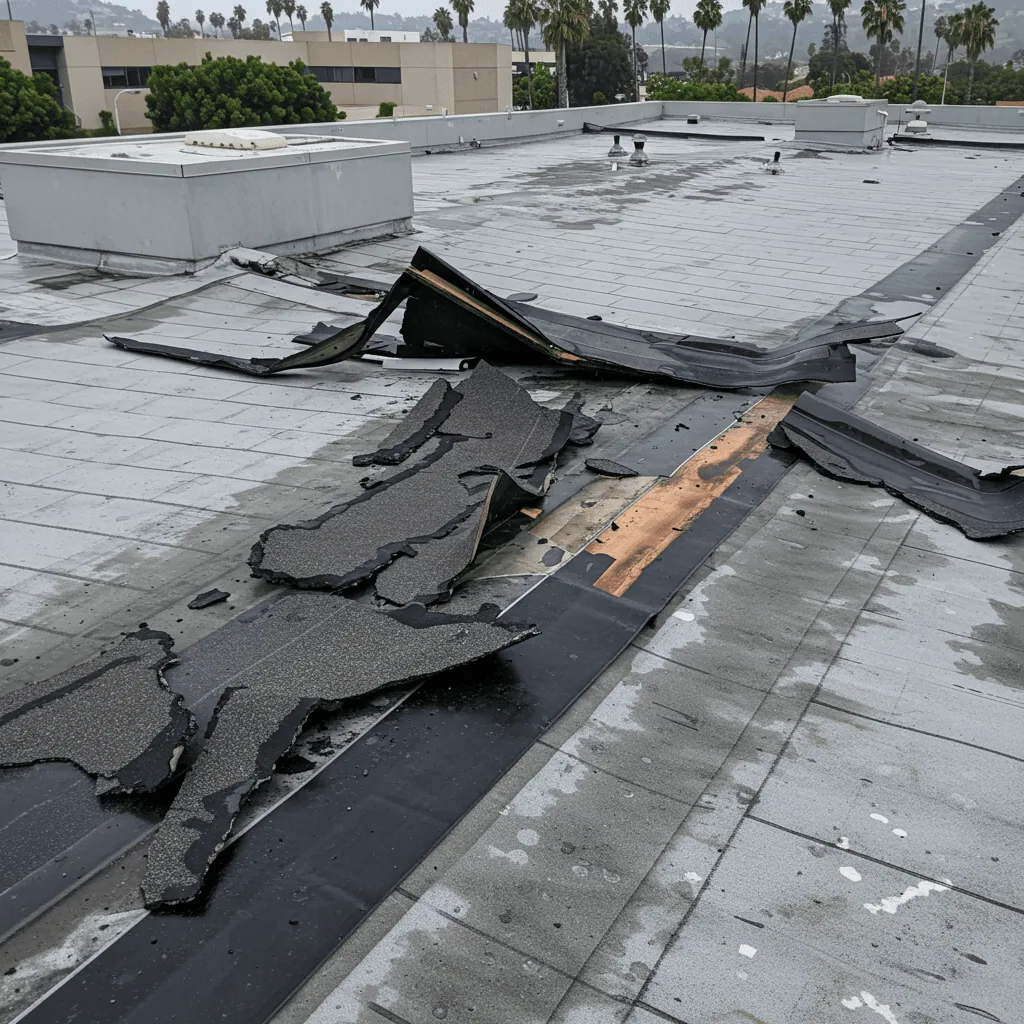
A good inspection starts inside. We ask where water has appeared, when it happens and whether it's getting worse, then go up and check the roof directly above and upslope. Seams, wall flashings, drains, pipe boots and equipment curbs are the usual sources. We also note earlier patches and whether they're holding.
A commercial roof inspection gives the building manager a plain list of findings with photos and locations marked on a roof plan. We separate urgent problems, like an open seam over an occupied office, from issues that can be budgeted for later, like worn coating or minor ponding. We also note any areas we couldn't reach or check, so nobody assumes the whole roof was cleared.
If the leak source isn't clear on the first visit, we explain what we ruled out and recommend the next step. Water often travels under the membrane before it drips, and rooftop units can leak from condensate lines in ways that look exactly like a roof leak from inside.
Compatible repair and adjoining work
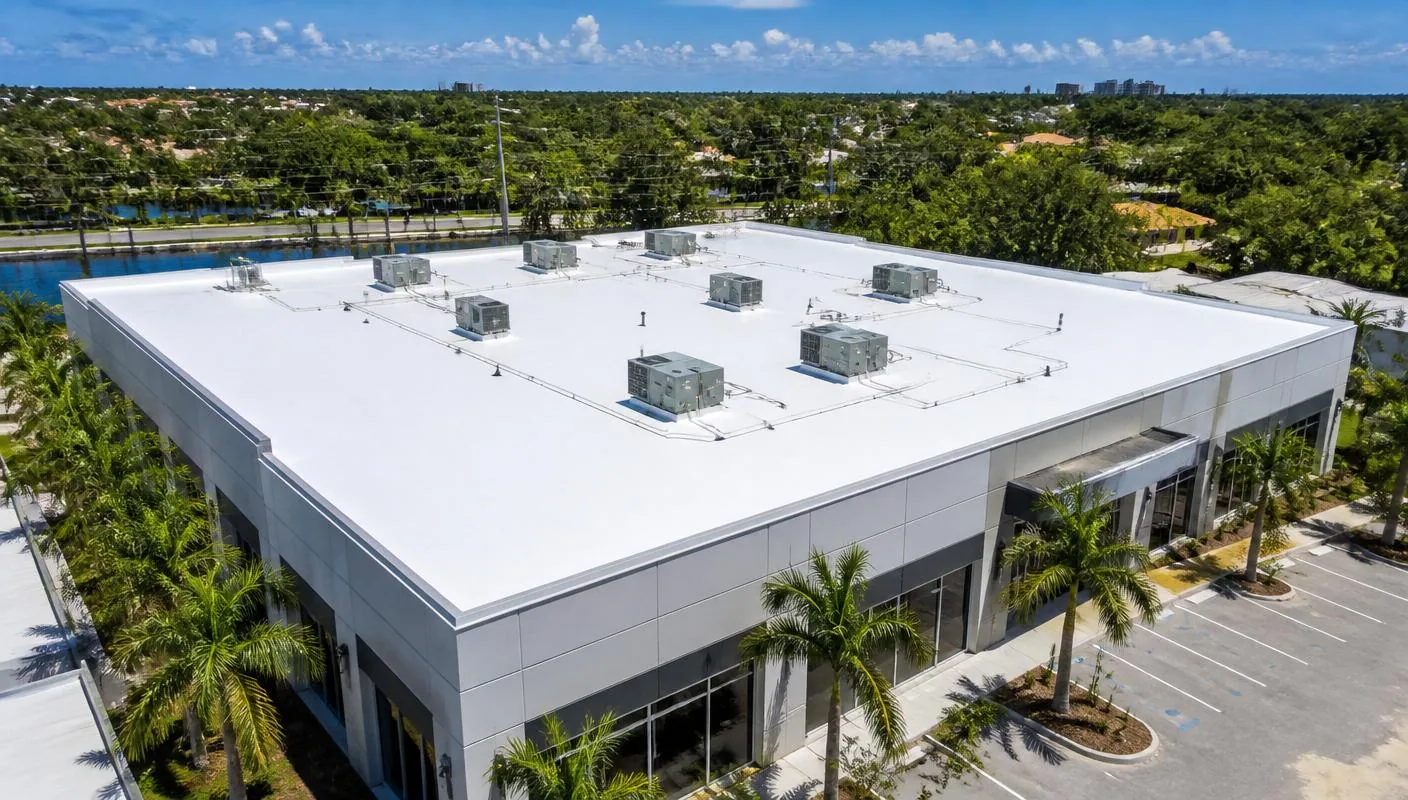
Repairs only last if the materials are compatible. Before repairing anything, we confirm what roof is on the building, whether TPO, PVC, built-up, modified bitumen, spray foam or metal, and choose matching repair materials and methods. Old patches made of the wrong product usually have to come off first so the new repair bonds to sound roofing.
For flashing failure repair, we remove the failed flashing at the wall, curb or penetration and check what's behind it. Rotted wood, crumbling block or loose stucco has to be repaired before new flashing goes on. If the wall itself needs masonry or stucco work above the roof line, that's often a different trade, and we coordinate the sequence so the flashing isn't installed against a wall that's about to be torn open.
Each step is photographed, including what we found underneath. The building file then shows exactly what was done instead of a one-line invoice entry.
Support review and wider construction
If a roof has repeated leaks or is getting old, a patch-by-patch approach eventually stops making sense. Before recommending a roof recover, which installs a new roof over the existing one, we check the insulation for moisture, confirm how many layers are already in place and look at how the roof is attached. Building codes generally limit how many roofs can be stacked, and a recover over wet insulation traps moisture that keeps damaging the deck.
Wet sections have to be cut out and replaced before a recover. If moisture is widespread, full replacement may cost about the same and give a better result. We test enough areas to make that call with confidence; one test cut doesn't tell you about an entire roof.
Edges, walls and penetrations usually need new flashing as part of a recover. We explain which details would be rebuilt and show how a recover compares with targeted repairs or a full tear-off, including how long each would take and how much of the building would be affected while work is underway.
Protected opening and next task
Some jobs need more than one visit, whether we're waiting on materials, another trade or an approval. Before the crew leaves, any open area is sealed with temporary protection. The building contact gets a short summary: what's finished, what's temporary, what comes next, who's responsible and who to call if water shows up. During monsoon season, that matters.
When hidden damage turns up, such as wet insulation, rotted wood or a corroded deck, we stop, photograph it and explain what it would take to fix. We don't expand the work without approval, and every approved change is recorded with the reason behind it.
At closeout, the building receives before and after photos, documentation of any hidden repairs, approved changes and a list of anything we noticed but didn't fix. If another trade still has work to finish, that's noted too. That record makes the next inspection faster and helps with maintenance planning and budgeting. It also means a new manager can pick up the file and understand the roof without starting from scratch.
Commercial Roofing Questions
Who should we identify before the first visit?
The building manager, whoever can approve roof access and repairs, and anyone who handles contractor requirements like permits, insurance or check-in.
What does describing the leak help you figure out?
Where water appears, when it happens and whether it's getting worse tells us where to look on the roof and whether the source might be equipment rather than the roof itself.
How do you choose the right repair material?
We confirm the existing roof type first, whether TPO, PVC, built-up, modified bitumen, foam or metal, and use materials and methods that bond properly to it.
Why does a recover or replacement need more testing?
It covers the whole roof, so we check for wet insulation, existing layers and attachment in multiple areas before recommending it or giving a price.
What should we know if part of the roof is temporarily sealed?
Where it is, what's left to do, who is doing it, when we'll return and who to call if water appears in the meantime.
Schedule a roof inspection in the Gila River area
Tell us the building address and who manages it. We'll inspect the roof, explain the repair and coordinate access and approvals with the right people.
Request a Roof AssessmentAll Service Areas