Home / Roof Damage Repair / Ponding Water Roof Repair
Ponding Water Roof Repair in Chandler, AZ
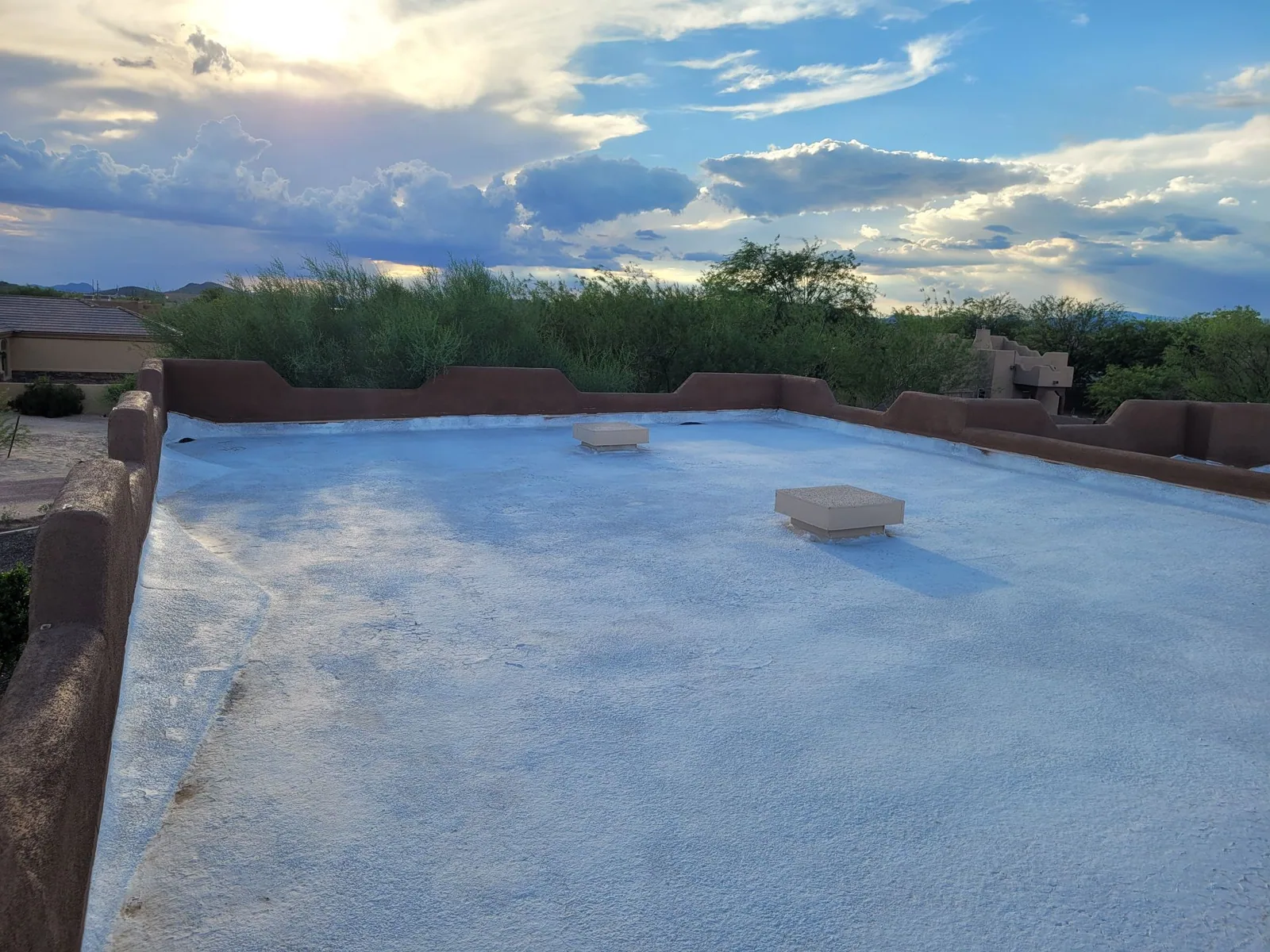
Ponding water roof repair in Chandler, AZ: we find out why water is sitting on your roof, clear or rebuild drains, fix low spots and repair the membrane damage standing water causes.
Water that sits on a flat roof for days after a monsoon storm is a problem waiting to happen. It speeds up membrane aging, finds every weak seam and adds weight the deck was not designed to carry. On office buildings, ponding usually traces back to one of a few causes: clogged drains or scuppers, a sagging deck, crushed insulation, or a roof that was never sloped well to begin with. Ponding water roof repair means finding which of those is behind it and fixing that, not just mopping up the symptom.
We look at the whole drainage picture: where water collects, where it is supposed to go and what is in the way. If the water spills from an upper roof onto a lower one, we look at both levels together. Standing water often hides damage, so membrane puncture repair may be needed alongside the drainage fix. Clearing debris is a quick job. Adding crickets, tapered insulation or new drains is real construction, and we explain where the water will go after the change and whether a plumber or engineer needs to be involved.
Where the water sits
We mark the ponding area on a roof plan and show how it relates to the nearest drains and scuppers. We ask when the water was seen and how long it stayed, and we ask for photos if anyone took them. If we visit after the roof has dried, we can still spot the telltale signs: dirt rings, algae stains, debris lines and low spots. The report notes which observations came from our visit and which came from earlier photos.
Our roof inspection answers a few separate questions. Is a drain clogged with leaves or debris? Does the water ever reach the drain, or is it trapped in a low spot? Is there damage where the membrane meets the drain bowl? Each answer leads to a different fix, so we do not recommend the same treatment for every wet area.
We also check water coming from other roof sections. If an upper roof dumps water onto the problem area, or a scupper discharges into a gutter that overflows, that is part of the picture. You get a plan showing where water flows, what is blocking it and what we recommend.
Membrane damage from standing water
We check the membrane and seams in and around the ponding area for cracks, open laps, blisters and holes. Long-term ponding can break down coatings and weaken seams faster than the rest of the roof. We confirm what kind of membrane you have before choosing a repair, since TPO, PVC, EPDM and modified bitumen all need different materials. A repair method that worked on another building is not proof it will bond to yours.
Our seam failure repair work often goes hand in hand with ponding repairs. We show which material needs to come out and what can stay. If the insulation under the ponding area may be wet, we recommend core cuts or a moisture scan before deciding, and we explain how any test openings will be patched.
A coating on top will not fix a drainage problem. We separate what the roofing repair covers from what still needs attention, such as a clogged drain line. You will see both clearly in the scope.
Drains, scuppers and gutters
Clearing a drain and repairing a drain are two different jobs. Pulling debris out of a drain basket fixes a blockage. It does not fix torn membrane at the drain bowl, a loose clamping ring or a cracked drain body. We identify each of those problems and price the fix for each one. If the drain line itself seems blocked below the roof, we recommend a plumber run a camera before relying on that drain in a permanent plan.
Our edge metal, coping and gutter work covers scuppers, gutters and downspouts at the roof edge. A clogged gutter, a crushed downspout and an undersized scupper are three different problems. Adding new drains or changing the slope requires planning where the water will go and what other work it triggers. We explain the expected result before you approve that kind of change.
For buildings in Downtown Chandler, send us the roof plan, the problem area and any drainage history. If the roofing visit does not answer the question about the pipes, we tell you who to call.
Low spots and wet insulation
A low area needs to be checked before deciding how to fix it. Sometimes the insulation underneath is wet and crushed, and replacing it with new tapered insulation solves the problem. Sometimes the deck itself has sagged, which may need an engineer to evaluate. The visible puddle tells us where to look. What we find underneath decides the fix.
A flashing repair may be needed if the drainage fix changes roof heights at walls, curbs or drains. Adding tapered insulation raises the roof surface, which can affect flashing heights and equipment curbs. We include those changes in the proposal so you can compare complete options, not just an allowance for filling in a low spot.
After the work, we record what was done and how the roof drains afterward. If water still collects after the next storm, we compare the spot with the work we did and come back to look. The closeout covers both the materials installed and the drainage result we were aiming for.
Doing the work
Before larger drainage work, we review access, debris removal and material staging with the property manager. Office tenants may need notice about noise or odors, and building staff decide what needs protecting inside. We plan the work so each section we open is sealed watertight by the end of the day.
Emergency roof repair can clear a clogged drain or patch a leak quickly, including nights and holiday weekends. We record what we did and what is still unresolved. A temporary fix does not mean the drain line underneath is clear or the low spot is solved.
If a plumber or other contractor has to finish their part before we can close up the roof, we note it and leave the area protected. Your property team can then schedule the next step with the right contractor.
After the repair
We photograph new insulation and drain work before the membrane covers it, then document the finished repairs against the approved scope. Changes in quantity are recorded with the conditions that caused them. Any drain line or plumbing questions still open are listed separately. A fixed membrane does not mean every part of the drainage system is working.
Future inspections start from the roof as it is then. Earlier photos give useful history. The rest of the roof keeps its own inspection status, and we recommend checking drains before each monsoon season.
Commercial Roofing Questions
What do you check when water stays on the roof?
We map where water collects and how it relates to nearby drains and scuppers. We check the membrane condition and ask about past drainage problems, keeping hidden pipe issues separate.
Does ponding mean the deck or insulation is damaged?
Not always, but it can. Ponding often comes with wet or crushed insulation, and sometimes a sagging deck. We recommend core cuts or a moisture scan before deciding on a fix.
Can a roof repair fix a clogged drain line?
No. Roof work covers the membrane and the drain bowl connection. A blockage in the pipe below needs a plumber. We list both so the whole problem gets solved.
Why check flashing when fixing drainage?
Adding tapered insulation or new drains changes roof heights at walls, curbs and drains. The flashing at those spots may need to be raised or rebuilt to stay watertight.
What happens after an emergency drain visit?
We record what we cleared or patched and why. The permanent drainage fix and any pipe questions stay on your open list until they are resolved.
Fix the ponding on your roof
Call us to inspect the drainage on your Chandler building. We will find out why water is sitting on the roof, check the membrane and drains, and recommend a fix that gets water off for good.
Request a Roof AssessmentAll Roof Damage Repair