Home / Roof Damage Repair / Wind Damage Roof Repair
Wind Damage Roof Repair in Chandler, AZ
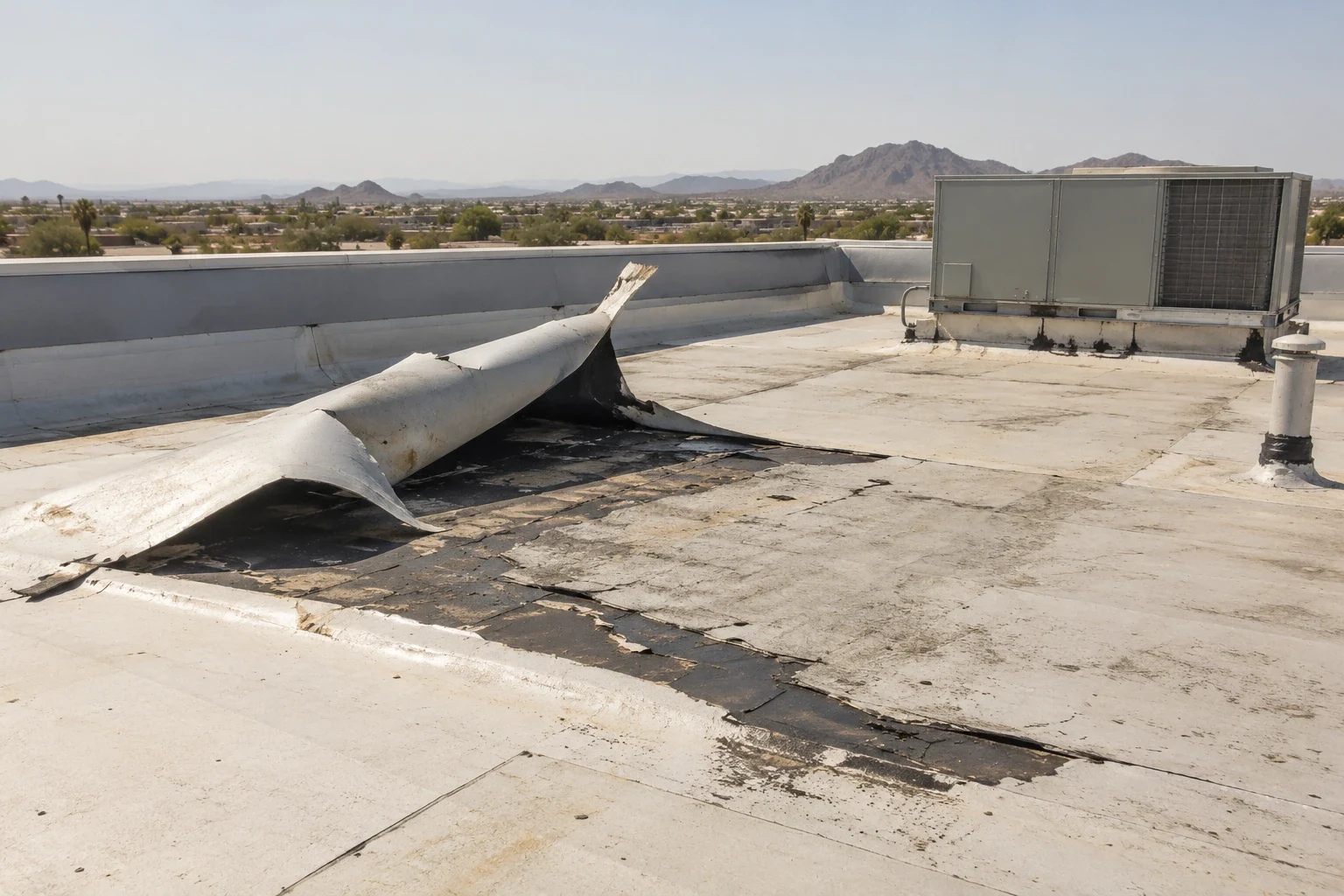
Wind damage roof repair in Chandler, AZ: fast securing of loose membrane and edge metal after a monsoon or haboob, then a permanent repair that fixes attachment, flashing and edges.
Monsoon storms and haboobs can push strong gusts across the East Valley with little warning. On a distribution building with a big flat roof, wind gets under loose edge metal, peels back flashing and lifts membrane that is not fully attached. Once wind gets a corner up, every gust after that pulls harder. Wind damage roof repair starts with securing whatever is loose so it does not get worse, then finding out how far the damage really goes before rebuilding it properly.
Tell us which building and roof section are affected, and take photos only if it is safe to do so. Torn membrane and an open seam next to it need different fixes, so membrane puncture repair and seam work may both be part of the job. We check the edges, seams and fasteners around the damaged area, then lay out what needs to come off and how it will be reattached. You get the emergency steps right away and a clear plan for the permanent repair once we know the full extent.
Mapping the damage
We map lifted sheets, torn membrane and loose or missing edge metal, photographing both the wide area and each problem spot. Any sections we could not safely reach are marked separately. Before you compare a patch with bigger repairs, you will see exactly what we inspected.
Our roof inspection ties what we find to what building staff reported. We ask where and when water came in and collect any photos with dates. We check nearby seams, flashing and old repairs. The storm timing tells us where to look, but the condition of the roof today decides the repair.
If fasteners, insulation or deck under the damaged area are hidden, we say what testing is needed. A lifted edge often means the membrane next to it has loosened too. We explain which findings could expand the repair, and we keep emergency securing separate from the permanent fix.
What can stay and what has to go
We confirm the membrane type before choosing how to reattach or patch it. We also check the membrane next to the damage to see whether it is still well attached and in good shape. Repairs must use materials and methods that match your roof system, since color alone does not tell you what product is up there. We use any records you have and, if needed, a small test opening.
Our seam failure repair work looks at each seam near the damage. Wind often stresses seams beyond the area that visibly lifted. Membrane that has been flapping or creased may need to be cut out before a new piece can be welded or adhered in. If insulation was lifted or soaked, it gets replaced as part of the same repair. A patch on top does not fix loose fasteners or plates underneath.
We mark which areas stay and which still need testing. If the opening reveals more loose or damaged material, we explain what we found and the revised repair area before going further.
Edge metal and perimeter
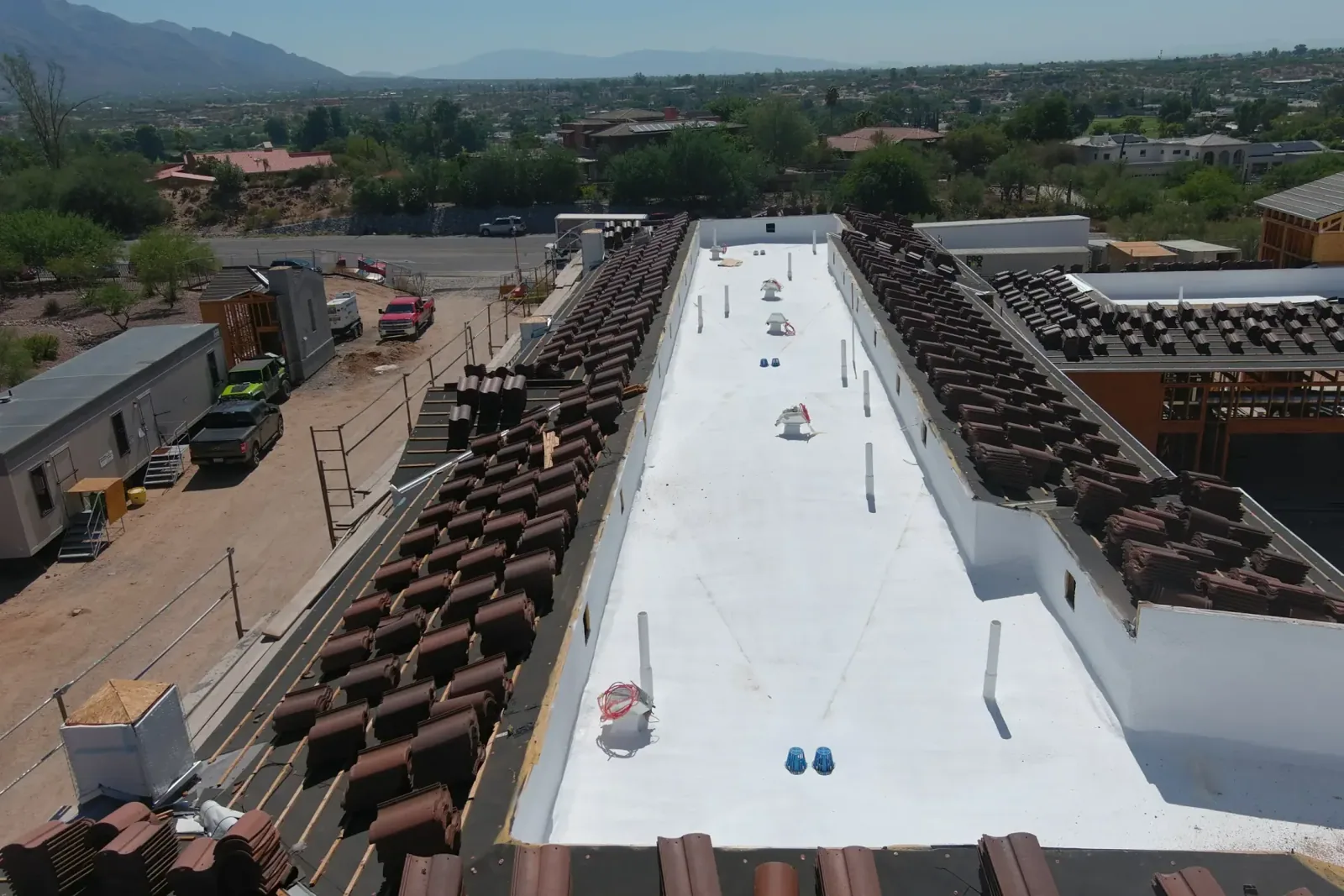
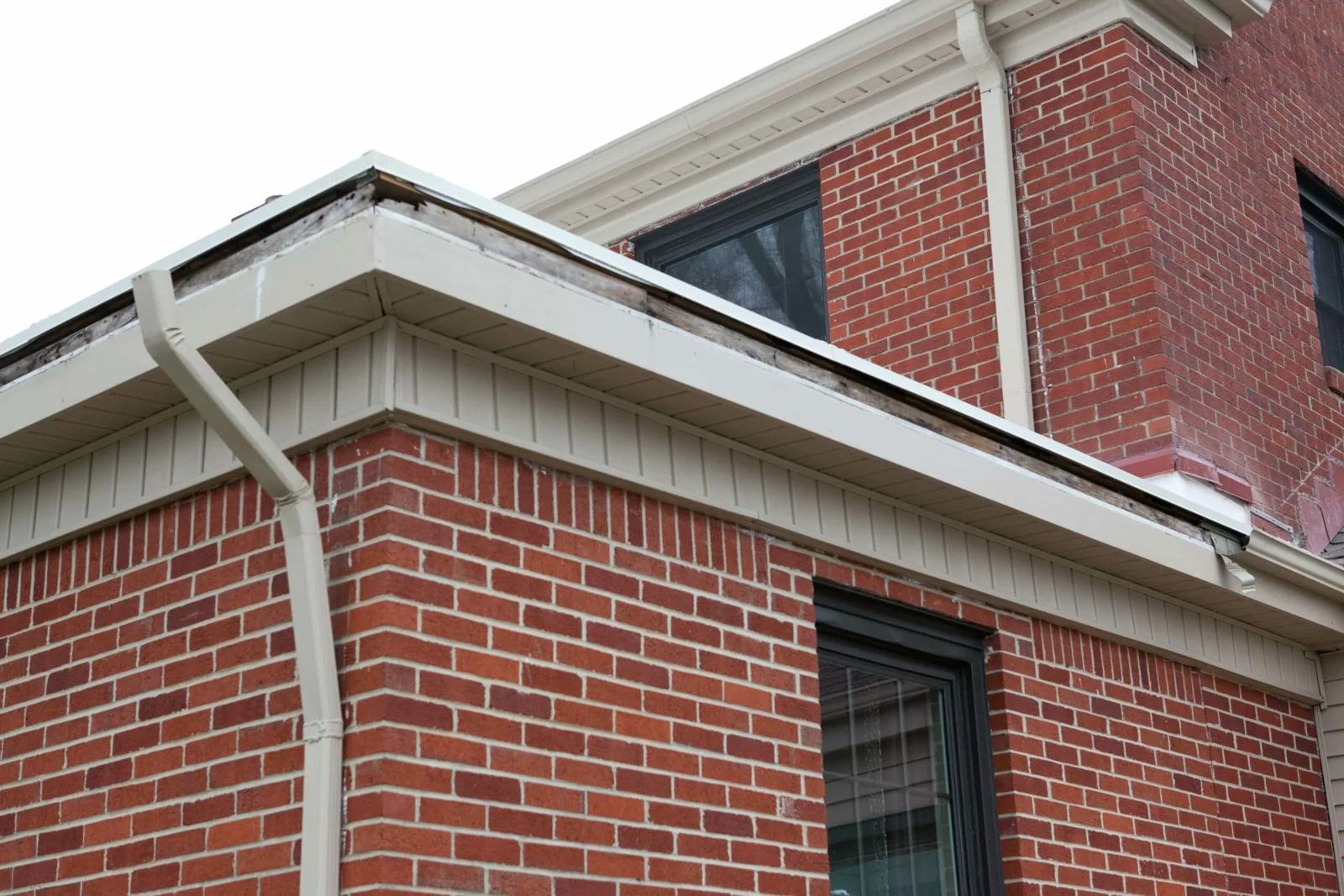
Most wind damage starts at the roof edge. If the edge metal or coping lifts, wind can get under the membrane and peel it back. We check the metal, the cleat or fasteners holding it, the wood nailer underneath and the membrane where it meets the edge. Bending a piece of edge metal back into place does not fix loose fasteners or rotted nailers. The repair needs to rebuild the edge so it holds.
Our edge metal, coping and gutter work replaces damaged perimeter components and secures them properly. We spell out the prep work needed before the new edge goes on. If the wall or structure behind it needs repair, an engineer or other contractor handles that. We base the fastening on your roof and its requirements, not on a past repair at another building.
For buildings near Falcon Field, we confirm the address, the building contact and the roof section before scheduling work.
Protecting the building
At a distribution center, we review crane placement, material staging and dock traffic with the site manager. Building staff decide what needs protection inside and handle any equipment their teams operate. If an HVAC unit or other equipment was moved by the wind, the mechanical contractor deals with it before we finish the roofing around it.
Emergency roof repair can secure loose membrane and edges quickly, including nights and holiday weekends. We record what we secured and why. The permanent repair is still needed, along with any testing. A temporary fix does not mean the fasteners or insulation underneath are sound.
If part of the repair has to wait, the area gets temporary protection, and the permanent work is scheduled once the roof and any other trades are actually ready.
The permanent repair
The repair scope lays out the membrane, insulation and edge work needed to put the roof back together, along with what stays and what still needs testing. If HVAC or wall work has to happen first, we list it next to the roofing that depends on it. A vague instruction to fix the roof leaves too much open, so we spell out what complete means.
A flashing repair is often part of wind damage, especially at walls and curbs. We check the backing behind the flashing and replace it if needed. If we find more damage once we open things up, we record it with photos and explain the extra quantity for your approval.
For insurance claims, we document what we found and what the repair involves. The storm report and our roof findings serve different purposes. Your insurer decides coverage. We supply clear photos and a defined repair scope to support the claim.
Closing out the repair
We photograph the damaged area, any exposed insulation or nailers, and the finished repair, with enough surrounding roof to show where each one is. The closeout lists the membrane removed, the insulation and backing replaced and the new edge metal and flashing installed. Any change in quantities is tied to the finding and the approval behind it.
If a section is still waiting on a permanent repair, it stays on the list with a contact and next step. HVAC or wall work outside our scope is listed separately. If a new leak shows up somewhere else, we compare it with our records and inspect the new spot before recommending work.
Commercial Roofing Questions
What should I record after wind lifts part of the roof?
Note when it happened and where any water came in, and take photos if it is safe. We map the damage and keep our findings separate from the storm report.
If one section lifted, is the whole roof damaged?
Not necessarily. We inspect the areas around the damage and check seams and edges. Other areas may need testing before we can say whether wider repairs are needed.
Why check under the edge metal?
Edge metal is only as strong as the fasteners and wood nailer behind it. If those are loose or rotted, new metal will not hold in the next storm.
What is left to do after an emergency visit?
The permanent repair, including any membrane replacement, reattachment and edge rebuild. We keep it on your open list with what we secured and why.
Can you tell me if insurance will cover the wind damage?
No. Your insurer decides coverage and cause. We provide located photos, our findings and a clear repair scope to support the claim.
Get wind damage secured and repaired
Call us after a storm hits your Chandler building. We will secure loose membrane and edges, inspect the damage and give you a clear plan for the permanent repair.
Request a Roof AssessmentAll Roof Damage Repair