Home / Roof Damage Repair / Fire Damage Roof Repair
Fire Damage Roof Repair in Chandler, AZ
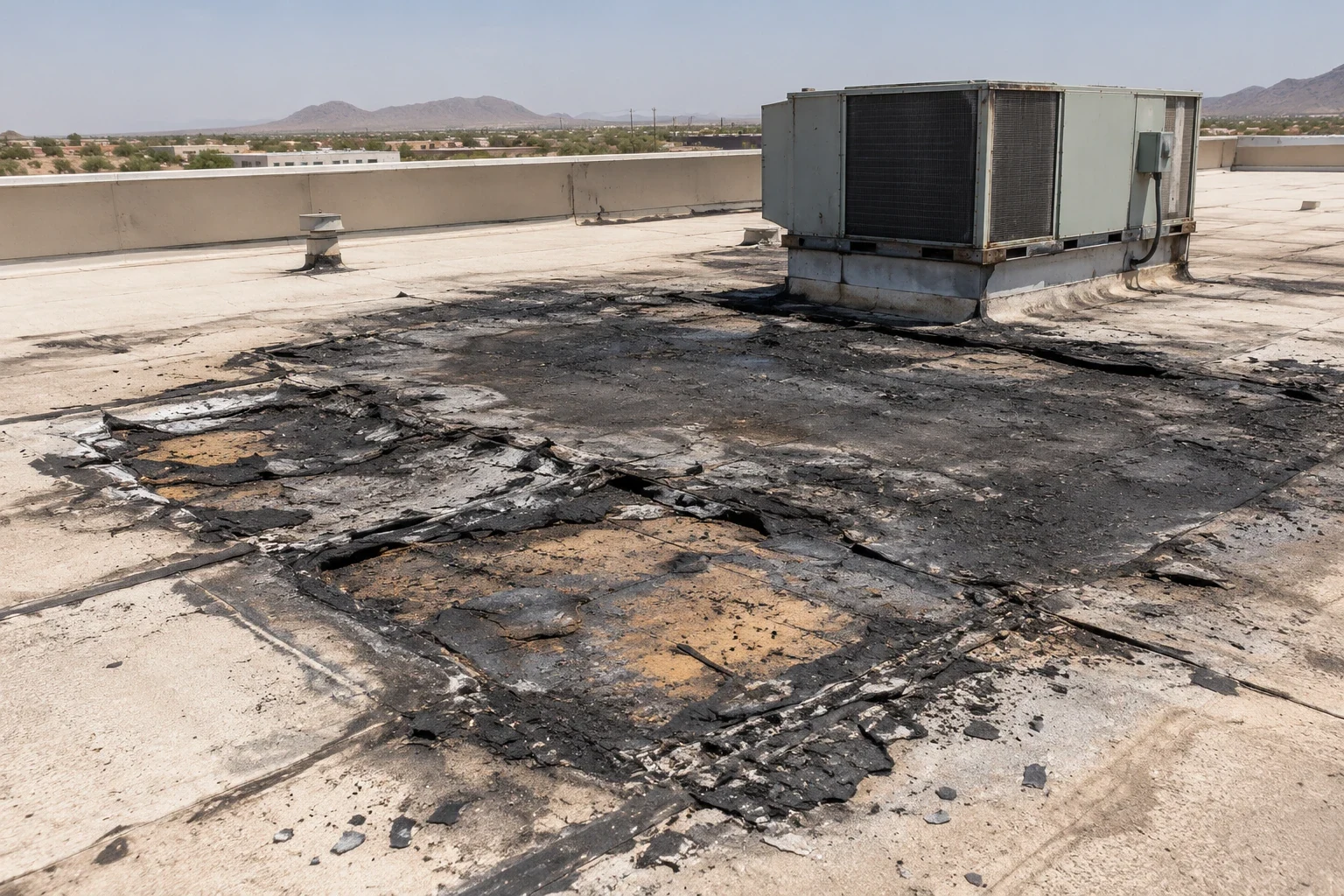
Fire damage roof repair in Chandler, AZ: safe assessment once the building is released, temporary dry-in, and a clear rebuild scope for membrane, insulation, deck and rooftop equipment.
After a fire at a manufacturing plant, warehouse or retail building, the roof is often the last thing anyone can get to and one of the first things that needs attention. Fire damage roof repair starts with safety. We do not go up until the fire department, the owner and, where needed, a structural engineer have cleared the area. Then we inspect what we can safely reach, find out what burned, melted or got soaked by fire hoses, and lay out what it will take to make the roof watertight again.
Heat and water damage often go well beyond the visible burn area. Insulation under a roof that looks fine can be saturated, and steel deck can lose strength from heat. Membrane damage is easy to spot, but the layers underneath need checking too. Structural and electrical questions belong to engineers and other trades, and we wait for their sign-off before rebuilding over them. Our scope separates the temporary dry-in that stops more water from getting in from the permanent rebuild, and we update it if tear-off reveals more damage.
Inspecting a fire-damaged roof
We confirm with the owner and site contact which parts of the roof are safe to inspect. The fire marshal, insurance adjuster and engineer each have their own role, and our visit does not replace theirs. If an area is off-limits, we mark it as not inspected and explain what that leaves unknown. You should know exactly what our findings cover.
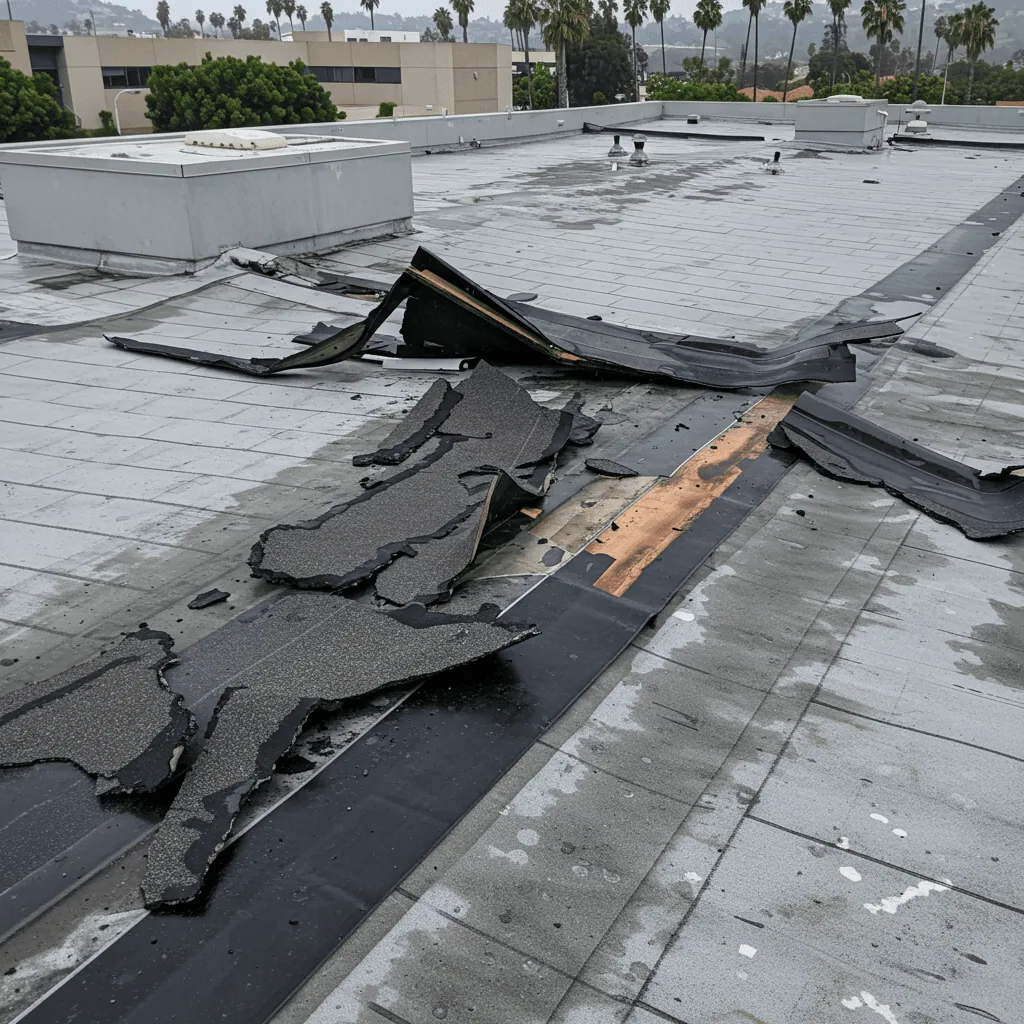
Our roof inspection maps the damage on a roof plan. Close-ups are paired with wider shots so anyone can find the spot later, which matters on big roofs with many similar sections. We describe what we see: blistered or melted membrane, charred insulation, scorched flashing, warped deck. The cause of the fire is not ours to determine.
If a section needs an engineer's review before we can say what it needs, we mark it and explain how it affects the roofing work. We do not assume the answer will be good news. The permanent scope waits for that review.
How much has to come off
We break the rebuild down by roof area. For each one, we list the membrane that needs to come off, the insulation that needs testing for heat and water damage, and any deck that needs an engineer's look. Original drawings help us understand how the roof was built, but what we find now drives the plan. One core cut does not tell us about the whole building, so untested areas stay marked on the plan.
A commercial roof repair scope after a fire shows what can be fixed now and what is waiting on more testing. It also explains how the new section will tie into the undamaged roof, walls and equipment. If damage extends past where we first looked, we show you the added area and get your approval before changing the quantity.
Roof work is kept separate from HVAC, electrical, wall and interior repairs. Often those have to happen first. We list what is included, what is excluded and who is handling each related repair, so the full project sequence is clear.
Checking the deck and structure
Fire can weaken steel deck, joists and wood framing in ways you cannot see from the roof surface. If there is any question about the structure, a structural engineer needs to evaluate it. We tell you what condition the deck has to be in before we can install a new roof, but a new membrane does nothing to fix a damaged deck. The engineer's findings and any repair work are listed next to the affected area.
Parapet walls and wall flashing often take heat damage too. Backing boards may need replacing before new flashing can be fastened. If tear-off reveals more damage, we explain what changed and what extra work is needed, then photograph it before it gets covered up.
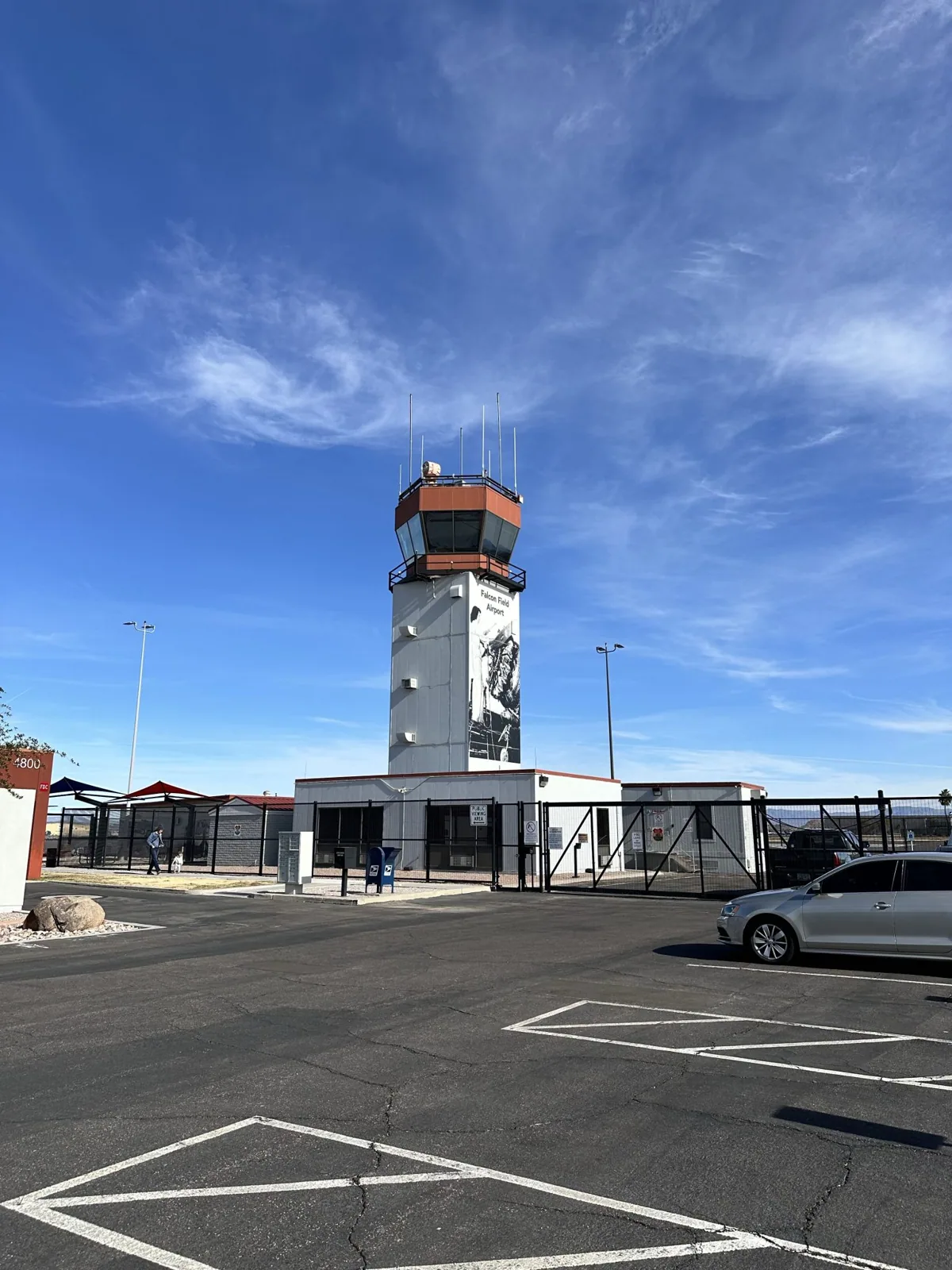
For buildings near Falcon Field, we confirm the address and access arrangements with the site contact before quoting any work.
Rooftop equipment after a fire
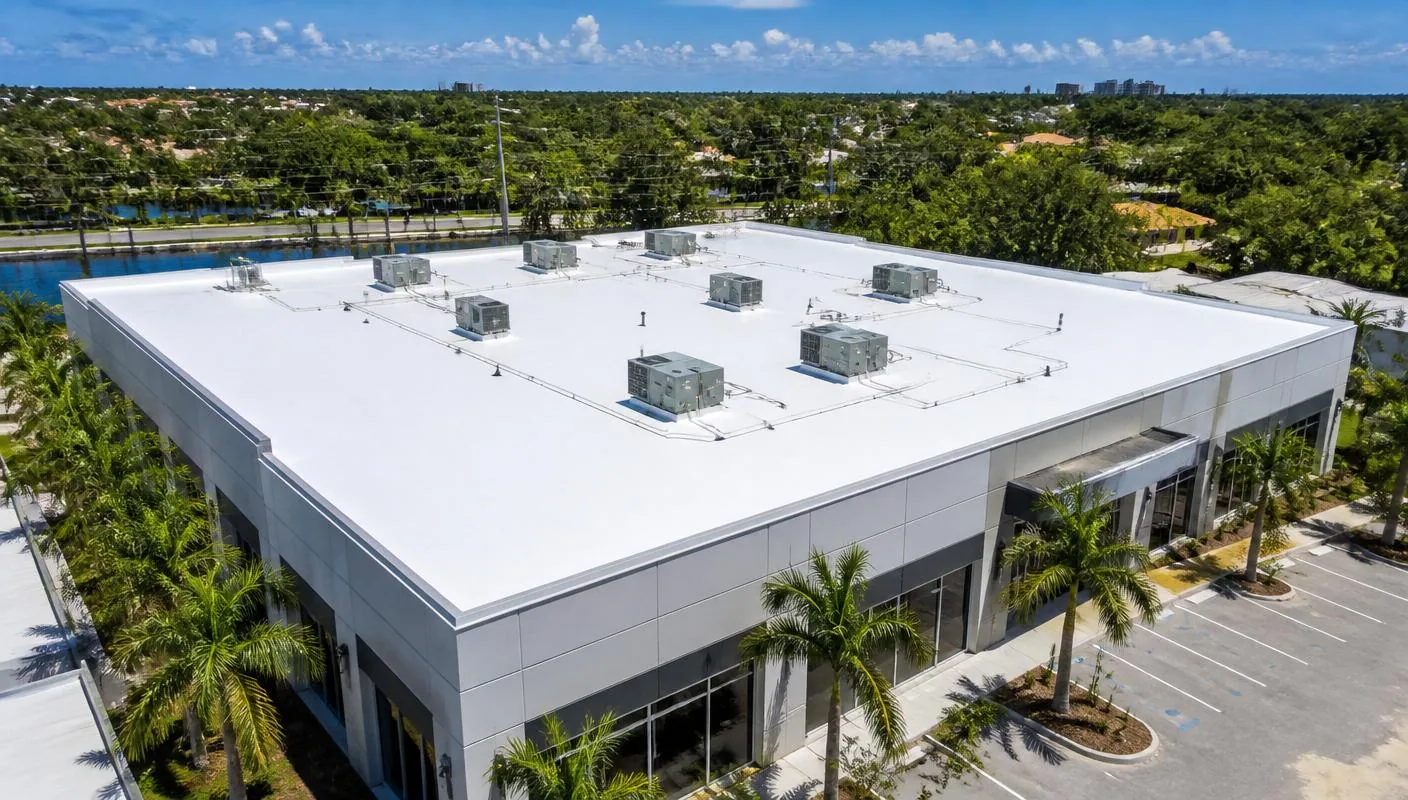
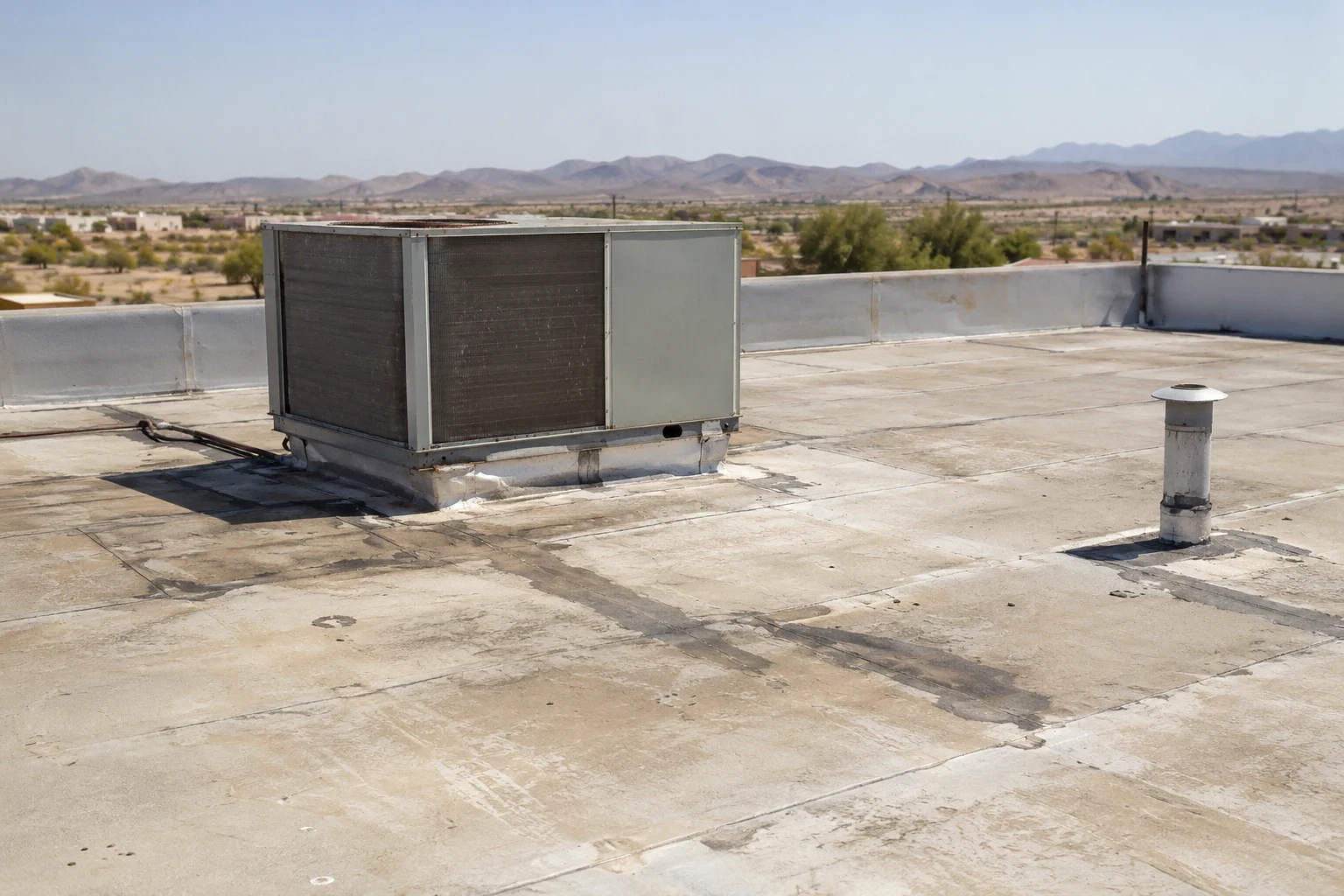
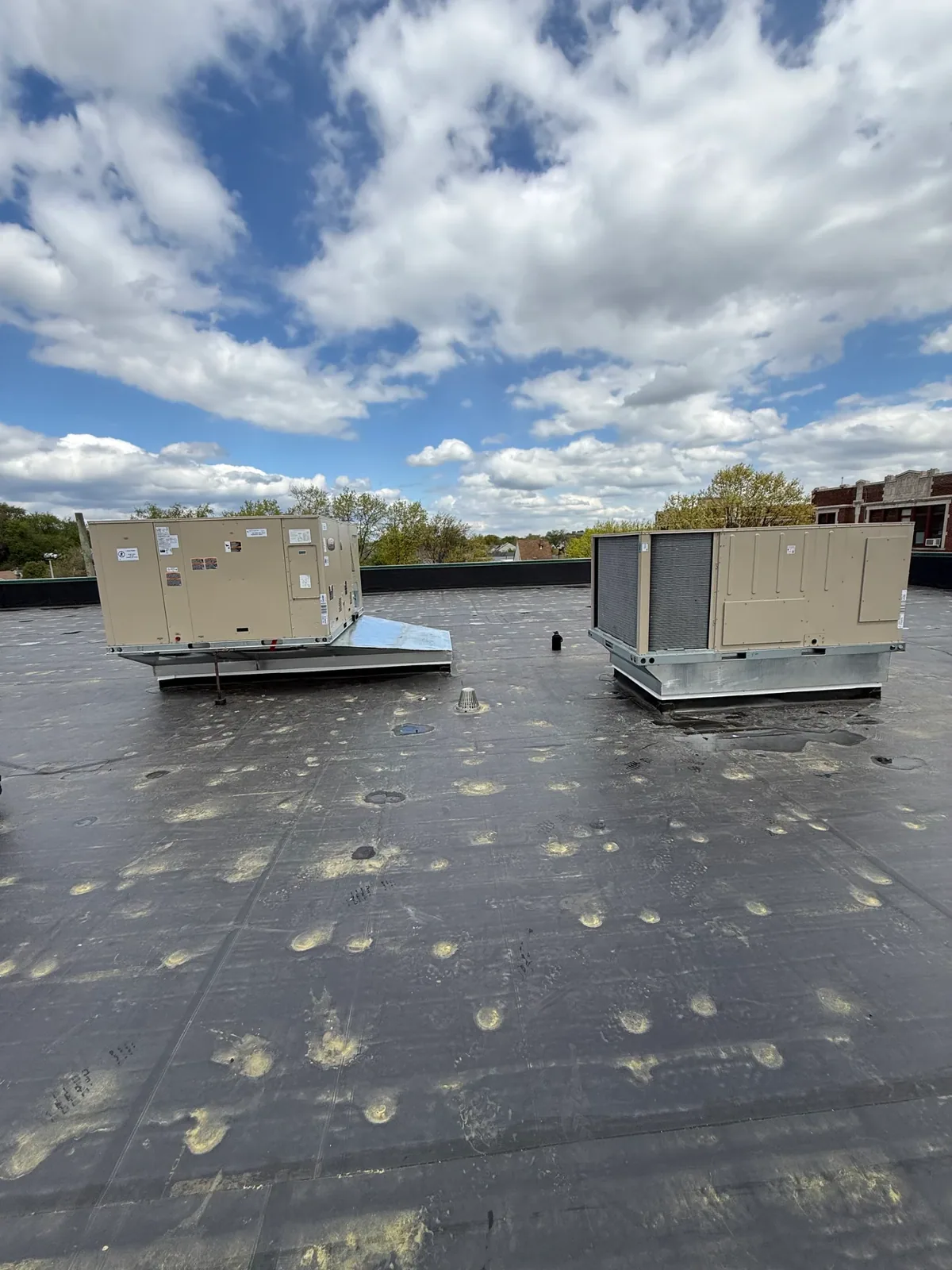
HVAC units, exhaust fans and electrical conduits on the roof often need repair or replacement after a fire. The mechanical and electrical contractors decide what happens with their equipment. We need to know where each unit will sit and what kind of curb or support it will use, so the flashing around it can be priced and scheduled.
Our rooftop equipment and curb review lists the equipment work still pending, who will confirm it is ready, and the roofing detail that follows. If the HVAC contractor is weeks out, we protect the open area in the meantime. A scheduled appointment is not the same as a curb that is ready for flashing.
The same goes for wall repairs and drains in the fire area. Wall backing and drain connections need to be in place before permanent flashing goes on. Changes and approvals stay tied to each spot, so the owner can schedule the next repair without lumping everything into one big roofing allowance.
Keeping the building dry
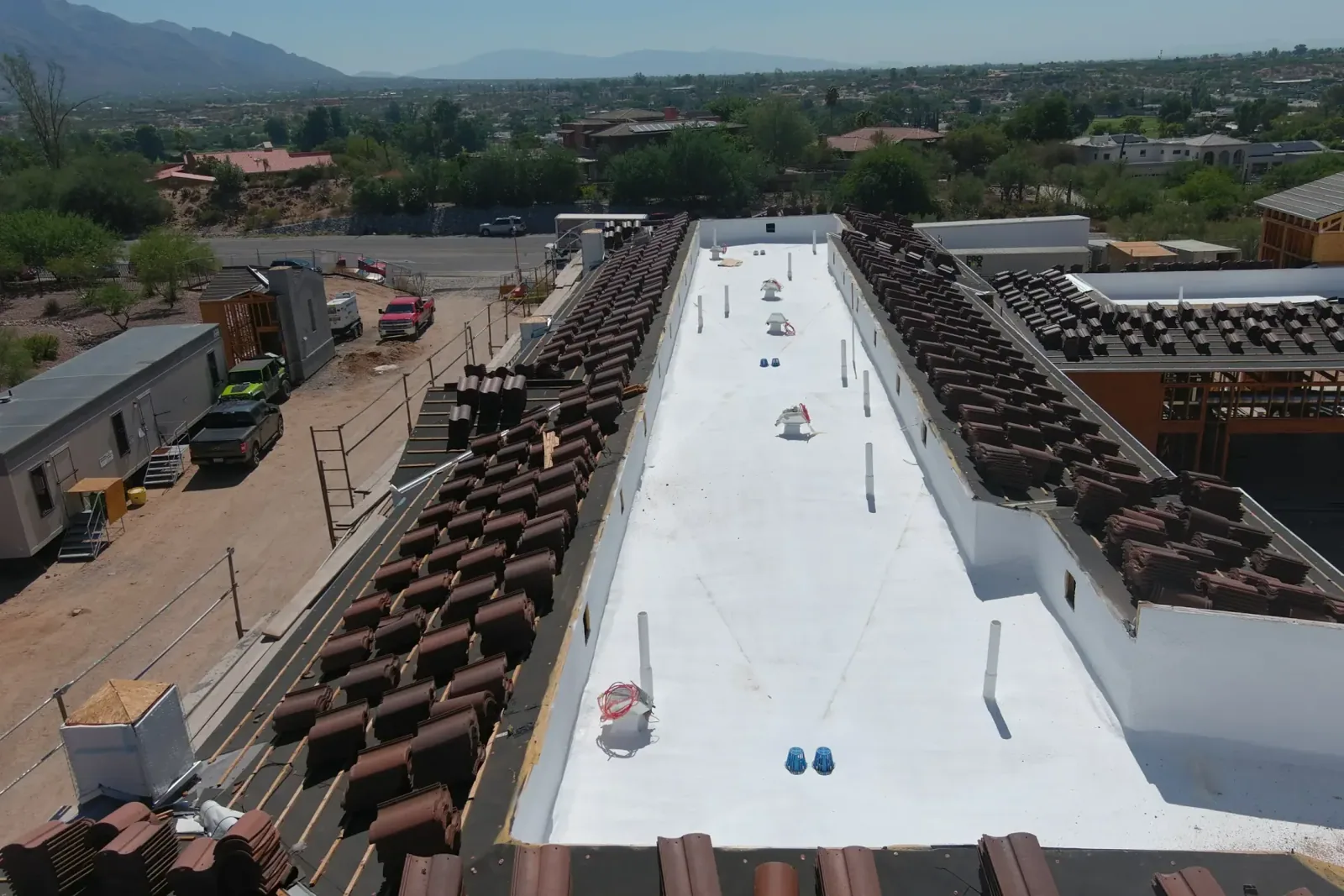
Before any tear-off, we review crane access, material staging and debris removal with the owner's representative. The restoration contractor, insurance adjuster and other trades have their own requirements. We plan each day's work so every section we open gets sealed watertight by quitting time. A convenient break in the site's schedule does not change.
Emergency roof repair can get a temporary dry-in on quickly, including nights and holiday weekends. We record what we covered and why. The temporary patch keeps water out but does not mean the deck has been cleared or the roof is ready for permanent work.
If the rebuild has to pause while another trade finishes, we leave the area protected and note which roofing work is waiting on what. The next visit is scheduled once that work is actually done.
Wrapping up the rebuild
The closeout covers the roof areas we rebuilt. We photograph tear-off, deck condition and new insulation before they are covered, so the owner and insurer can see what was replaced. Approved changes are tied to their locations and final quantities, along with the materials installed and how the new roof ties into the existing one.
You also get a list of anything still open, such as a curb waiting on a new unit or a wall waiting on repairs. Temporary protection is clearly marked as temporary. Our report covers the roof. Occupancy and other building decisions belong to the owner and the authorities.
Commercial Roofing Questions
When can you inspect a roof after a fire?
Once the fire department, owner and, if needed, a structural engineer say the area is safe. We inspect only the parts of the roof that have been cleared and note anything we could not reach.
If the roof looks fine on top, is the insulation okay?
Not necessarily. Heat and hose water can damage insulation and deck under a membrane that looks intact. We recommend core cuts or a moisture scan in suspect areas before keeping any existing layers.
Who decides if the roof structure is safe after a fire?
A structural engineer. We tell you what the deck needs to support a new roof, but structural evaluation and repairs belong to the engineer and the contractor they work with.
What is the difference between a temporary dry-in and a permanent repair?
A dry-in keeps water out while the building is assessed and repaired. It does not fix damaged insulation or deck. The permanent rebuild is scoped and priced separately.
Does a finished roof mean the building can be reopened?
No. We document the roofing work. Occupancy, fire safety and other building decisions belong to the owner, the inspectors and the other trades involved.
Get help after a roof fire
Call us once the building has been cleared for access. We will inspect the roof in Chandler, set up temporary protection if needed and give you a clear rebuild scope for the owner and insurer.
Request a Roof AssessmentAll Roof Damage Repair